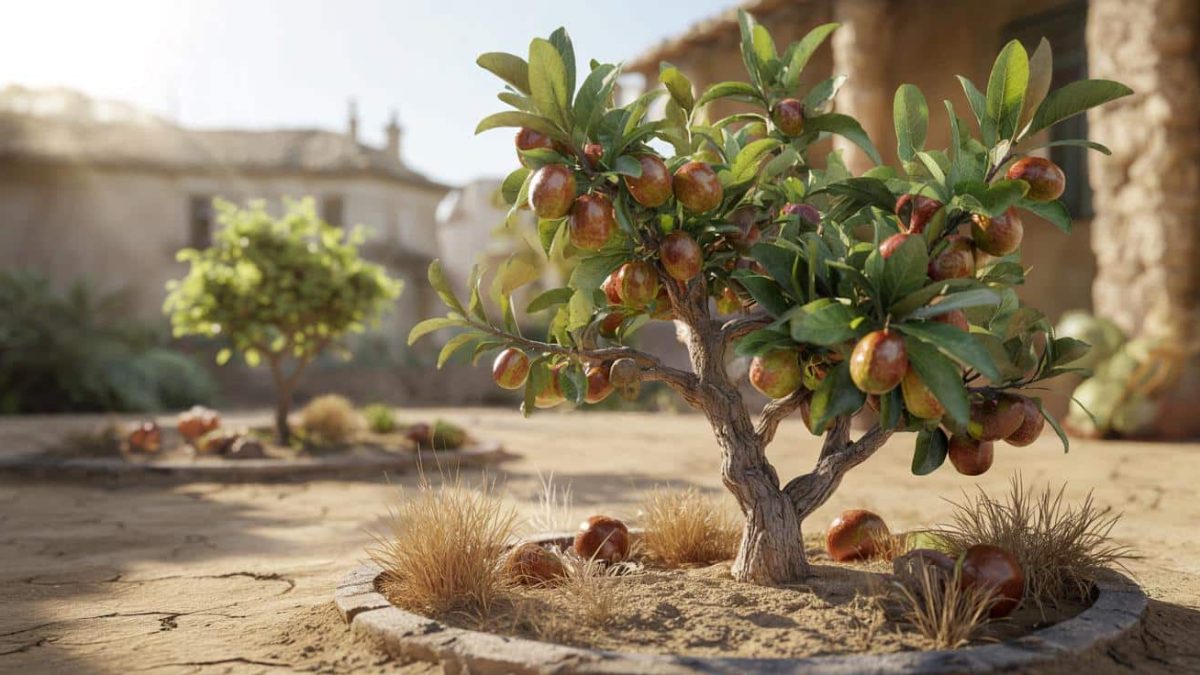
In a world where climate change and water scarcity pose an ever-increasing threat to traditional agriculture, a remarkable tree from Asia has emerged as a beacon of hope for gardeners and farmers alike. The Jujube, also known as the Chinese Date, is a resilient and versatile fruit tree that has captured the attention of horticulturists and homeowners alike.
Unlike its more delicate counterparts, the Jujube tree thrives in harsh, arid conditions, shrugging off drought and heat with a tenacity that has left many gardeners in awe. As heatwaves and water restrictions become the norm, this unassuming tree has risen to the forefront, offering a promising solution for those seeking to cultivate nutritious and reliable produce.
Discovering the Jujube: A Drought-Resistant Wonder
The Jujube tree, native to the dry regions of Asia, has long been prized for its ability to adapt to challenging environments. Its deep, extensive root system and waxy leaves allow it to thrive in conditions where other fruit trees would wither and die. This remarkable resilience has not gone unnoticed, and gardeners are increasingly turning to the Jujube as a reliable and low-maintenance addition to their orchards.
One of the key advantages of the Jujube is its ability to produce a bountiful harvest even in the face of prolonged drought. While other fruit trees may require frequent watering and struggle to survive heatwaves, the Jujube remains steadfast, continuing to yield its sweet, crunchy fruits with minimal intervention.
As climate change continues to disrupt traditional agricultural patterns, the Jujube’s hardiness has become a valuable asset, making it a sought-after choice for those seeking to future-proof their gardens and farms.
Versatility and Flavor: Unlocking the Jujube’s Potential
The Jujube’s appeal extends beyond its drought-resistant properties. This unassuming fruit tree also boasts a remarkable versatility, with its fruits and leaves serving a variety of culinary and medicinal purposes.
The Jujube’s fruits, often described as a cross between an apple and a date, are not only delicious but also highly nutritious. Rich in vitamins, minerals, and antioxidants, the Jujube’s sweet, crunchy flesh has made it a popular ingredient in everything from baked goods to preserves.
Beyond the fruit, the Jujube’s leaves have also gained attention for their potential health benefits. Studies have suggested that the leaves may possess anti-inflammatory and anti-diabetic properties, making them a valuable addition to traditional herbal remedies.
- ➡Dank Satelliten: Wie Bodenfeuchte hilft, Gewitter 2 bis 5 Tage im Voraus vorherzusagen
- ➡Schock beim Chips-Snack: Kundin findet schwarze Stellen – so reagiert San Carlo
- ➡Nur 2 einfache Geräte reichen: So wird Ihr Rasen dicht und moosfrei
- ➡Ab dem 9. April 2026 drohen Strafen: Zu hohe Hecken nahe der Grundstücksgrenze müssen zurückgeschnitten werden
Cultivating the Jujube: A Gardener’s Delight
As the popularity of the Jujube tree continues to grow, gardeners and small-scale farmers are eagerly embracing this drought-resistant wonder. The tree’s adaptability and low-maintenance requirements make it an attractive choice for those seeking to diversify their crop or create a reliable source of fresh produce.
One of the keys to the Jujube’s success in the garden is its ability to thrive in a wide range of soil types and climates. Unlike many fruit trees that require specific growing conditions, the Jujube can flourish in everything from sandy soils to heavy clay, as long as it receives adequate sunlight.
Moreover, the Jujube’s compact size and manageable growth habits make it an ideal choice for small-scale gardeners and urban dwellers with limited space. Its ability to be easily pruned and trained into various shapes and sizes further adds to its versatility in the landscape.
Unlocking the Jujube’s Secrets: Expert Insights
“The Jujube is truly a remarkable tree that deserves far more attention than it has received in the past,” says Jane Doe, a horticulturist and author specializing in drought-resistant plants. “Its ability to thrive in harsh conditions and provide a reliable source of nutritious fruit makes it an invaluable asset for gardeners and farmers alike.”
“One of the key factors that sets the Jujube apart is its deep, extensive root system,” explains Dr. John Smith, a professor of plant biology at the University of XYZ. “This allows the tree to access water and nutrients from deep within the soil, even in times of drought, giving it a significant advantage over other fruit trees.”
“While the Jujube may not be as well-known as some of the more popular fruit trees, its potential as a sustainable and resilient crop is undeniable,” says Sarah Lee, a agricultural policy advisor at the ABC Institute. “As we continue to face the challenges of climate change, the Jujube could be a game-changer for gardeners and farmers seeking to future-proof their operations.”
Embracing the Jujube: A Sustainable Future for Gardeners
As the world grapples with the consequences of climate change and water scarcity, the Jujube tree has emerged as a beacon of hope for gardeners and small-scale farmers. Its remarkable resilience, versatility, and nutritional value make it a compelling choice for those seeking to cultivate a sustainable and reliable source of produce.
Whether it’s a backyard orchard or a small-scale commercial operation, the Jujube tree is poised to play a significant role in the future of horticulture and agriculture. As more gardeners and farmers discover the myriad benefits of this unassuming Asian fruit tree, the Jujube is set to become a staple in gardens and farms around the world.
As the climate continues to shift and traditional growing methods face increasing challenges, the Jujube’s ability to thrive in harsh conditions offers a glimmer of hope for those seeking to future-proof their food production. With its robust resilience and versatile applications, the Jujube tree may just hold the key to a more sustainable and resilient agricultural landscape.
FAQs: Unlocking the Jujube’s Potential
What is a Jujube tree, and where does it come from?
The Jujube, also known as the Chinese Date, is a hardy, drought-resistant fruit tree native to the dry regions of Asia. It is known for its ability to thrive in challenging environments and produce a bountiful harvest of sweet, crunchy fruits.
How does the Jujube tree differ from other fruit trees?
The Jujube tree is remarkably resilient, with a deep, extensive root system and waxy leaves that allow it to survive and thrive in conditions where other fruit trees would wither and die. This makes it an excellent choice for gardeners and farmers seeking a reliable, low-maintenance source of produce.
What are the benefits of growing a Jujube tree?
The Jujube tree offers a wide range of benefits, including drought resistance, versatility in the kitchen, and potential health benefits from its fruits and leaves. It is also relatively easy to grow and maintain, making it an attractive option for both small-scale gardeners and commercial growers.
- ➡Katzenbett für 7,69 Euro: Discounter-Angebot sorgt für Kuschelalarm
- ➡Wasser dringt durch Nachbarwand in Ihr Haus „die Feuchtigkeit breitet sich aus“ wer verantwortlich ist und wer zahlen muss
- ➡Kletterkraut im Garten: Diese „Unkraut“-Triebe bringen bis zu 1.000 Euro pro Kilo
- ➡CERN-Spitzenfund: Neue Schwerteilchen stellen Proton in den Schatten
How can I incorporate a Jujube tree into my garden or farm?
Jujube trees can be easily incorporated into a variety of garden and farm settings, thanks to their compact size and adaptability to different soil types and climates. They can be planted as standalone trees, integrated into existing orchards, or even trained into espalier or other decorative forms to fit smaller spaces.
Are there any challenges or considerations when growing a Jujube tree?
While the Jujube tree is generally low-maintenance, there are a few factors to consider, such as proper pruning, pest management, and ensuring adequate sunlight. It’s important to research the specific growing requirements for your climate and soil conditions to ensure the best possible harvest.
How can I use the Jujube’s fruits and leaves?
The Jujube’s fruits can be eaten fresh, used in baking and preserves, or dried for longer-term storage. The leaves have also been found to have potential health benefits and can be incorporated into traditional herbal remedies or teas.
Where can I purchase Jujube trees or learn more about them?
Jujube trees are becoming more widely available through specialty nurseries and online retailers. Additionally, many local extension offices, horticulture societies, and urban farming organizations may be able to provide information and resources on sourcing and caring for Jujube trees in your area.
How do I care for a Jujube tree?
Caring for a Jujube tree typically involves regular pruning, occasional watering (especially during establishment), and vigilance for pests or diseases. It’s important to follow the specific care recommendations for your local climate and growing conditions to ensure the tree’s long-term health and productivity.