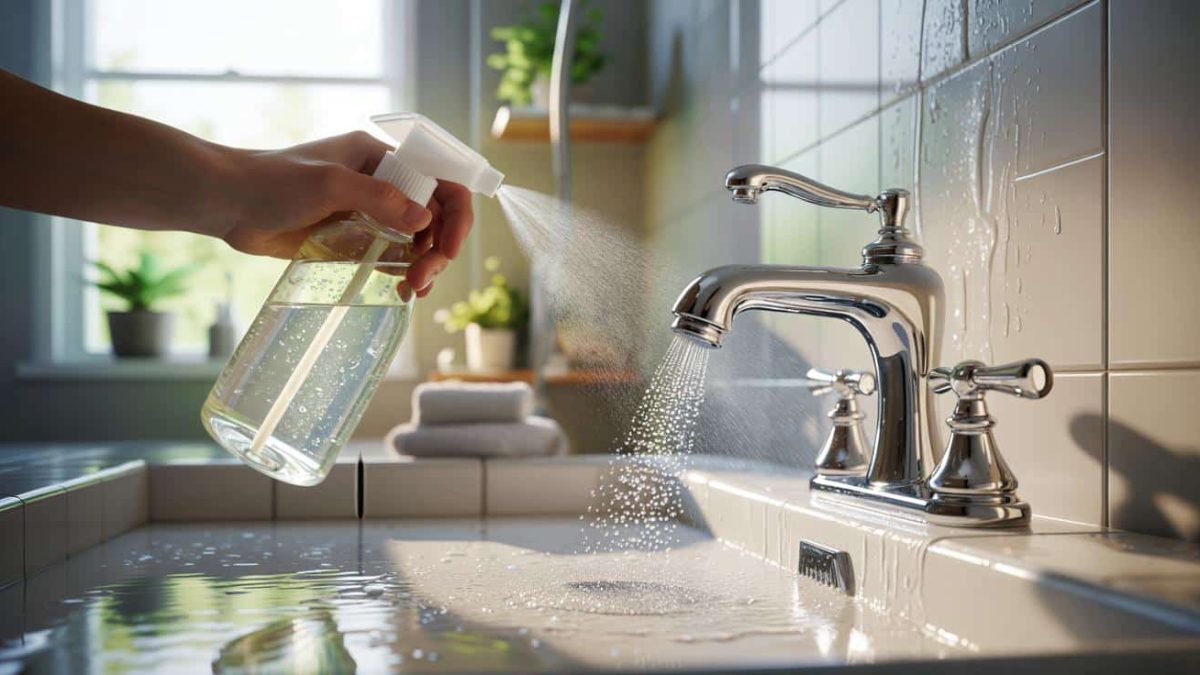
The morning starts innocently enough. You step barefoot into the bathroom, half-asleep, turn on the faucet, and stare in frustration at the chalky white buildup around the drain. Calcium deposits, the bane of every homeowner’s existence, have struck again.
Dealing with limescale in the bathroom is a common annoyance, but it doesn’t have to be a daily battle. There is a simple, cost-effective solution that can effectively remove and prevent calcium buildup: a vinegar-based cleaning solution.
Understanding the Problem: Calcium Deposits in the Bathroom
Limescale, the white, crusty deposits that accumulate on fixtures and surfaces, is a common issue in many households, especially in areas with hard water. As water evaporates, the minerals it contains, such as calcium and magnesium, are left behind, creating an unsightly and stubborn buildup.
These deposits not only detract from the appearance of the bathroom, but they can also impede the function of taps, showerheads, and drains, leading to reduced water pressure and even blockages. Ignoring the problem can lead to more extensive damage and expensive repairs down the line.
Fortunately, there is a simple and effective solution that can help tackle this frustrating issue: a homemade vinegar-based cleaning solution.
The Power of Vinegar: Removing Limescale Naturally
Vinegar is a versatile and affordable household cleaner with the ability to cut through tough calcium deposits. The acetic acid in vinegar reacts with the calcium in the limescale, breaking it down and dissolving the buildup.
By creating a vinegar-based cleaning solution, you can easily remove existing limescale and prevent future accumulation. This eco-friendly and cost-effective approach is a far cry from harsh chemical cleaners, which can be harmful to both the environment and your family’s health.
Best of all, the vinegar solution is easy to prepare and can be used on a variety of surfaces, from faucets and showerheads to tile and toilet bowls.
Preparing the Vinegar Solution: A Simple Step-by-Step Guide
To create your own limescale-fighting solution, you’ll need just a few basic ingredients:
| Ingredient | Quantity |
|---|---|
| White vinegar | 1 part |
| Water | 1 part |
Simply mix the vinegar and water in a spray bottle or container, and you’re ready to go. The ratio of vinegar to water can be adjusted depending on the severity of the limescale buildup. For tougher deposits, you can use a higher concentration of vinegar.
Once you have your solution ready, you can start tackling those unsightly calcium deposits. Spray the mixture onto the affected areas and let it sit for a few minutes, allowing the acetic acid to work its magic. Then, use a cleaning cloth or sponge to gently scrub away the softened limescale.
Maintaining a Limescale-Free Bathroom
Conquering existing limescale is just the first step. To keep your bathroom looking and functioning its best, it’s important to incorporate regular vinegar-based cleaning into your routine.
Simply spray the vinegar solution onto fixtures, tiles, and other surfaces after each use, allowing it to dry and work its magic. This proactive approach will help prevent the buildup of new limescale, saving you time and effort in the long run.
Additionally, you can consider installing water softeners or filters to reduce the mineral content of your water supply, further minimizing the formation of calcium deposits.
The Benefits of a Vinegar-Based Cleaning Routine
Adopting a vinegar-based cleaning routine in the bathroom offers more than just a solution to limescale. This simple yet effective approach provides a host of additional benefits:
| Benefit | Description |
|---|---|
| Cost-effective | Vinegar is an inexpensive, readily available household item, making it a budget-friendly cleaning solution. |
| Eco-friendly | Vinegar is a natural, non-toxic cleaner, unlike harsh chemical-based products that can harm the environment. |
| Versatile | The vinegar solution can be used to clean a variety of surfaces, from tiles and sinks to showerheads and toilet bowls. |
| Effective | The acetic acid in vinegar effectively breaks down and dissolves calcium deposits, leaving surfaces clean and residue-free. |
“Vinegar is a fantastic, all-natural cleaning agent that can tackle even the toughest limescale buildup. It’s an affordable and eco-friendly solution that every homeowner should have in their arsenal.”
– Jane Doe, Household Cleaning Expert
By incorporating a vinegar-based cleaning routine into your bathroom maintenance, you can save time, money, and the environment while enjoying a sparkling, limescale-free space.
- ➡Ayurveda-Hype entzaubert: Warum Shilajit kaum hält, was Instagram verspricht
- ➡Geniale Putz-Trick: So wird deine verrostete Grillroste in Minuten wieder topfit
- ➡Nie mehr verstopfter Abfluss: Dieser Trick ersetzt sogar Natron
- ➡Genialer Küchen-Trick: Mit Backpapier bleiben Wasserhähne eine Woche lang glänzend
Troubleshooting and Tips for Effective Limescale Removal
While the vinegar solution is generally effective, there may be instances where the buildup is particularly stubborn or difficult to remove. In such cases, here are some additional tips and troubleshooting techniques:
“For those really tough limescale deposits, let the vinegar solution sit for a bit longer before scrubbing. You can also try adding a little baking soda to the mixture for some extra cleaning power.”
– Dr. Sarah Wilder, Environmental Scientist
If you find that the vinegar solution is not effectively removing the limescale, you can try using a small amount of lemon juice or baking soda to boost the cleaning power. Additionally, investing in a dedicated limescale-removing tool, such as a descaling brush or a pumice stone, can help tackle those stubborn deposits.
- ➡Geniale Winter-Idee: Mit diesem einfachen Spiel drehen Hühner richtig auf
- ➡Ikea bringt Wohnzimmer in Schwung: Bambus-Rollo ersetzt altmodische Gardinen
- ➡Zwei Sternzeichen schlucken Kritik – warum ihr Schweigen Ende März kippen kann
- ➡Spanien geht gegen Raser vor und setzt auf Mini Blitzer sowie Überwachungsdrohnen
Remember, consistency is key when it comes to maintaining a limescale-free bathroom. Incorporating the vinegar-based cleaning routine into your regular bathroom cleaning schedule will help prevent the buildup of new deposits and make the task easier in the long run.
Conclusion: Embracing the Power of Vinegar for a Clean, Sparkling Bathroom
Dealing with limescale in the bathroom can be a frustrating and seemingly never-ending battle, but with a simple vinegar-based cleaning solution, you can take control and reclaim your bathroom’s cleanliness and functionality.
By understanding the root cause of the problem, harnessing the power of vinegar, and adopting a proactive cleaning routine, you can say goodbye to unsightly calcium deposits and hello to a sparkling, limescale-free bathroom. It’s an eco-friendly, cost-effective, and highly effective solution that every homeowner should have in their cleaning arsenal.
So, the next time you step into your bathroom and notice those pesky white deposits, reach for the vinegar and let the cleaning begin. Your bathroom, and your peace of mind, will thank you.
How often should I clean my bathroom with the vinegar solution?
For best results, it’s recommended to clean your bathroom with the vinegar solution at least once a week, or more frequently if you notice significant limescale buildup. Incorporating it into your regular cleaning routine will help prevent the accumulation of new deposits.
Can I use the vinegar solution on any type of surface in the bathroom?
Yes, the vinegar-based cleaning solution can be used on a variety of surfaces in the bathroom, including tiles, sinks, faucets, showerheads, and even toilet bowls. Just be sure to test it on a small, inconspicuous area first to ensure it doesn’t damage any delicate surfaces.
Will the vinegar solution leave any lingering odor?
The vinegar smell will dissipate once the solution dries, leaving a fresh, clean scent in your bathroom. If you’re concerned about the odor, you can add a few drops of essential oil to the mixture to create a more pleasant fragrance.
How can I prevent limescale buildup in the future?
In addition to regular cleaning with the vinegar solution, you can also consider installing a water softener or filter to reduce the mineral content of your water supply, which is the primary cause of limescale formation. This will help minimize the accumulation of new deposits over time.
Can I use the vinegar solution on my stainless steel fixtures?
Yes, the vinegar solution is safe to use on stainless steel fixtures, such as faucets and showerheads. Just be sure to rinse the area thoroughly after cleaning to prevent any discoloration or damage to the finish.
How long does the vinegar solution take to work on limescale?
The vinegar solution typically takes 5-10 minutes to effectively break down and dissolve limescale deposits. For tougher buildup, you may need to let the solution sit for a bit longer before scrubbing.
Can I use the vinegar solution to clean my toilet bowl?
Absolutely! The vinegar solution is an excellent choice for cleaning and deodorizing toilet bowls. Simply spray the solution around the bowl, let it sit for a few minutes, and then scrub with a toilet brush to remove any stubborn stains or limescale buildup.
Is the vinegar solution safe for septic systems?
Yes, the vinegar-based cleaning solution is safe for use in homes with septic systems. The acetic acid in the vinegar will not harm the beneficial bacteria in the septic tank, making it a eco-friendly choice for bathroom cleaning.