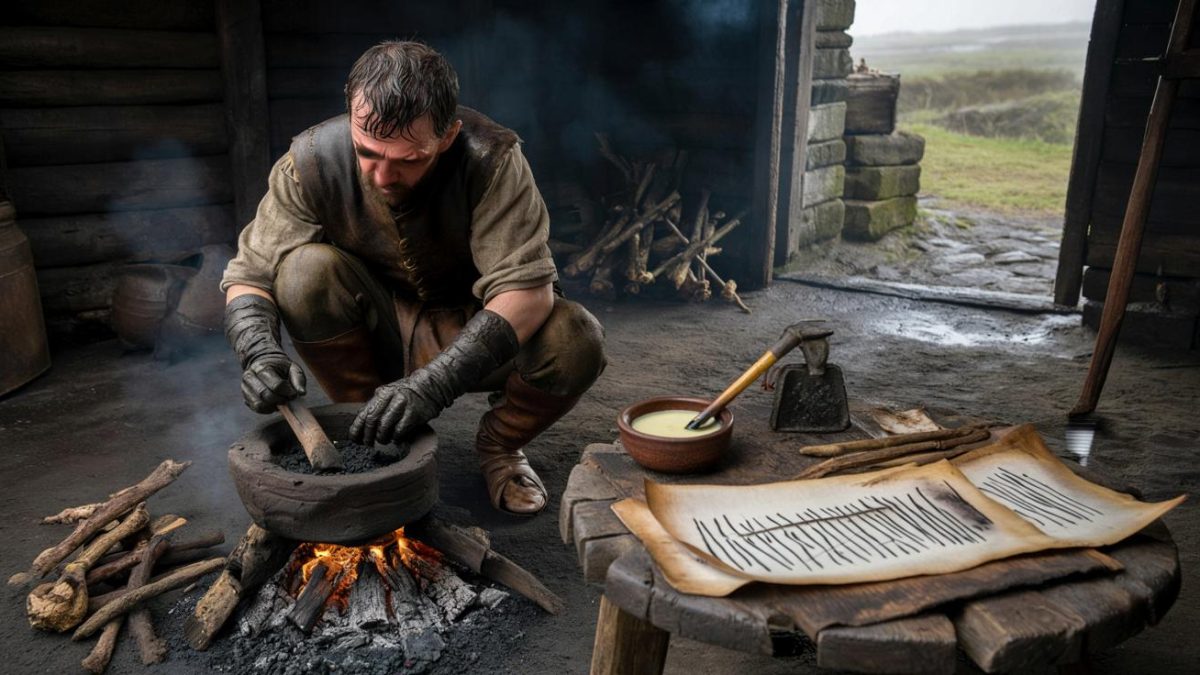
For centuries, the fading light of the Roman Empire has captivated historians and archaeologists alike. But deep within the crumbling walls of an ancient fortress in northern England, a remarkable discovery has shed new light on the daily lives of the empire’s soldiers. Hidden away in the damp, wooden archives of Vindolanda, a cache of ancient writing tablets has revealed a surprising secret: the Roman legionnaires were not just wielding swords, but also acting as amateur chemists, mixing their own specialized ink for their military correspondence.
This unexpected glimpse into the past offers a unique perspective on the resourcefulness and ingenuity of the Roman soldiers stationed at the empire’s far-flung outposts. Their self-reliance and adaptability in the face of limited resources provide a fascinating counterpoint to the well-documented grandeur of the Roman legions.
Vindolanda: A Treasure Trove of Ancient Scribblings
Situated just south of Hadrian’s Wall, the Roman fort of Vindolanda has long been a treasure trove for historians and archaeologists. Unlike many other ancient sites, the fort’s unique environmental conditions have preserved a remarkable collection of everyday objects, from leather shoes and wooden tools to the precious writing tablets that have captivated scholars.
These thin, wooden slabs, bearing the faint impressions of handwritten messages, offer a rare glimpse into the daily lives of the Roman soldiers stationed at the outpost. From requisition orders and military correspondence to personal letters and even party invitations, the Vindolanda tablets have provided an unparalleled window into the past.
But among these ancient scribblings, one discovery has stood out: the evidence of the soldiers’ own homemade ink, a testament to their resourcefulness and adaptability in the face of the challenges of life on the empire’s remote frontiers.
Mixing Ink in the Shadows of the Roman Outpost
In the damp, dimly lit confines of the Vindolanda fort, the Roman soldiers were not content to rely solely on the supplied writing materials. Instead, they took matters into their own hands, literally, by mixing their own specialized ink for their daily correspondence and record-keeping.
Analyzing the chemical composition of the ink used on the Vindolanda tablets, researchers have uncovered a fascinating story of ancient DIY. The soldiers were not simply using a basic carbon-based ink, but rather a more complex concoction that incorporated metallic compounds, likely derived from local resources.
This homemade ink, with its distinctive hues and properties, suggests that the Roman legionnaires were not merely following orders, but actively engaged in the process of adapting to their environment and finding creative solutions to the challenges they faced.
- ➡Nie mehr Unkraut im Kies: Mit diesem Profi-Trick bleibt der Garten dauerhaft sauber
- ➡Wir reisen, wir erledigen unsere Einkäufe: alles auf Staatskosten“ : Ohne je gearbeitet zu haben, kassiert dieses Rentnerpaar über 1.600 Euro im Monat dank Solidaritätsrente
- ➡Ofenhit für kalte Tage: Gefüllte Ofenkartoffeln mit Pilzen und Käse
- ➡Geheimtipp im Indischen Ozean: Diese Trauminsel schlägt sogar Mauritius
Resourcefulness and Resilience on the Frontier
The discovery of the soldiers’ homemade ink highlights the remarkable resourcefulness and resilience of the Roman military, even in the most remote and challenging outposts of the empire. Faced with limited supplies and the harsh realities of life on the frontier, these legionnaires demonstrated a level of self-reliance and problem-solving that challenges the traditional image of the Roman soldier as a rigid, unquestioning automaton.
By taking the initiative to mix their own ink, the Vindolanda soldiers were not only ensuring the smooth flow of military communication, but also asserting their own agency and adaptability in the face of adversity. This small but significant act of DIY chemistry speaks volumes about the ingenuity and resilience that helped sustain the Roman Empire, even at its farthest reaches.
As archaeologists continue to uncover the secrets of Vindolanda and other Roman outposts, the story of the soldiers’ homemade ink serves as a reminder that the true strength of the Roman legions lay not just in their military might, but also in the resourcefulness and adaptability of the individual men who made up its ranks.
Insights from the Ink: What the Vindolanda Tablets Reveal
Beyond the fascinating tale of the soldiers’ DIY ink-making, the Vindolanda tablets offer a wealth of insights into the daily lives and concerns of the Roman military. From the mundane to the extraordinary, these ancient documents provide a rare and invaluable glimpse into the workings of the empire.
The tablets reveal the soldiers’ preoccupations with everything from supplies and troop movements to personal matters and social events. They offer a window into the complex networks of communication and bureaucracy that underpinned the Roman military machine, as well as the individual experiences and perspectives of the men stationed at the outpost.
By studying the contents of these ancient writings, researchers have been able to piece together a more nuanced and multifaceted understanding of the Roman Empire, one that goes beyond the usual narratives of conquest and imperial grandeur.
The Enduring Legacy of the Vindolanda Tablets
The discovery of the Vindolanda tablets, and the remarkable story of the soldiers’ homemade ink, has sparked a renewed fascination with the everyday experiences of life in the Roman Empire. These ancient scribblings have not only provided invaluable insights into the past, but have also inspired new ways of thinking about the resilience and adaptability of the Roman military.
As researchers continue to analyze and interpret the wealth of information contained in the Vindolanda tablets, the legacy of these ancient documents continues to grow. From the insights they offer into the daily lives of Roman soldiers to the lessons they hold about the power of resourcefulness and innovation, the Vindolanda tablets stand as a testament to the enduring ingenuity of the human spirit, even in the face of the most daunting challenges.
- ➡Was deine Frisur wirklich über deine Persönlichkeit verrät
- ➡Diese unsichtbare Veränderung im Regen erhöht das Hochwasserrisiko dramatisch
- ➡Wer mühelos mit Fremden plaudert, hat meist genau dieses Persönlichkeitsmerkmal
- ➡Spanien erlebt den nassesten Winter seit Jahrzehnten – Gefahr von Extremfluten wächst
In the end, the story of the soldiers’ homemade ink serves as a poignant reminder that the true strength of the Roman Empire lay not just in its military might, but in the resilience and adaptability of the individuals who made up its ranks. It is a story that continues to captivate and inspire, even centuries after the last Roman soldier has left the shadows of Vindolanda.
Exploring the Chemical Secrets of the Vindolanda Ink
As researchers delve deeper into the composition of the ink used by the Roman soldiers at Vindolanda, they have uncovered a fascinating story of ancient chemistry and innovation. Through advanced analytical techniques, scientists have been able to identify the key ingredients and manufacturing processes that went into the soldiers’ homemade ink.
One of the most striking discoveries is the presence of metallic compounds, such as iron and copper, which the soldiers likely harvested from local resources to create their specialized writing fluid. This more complex and sophisticated ink formula suggests that the legionnaires were not simply relying on basic carbon-based pigments, but were actively experimenting with different materials and techniques to produce a superior product.
By understanding the chemical makeup of the Vindolanda ink, researchers have been able to gain new insights into the resourcefulness and technical skills of the Roman soldiers. This knowledge not only sheds light on the daily lives and concerns of the men stationed at the outpost, but also highlights the broader context of scientific and technological innovation that underpinned the Roman Empire.
- ➡Australische Forscher zeigen Quantumbatterie, die kabellos in einer Sekunde lädt
- ➡Genialer Tomaten-Trick: Wie eine Supermarktfrucht hunderte Pflanzen liefert
- ➡Seit 10 Jahren volle Schalen: Diese Pflanzregel macht Himbeeren zur Dauer-Ernte
- ➡Schock im Haushalt: Warum Ihr Geschirrspüler ein Keim-Hotspot ist – und wie Sie ihn wirklich sauber kriegen
The Vindolanda Tablets: A Window into the Past
In the grand scheme of the Roman Empire, the Vindolanda tablets may seem like a small and insignificant artifact. But in the hands of skilled researchers and historians, these ancient scribblings have become a powerful tool for understanding the complex realities of life in the ancient world.
From the soldiers’ homemade ink to the diverse range of topics covered in the tablets, the Vindolanda collection offers a rare and invaluable glimpse into the daily lives, concerns, and perspectives of the men who served at the empire’s remote outposts. By studying these ancient documents, scholars have been able to challenge and expand the traditional narratives of Roman history, shedding new light on the resilience, ingenuity, and diversity that underpinned the rise and fall of one of the world’s greatest civilizations.
As the Vindolanda tablets continue to yield their secrets, the story of the soldiers’ homemade ink serves as a powerful reminder of the enduring human spirit that thrived even in the shadows of the Roman Empire. It is a testament to the resourcefulness and adaptability that have always been at the heart of human civilization, and a testament to the enduring power of the written word to bridge the divides of time and space.
Conclusion: The Lasting Significance of the Vindolanda Discovery
The discovery of the Vindolanda tablets, and the remarkable story of the soldiers’ homemade ink, has had a profound impact on our understanding of the Roman Empire and the daily lives of its legionnaires. This unexpected glimpse into the past has not only captivated scholars and the public alike, but has also challenged many of the traditional assumptions about the rigid and unquestioning nature of the Roman military.
Through the lens of the soldiers’ resourcefulness and adaptability, the Vindolanda tablets have opened up new perspectives on the complex social, economic, and technological realities that underpinned the Roman Empire. From the insights they offer into the supply chains and communication networks of the military to the glimpses they provide of the individual experiences and concerns of the soldiers, these ancient documents have become an invaluable resource for historians and archaeologists.
As research into the Vindolanda tablets continues, the story of the soldiers’ homemade ink is poised to become an enduring symbol of the resilience and ingenuity that have always been at the heart of human civilization. It is a testament to the power of the written word to bridge the divides of time and space, and a reminder that even in the face of the most daunting challenges, the human spirit will always find a way to adapt and thrive.
How were the Vindolanda tablets discovered?
The Vindolanda tablets were discovered during excavations of the Roman fort at Vindolanda, located just south of Hadrian’s Wall in northern England. The site’s unique environmental conditions, including the presence of waterlogged soil, allowed for the preservation of a vast collection of everyday objects, including thousands of wooden writing tablets that had been used by the soldiers stationed at the fort.
What kind of information is contained in the Vindolanda tablets?
The Vindolanda tablets cover a wide range of topics, from military correspondence and supply orders to personal letters and even party invitations. They offer a rare and invaluable glimpse into the daily lives and concerns of the Roman soldiers stationed at the remote outpost, providing insights into everything from the logistics of the empire to the individual experiences and perspectives of the legionnaires.
How did the soldiers make their own ink?
Analysis of the ink used on the Vindolanda tablets has revealed that the Roman soldiers were not simply using a basic carbon-based ink, but rather a more complex concoction that incorporated metallic compounds, likely derived from local resources. This homemade ink, with its distinctive hues and properties, suggests that the legionnaires were actively engaged in the process of adapting to their environment and finding creative solutions to the challenges they faced.
What can the Vindolanda tablets tell us about the Roman Empire?
The Vindolanda tablets offer a wealth of insights into the daily workings and concerns of the Roman Empire, going beyond the usual narratives of conquest and imperial grandeur. By studying the contents of these ancient documents, researchers have been able to piece together a more nuanced and multifaceted understanding of the empire, from the complex networks of communication and bureaucracy that underpinned the military machine to the individual experiences and perspectives of the soldiers stationed at the remote outposts.
How have the Vindolanda tablets influenced our understanding of the Roman military?
The discovery of the Vindolanda tablets, and the remarkable story of the soldiers’ homemade ink, has challenged many of the traditional assumptions about the rigid and unquestioning nature of the Roman military. The tablets reveal the legionnaires as resourceful, adaptable, and engaged individuals who were actively shaping their own experiences and finding creative solutions to the challenges they faced, even in the most remote and challenging outposts of the empire.
What is the lasting significance of the Vindolanda tablets?
The Vindolanda tablets have become an invaluable resource for historians and archaeologists, offering a rare and invaluable glimpse into the daily lives, concerns, and perspectives of the men who served in the Roman Empire. Beyond the insights they provide into the workings of the empire, the tablets also serve as a testament to the resilience and ingenuity of the human spirit, even in the face of the most daunting challenges. As research into the Vindolanda collection continues, the story of the soldiers’ homemade ink is poised to become an enduring symbol of the power of the written word to bridge the divides of time and space.
How have advances in technology helped researchers study the Vindolanda tablets?
The application of advanced analytical techniques, such as chemical analysis and digital imaging, has been instrumental in revealing the secrets of the Vindolanda tablets. By studying the composition and properties of the ink used by the Roman soldiers, researchers have been able to gain new insights into the resourcefulness and technical skills of the legionnaires, as well as the broader context of scientific and technological innovation that underpinned the Roman Empire.
What challenges have researchers faced in studying the Vindolanda tablets?
The Vindolanda tablets present a number of unique challenges for researchers, from the fragile and delicate nature of the wooden writing surfaces to the difficulty of deciphering the faint impressions of the ancient handwriting. Additionally, the remote location of the Vindolanda site and the need for specialized equipment and expertise have added to the complexity of studying these ancient documents. Despite these challenges, the determination and ingenuity of researchers have allowed them to uncover the remarkable stories and insights contained within the Vindolanda tablets.
How have the Vindolanda tablets captured the public’s imagination?
The Vindolanda tablets have captivated the public’s imagination, offering a rare and tangible connection to the daily lives and experiences of the Roman soldiers who once occupied the remote outpost. The story of the soldiers’ homemade ink, in particular, has resonated with audiences, as it provides a vivid and unexpected glimpse into the resourcefulness and adaptability of the legionnaires. The Vindolanda tablets have become a symbol of the enduring power of the written word and the resilience of the human spirit, even in the face of the most daunting challenges.