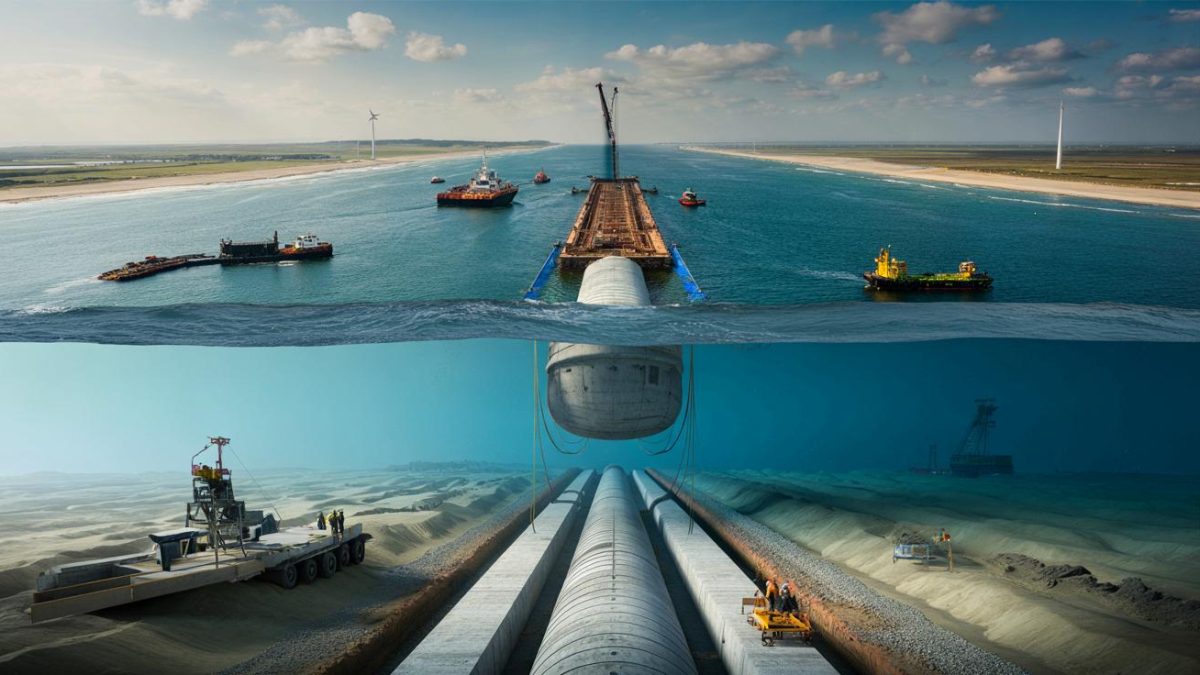
Beneath the calm waters of the Fehmarnbelt, a remarkable engineering feat is unfolding. Connecting the German island of Fehmarn to the Danish island of Lolland, the Fehmarnbelt Tunnel is poised to become the world’s longest and largest immersed tunnel. This ambitious project promises to revolutionize transportation and connectivity between Scandinavia and Central Europe, but its sheer scale and technical complexity make it a true marvel of modern engineering.
What sets this tunnel apart is its unique construction method, known as the “immersed tunnel” technique. Unlike traditional bored tunnels, the Fehmarnbelt Tunnel will be assembled in sections on land, towed into place, and then submerged and secured to the seabed. This innovative approach allows for greater control and precision, ensuring the tunnel’s structural integrity in the face of the challenging Ostsee environment.
As Europe invests heavily in this groundbreaking infrastructure project, the Fehmarnbelt Tunnel stands as a testament to the region’s commitment to economic and social integration. By significantly reducing travel times between Germany and Denmark, this engineering marvel will not only enhance connectivity but also unlock new opportunities for businesses, tourists, and local communities on both sides of the border.
Tackling the Challenges of the Ostsee Seabed
Constructing a tunnel of this scale in the Ostsee poses a unique set of challenges. The seabed is composed of complex geological layers, ranging from soft, clay-rich sediments to more rigid, rocky formations. This heterogeneous terrain requires meticulous planning and engineering solutions to ensure the tunnel’s stability and safety.
To address these challenges, the project team has conducted extensive surveys and geological assessments to map the seabed in detail. Advanced techniques, such as seismic imaging and soil sampling, have provided valuable insights into the composition and behavior of the Ostsee’s underwater terrain.
Based on this detailed analysis, the engineers have designed a robust foundation system that will anchor the tunnel securely to the seabed. This includes the use of reinforced concrete structures and advanced grouting techniques to stabilize the surrounding soil and rock. By meticulously accounting for the unique characteristics of the Ostsee environment, the project team aims to ensure the tunnel’s long-term resilience.
A Pioneering Immersed Tunnel Technique
The Fehmarnbelt Tunnel’s construction method sets it apart from traditional bored tunnels. Instead of drilling through the seabed, the tunnel will be assembled in sections on land, towed into position, and then lowered and secured to the seafloor.
This immersed tunnel approach offers several advantages. Firstly, it allows for greater control over the construction process, as the tunnel sections can be meticulously fabricated and inspected in a controlled environment. Secondly, the immersed technique reduces the environmental impact, as it avoids the need for extensive drilling and excavation work that can disrupt the sensitive Ostsee ecosystem.
- ➡Warum manche Menschen nie verzeihen: Die versteckte Logik von Groll
- ➡Geniale Muffin-Blech-Idee: Herzhafte Thunfisch-Flans in nur 15 Minuten vorbereiten
- ➡Blumen dekorieren wie ein Profi: So funktioniert die geniale 3-5-8-Regel
- ➡Beruf, Stress, langer Arbeitstag: Ist ein Wohnungskatze trotzdem glücklich?
The tunnel sections, each measuring around 217 meters in length and weighing up to 73,000 tons, will be transported by specialized barges and then carefully lowered into pre-dredged trenches on the seabed. Once in place, the sections will be connected and sealed, creating a continuous, watertight structure that will span the Fehmarnbelt.
Enhancing Connectivity and Economic Integration
The Fehmarnbelt Tunnel’s significance extends far beyond its engineering marvels. This ambitious project is a key component in Europe’s efforts to strengthen economic and social integration across the continent.
By reducing the travel time between Germany and Denmark to just 7 minutes, the tunnel will revolutionize transportation links between Scandinavia and Central Europe. This will not only benefit commuters and travelers but also open up new opportunities for businesses, tourism, and cross-border collaboration.
The project’s economic impact is expected to be substantial. Estimates suggest that the tunnel could generate billions in additional economic activity, creating thousands of jobs and boosting trade and investment across the region. Moreover, the improved connectivity will enhance the region’s attractiveness for businesses and talent, further fueling economic growth and prosperity.
A Showcase of Modern Engineering
The Fehmarnbelt Tunnel stands as a testament to the ingenuity and technical prowess of modern engineering. From the meticulous planning and geological assessments to the innovative construction techniques, every aspect of this project reflects the cutting edge of civil engineering.
For engineers and infrastructure experts, the Fehmarnbelt Tunnel serves as a valuable case study, showcasing the latest advancements in tunnel design, construction, and project management. The lessons learned from this ambitious endeavor will undoubtedly inform and inspire future infrastructure projects around the world.
Beyond its technical achievements, the Fehmarnbelt Tunnel also represents a broader vision for a more connected and integrated Europe. As the continent continues to invest in transformative infrastructure projects, this engineering marvel stands as a symbol of the region’s commitment to economic and social cohesion.
The Future of Mobility and Connectivity
As the Fehmarnbelt Tunnel nears completion, it is poised to reshape the future of transportation and connectivity between Scandinavia and Central Europe. The tunnel’s impact will be felt not only in terms of reduced travel times but also in the way it facilitates the movement of people, goods, and ideas across borders.
Beyond its immediate benefits, the Fehmarnbelt Tunnel also represents a forward-looking vision for sustainable and efficient transportation. By providing a seamless, low-emission link between Denmark and Germany, the tunnel aligns with Europe’s broader goals of reducing greenhouse gas emissions and promoting eco-friendly mobility solutions.
As the world looks to the future, the Fehmarnbelt Tunnel stands as a shining example of how ambitious infrastructure projects can transform the landscape of transportation and connectivity. This engineering marvel will not only serve as a vital transportation link but also inspire new ideas and innovations that will shape the way we move and interact in the years to come.
FAQ
What is the Fehmarnbelt Tunnel?
The Fehmarnbelt Tunnel is an ambitious infrastructure project that aims to connect the German island of Fehmarn with the Danish island of Lolland. Once completed, it will be the world’s longest and largest immersed tunnel, spanning the Fehmarnbelt strait.
How long will the Fehmarnbelt Tunnel be?
The Fehmarnbelt Tunnel will be approximately 18 kilometers (11 miles) long, making it the world’s longest immersed tunnel.
- ➡Warum so viele Menschen ab 40 plötzlich lernen, an sich selbst zu denken
- ➡Wasser dringt durch Nachbarwand in Ihr Haus „die Feuchtigkeit breitet sich aus“ wer verantwortlich ist und wer zahlen muss
- ➡Darum legen immer mehr Menschen Alufolie ins Portemonnaie und schwören auf den Effekt
- ➡NASA plant nuklear angetriebenes Mars-Schiff – Start schon 2028
What is the purpose of the Fehmarnbelt Tunnel?
The primary purpose of the Fehmarnbelt Tunnel is to enhance connectivity and transportation links between Scandinavia and Central Europe. By reducing travel times between Germany and Denmark to just 7 minutes, the tunnel will facilitate the movement of people, goods, and ideas across borders.
How is the Fehmarnbelt Tunnel being constructed?
The Fehmarnbelt Tunnel is being constructed using an innovative “immersed tunnel” technique. Instead of drilling through the seabed, the tunnel sections are being assembled on land, towed into position, and then lowered and secured to the seafloor.
What are the key challenges in building the Fehmarnbelt Tunnel?
The primary challenges in building the Fehmarnbelt Tunnel include navigating the complex geology of the Ostsee seabed, ensuring the tunnel’s structural integrity in the face of environmental factors, and coordinating the massive scale and logistics of the construction process.
What are the expected benefits of the Fehmarnbelt Tunnel?
The Fehmarnbelt Tunnel is expected to bring significant economic and social benefits, including reduced travel times, enhanced trade and investment opportunities, and increased cross-border collaboration between Scandinavia and Central Europe.
- ➡Mit diesem Profi-Trick gelingt die Kartoffelernte jedes Jahr bombensicher
- ➡Kletterkraut im Garten: Diese „Unkraut“-Triebe bringen bis zu 1.000 Euro pro Kilo
- ➡Schock-Studie 2026: Dieses beliebte Grünzeug ist der größte Pestizid-Fallensteller
- ➡Genialer Karotten-Trick: So verhindern Sie Gabelwurzeln schon beim Säen
How long will the Fehmarnbelt Tunnel take to complete?
The Fehmarnbelt Tunnel project is currently estimated to be completed by 2029, after years of planning, design, and construction work.
Who is funding the Fehmarnbelt Tunnel project?
The Fehmarnbelt Tunnel project is being funded primarily by the governments of Germany and Denmark, with additional support from the European Union’s Connecting Europe Facility program.