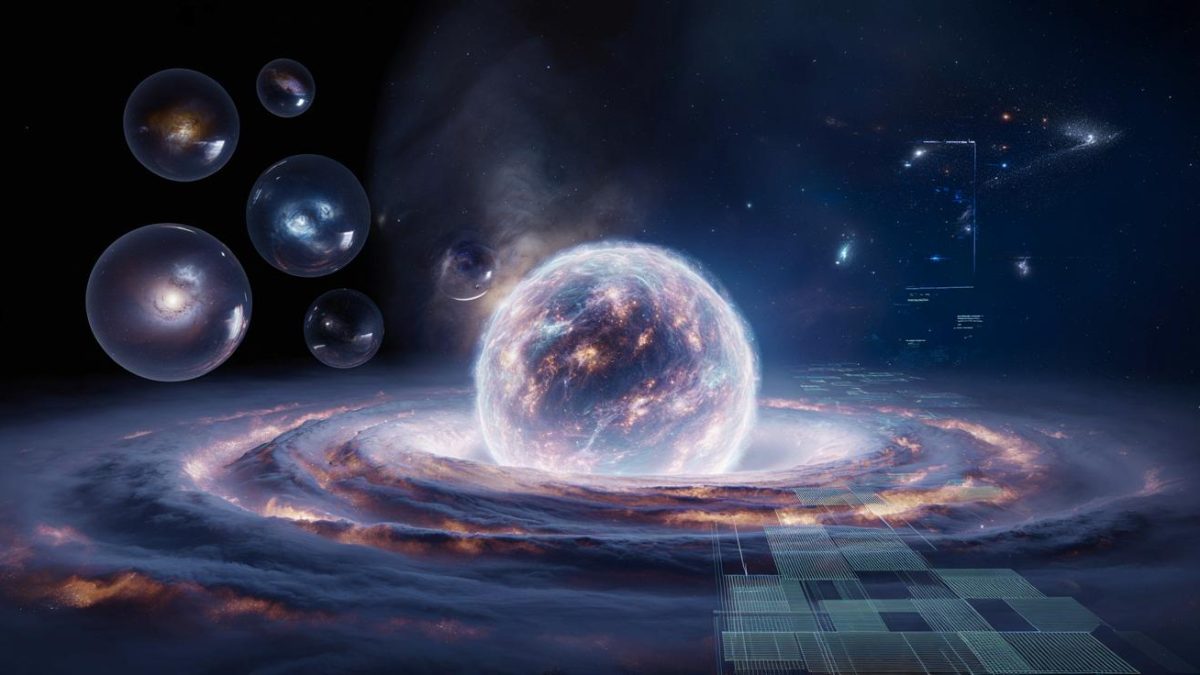
The origin of the universe has captivated the human imagination for centuries. From ancient creation myths to modern scientific theories, the question of how our cosmos came into being has been the subject of endless speculation and debate. But now, cosmologists are delivering surprisingly concrete answers that are challenging our long-held beliefs.
As we gaze up at the night sky, the mystery of the universe’s beginnings seems to deepen with every passing year. Is the Big Bang the true story of our cosmic origins? Or could our universe be just one of many, part of a vast Multiverse? And what if our reality is nothing more than a highly advanced computer simulation? The search for the ultimate truth about the nature of existence has never been more tantalizing.
The Big Bang: The Standard Model for the Beginning of Space and Time
For decades, the Big Bang theory has reigned as the dominant scientific explanation for the origin of the universe. According to this model, the entire universe was once concentrated in a single, infinitely dense point known as a singularity. Around 13.8 billion years ago, this primordial dot exploded in a cataclysmic event, giving rise to the fundamental forces, particles, and the fabric of space-time as we know it.
As the universe rapidly expanded and cooled, matter began to coalesce, eventually forming the stars, galaxies, and cosmic structures we observe today. The evidence for the Big Bang is compelling, from the cosmic microwave background radiation to the abundance of light elements in the universe. But despite its success, the theory still leaves many unanswered questions about the true nature of the universe’s beginning.
One of the biggest puzzles is what came before the Big Bang. Some cosmologists have proposed that our universe may have emerged from a previous cosmic cycle, like a cosmic “phoenix” rising from the ashes of a previous iteration. Others suggest that the Big Bang may have been triggered by the collision of two parallel universes in a Multiverse.
The Steady-State Cosmos: An Eternal, Self-Renewing Universe
While the Big Bang has become the standard model, it wasn’t always the dominant theory. In the early 20th century, the influential British astronomer Fred Hoyle championed an alternative known as the Steady-State theory. According to this view, the universe has no beginning or end, but rather maintains a constant average density through the continuous creation of new matter.
Hoyle and his colleagues argued that the universe’s expansion is balanced by the spontaneous formation of new hydrogen atoms, keeping the overall structure stable and unchanging over time. This idea was in direct contrast to the Big Bang, which posits a universe that began in a hot, dense state and has been expanding and cooling ever since.
The Steady-State theory had its adherents for several decades, but it ultimately fell out of favor as evidence for the Big Bang mounted in the 1960s. The discovery of the cosmic microwave background radiation, along with observations of the universe’s expansion and the formation of elements, provided overwhelming support for the Big Bang model. Today, the Steady-State theory is largely considered a historical curiosity, though some fringe thinkers still hold out hope for its revival.
The Multiverse: Is Our Universe Just One of Many?
As the Big Bang theory has become increasingly well-established, some cosmologists have proposed an even more radical idea: the Multiverse. According to this concept, our universe is just one of potentially countless “bubble universes” that have emerged from a vast, interconnected reality.
The Multiverse theory suggests that the Big Bang was not a unique event, but rather one of many such explosions that have given rise to distinct universes with their own physical laws and properties. These parallel worlds may be unimaginably different from our own, with varying fundamental constants, dimensions, and even the presence or absence of matter and energy.
The idea of the Multiverse has gained traction in recent years, particularly among string theorists and quantum physicists. Some researchers believe that the Multiverse could explain the seemingly fine-tuned nature of our universe, where the fundamental forces and constants appear to be precisely calibrated to allow for the existence of complex structures like stars, galaxies, and even life. If our universe is just one of many, the argument goes, then the conditions for our existence are more likely to be met somewhere in the Multiverse.
The Simulation Hypothesis: Living in a Gigantic Computer Program
While the Multiverse may seem like the stuff of science fiction, an even more radical idea has been gaining ground in recent years: the Simulation Hypothesis. This mind-bending concept posits that our entire universe, including all of its physical laws and the beings that inhabit it, may be nothing more than a highly advanced computer simulation.
The Simulation Hypothesis was first proposed by the philosopher Nick Bostrom, who argued that it’s possible that an incredibly sophisticated future civilization could have the technological capability to create simulated realities indistinguishable from our own. If this is the case, then the odds are high that we are living in such a simulation rather than a “base” reality.
The idea has gained traction among some scientists and tech luminaries, who point to the exponential growth of computing power and the increasing sophistication of virtual worlds as evidence that a simulation of our universe may be technologically feasible. Some even suggest that the occasional “glitches” we observe in the universe could be signs that our reality is indeed a simulation.
Which Model Has the Upper Hand?
As the debate over the origin of the universe rages on, it’s clear that the traditional Big Bang theory remains the most well-established and widely accepted model among mainstream cosmologists. The evidence for the Big Bang’s basic premises – the expansion of the universe, the cosmic microwave background radiation, and the abundance of light elements – is simply too compelling to ignore.
However, the Multiverse and Simulation Hypothesis theories continue to capture the imagination of many scientists and philosophers. While these ideas remain speculative and lack the same level of empirical support as the Big Bang, they offer tantalizing possibilities that challenge our fundamental understanding of reality.
Ultimately, the search for the true origin of the universe is an ongoing process, with new observations and theoretical breakthroughs constantly reshaping our understanding. As we continue to explore the cosmos and push the boundaries of our knowledge, the answers to these profound questions may become clearer – or perhaps even more elusive than ever before.
How Researchers Test Theories About the Universe
Cosmologists and astrophysicists use a variety of techniques to test and refine their theories about the origin and evolution of the universe. Some of the key methods they employ include:
| Method | Description |
|---|---|
| Observational Data | Gathering and analyzing data from telescopes, satellites, and other observational instruments to look for evidence that supports or contradicts various models. |
| Computer Simulations | Running complex computer simulations to model the behavior of the universe based on different theoretical frameworks and compare the results to observations. |
| Theoretical Calculations | Developing mathematical models and equations to describe the underlying physical processes that govern the universe’s evolution and structure. |
| Experiments | Conducting experiments in particle accelerators and other high-energy physics facilities to test specific predictions of cosmological theories. |
By combining these various approaches, cosmologists are able to continually refine and test their theories, gradually building a more comprehensive understanding of the universe’s origins and development. As new observations and experimental results emerge, existing models are either validated or challenged, leading to the emergence of new, more accurate theories.
Key Concepts in Cosmology
To fully understand the current state of cosmological research, it’s helpful to familiarize oneself with some of the key concepts and terms that are commonly used in the field:
| Concept | Definition |
|---|---|
| Singularity | A point in space-time where the laws of physics as we understand them break down, such as the initial state of the universe in the Big Bang theory. |
| Cosmic Microwave Background (CMB) | The oldest light in the universe, a faint glow of radiation that permeates the cosmos and provides strong evidence for the Big Bang. |
| Dark Matter | An invisible form of matter that makes up the majority of the universe’s mass, but does not interact with light and is not directly observable. |
| Dark Energy | A mysterious force that appears to be driving the accelerated expansion of the universe, despite the gravitational pull of matter. |
| Inflation | A hypothetical period of rapid, exponential expansion in the early universe that helped shape the large-scale structure we observe today. |
Understanding these core concepts is essential for anyone interested in exploring the latest theories and developments in the field of cosmology.
“The universe is not only stranger than we imagine, it is stranger than we can imagine.” – Sir Arthur Eddington, British astrophysicist
Also Read
As Eddington’s famous quote suggests, the true nature of the cosmos may forever remain beyond our full comprehension. But the pursuit of understanding the origins of the universe continues to captivate the human spirit, driving us to explore the deepest mysteries of existence.
“We are just an advanced breed of monkeys on a minor planet of a very average star. But we can understand the Universe. That makes us something very special.” – Stephen Hawking, renowned theoretical physicist
Despite the humbling vastness of the universe, the fact that we can even contemplate our own cosmic origins is a testament to the remarkable capacity of the human mind. As we continue to push the boundaries of our knowledge, the answers to the great questions of the universe may one day be revealed – or perhaps, they will remain forever elusive, leaving us to wonder at the profound mysteries of our existence.
What is the Big Bang theory?
The Big Bang theory is the widely accepted scientific model that describes the origin of the universe. It states that the entire universe was once concentrated in a single, incredibly hot and dense point known as a singularity, which exploded in a cataclysmic event around 13.8 billion years ago, giving rise to the fundamental forces, particles, and the fabric of space-time as we know it.
What is the Steady-State theory?
The Steady-State theory was an alternative model proposed in the early 20th century by the British astronomer Fred Hoyle and his colleagues. It posits that the universe has no beginning or end, but rather maintains a constant average density through the continuous creation of new matter, keeping the overall structure stable and unchanging over time. This theory fell out of favor as evidence for the Big Bang mounted in the 1960s.
What is the Multiverse theory?
The Multiverse theory suggests that our universe is just one of potentially countless “bubble universes” that have emerged from a vast, interconnected reality. According to this concept, the Big Bang was not a unique event, but rather one of many such explosions that have given rise to distinct universes with their own physical laws and properties. The Multiverse theory has gained traction among some cosmologists and quantum physicists as a way to explain the seemingly fine-tuned nature of our universe.
What is the Simulation Hypothesis?
The Simulation Hypothesis posits that our entire universe, including all of its physical laws and the beings that inhabit it, may be nothing more than a highly advanced computer simulation. This idea was first proposed by the philosopher Nick Bostrom, who argued that it’s possible that a sufficiently advanced future civilization could create simulated realities indistinguishable from our own. Some scientists and tech luminaries have expressed support for this concept, suggesting that occasional “glitches” in the universe could be signs that our reality is indeed a simulation.
How do cosmologists test their theories about the universe?
Cosmologists and astrophysicists use a variety of techniques to test and refine their theories about the origin and evolution of the universe. These include gathering and analyzing observational data from telescopes and satellites, running complex computer simulations to model the behavior of the universe, developing theoretical calculations to describe the underlying physical processes, and conducting experiments in particle accelerators and other high-energy physics facilities.
What is the current status of the different theories about the universe’s origin?
The Big Bang theory remains the most well-established and widely accepted model among mainstream cosmologists, as the evidence for its basic premises is quite compelling. However, the Multiverse and Simulation Hypothesis theories continue to capture the imagination of many scientists and philosophers, offering tantalizing possibilities that challenge our fundamental understanding of reality. Ultimately, the search for the true origin of the universe is an ongoing process, with new observations and theoretical breakthroughs constantly reshaping our understanding.
What are some key concepts in cosmology?
Some of the key concepts in cosmology include singularity, cosmic microwave background (CMB), dark matter, dark energy, and inflation. Understanding these core ideas is essential for anyone interested in exploring the latest theories and developments in the field of cosmology.
How do the different theories about the universe’s origin compare in terms of empirical support?
The Big Bang theory remains the most well-supported model, with a wealth of observational evidence, such as the cosmic microwave background radiation and the abundance of light elements in the universe. The Multiverse and Simulation Hypothesis theories, while intriguing, currently lack the same level of empirical support as the Big Bang. These alternative models remain speculative and are still being actively explored and debated by the scientific community.