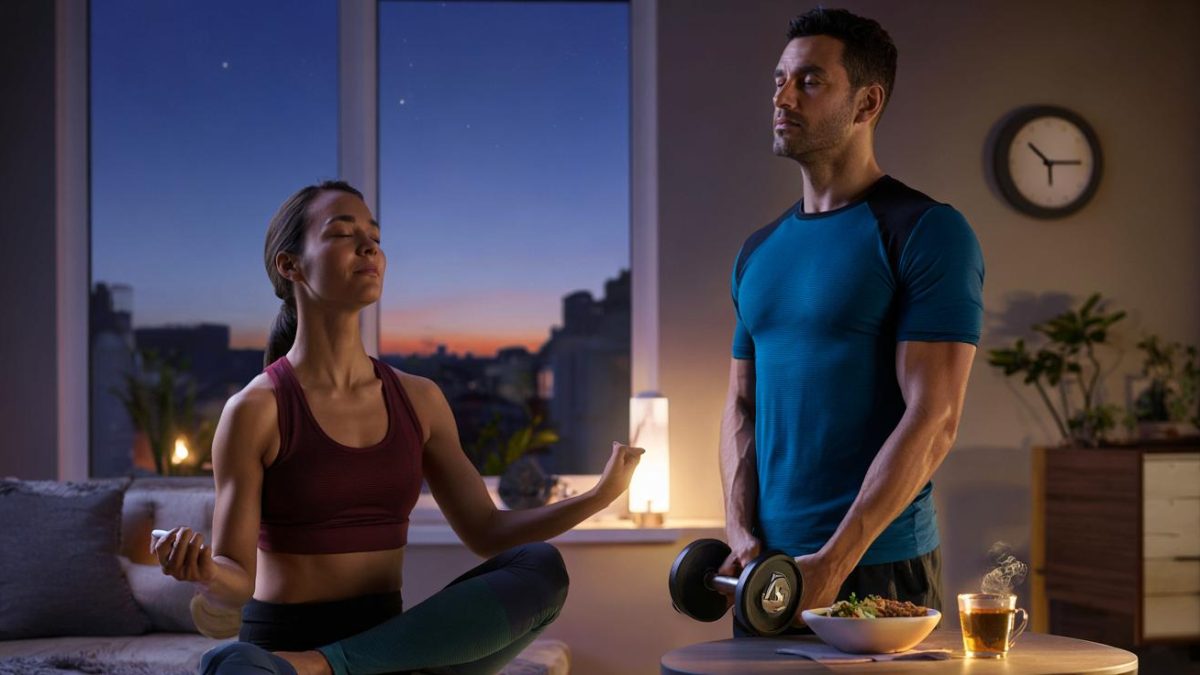
As the sun starts to dip below the horizon, many fitness enthusiasts find themselves torn between the allure of an evening workout and the desire for a peaceful night’s sleep. The age-old debate rages on: does late-day exercise really rob us of slumber, or can it actually serve as a relaxing prelude to a restful night?
The truth is, the impact of evening exercise on sleep quality is a complex interplay of individual factors, from our unique circadian rhythms to the intensity of our workouts. Debunking the myths and understanding the nuances can help us strike the perfect balance between an active lifestyle and a good night’s rest.
The Myth of Nighttime Workouts and Insomnia
For many, the idea of hitting the gym or the running trail in the evening conjures up visions of tossing and turning all night, unable to find the elusive land of nod. However, this commonly held belief is often an oversimplification of a more intricate physiological process.
The key lies in the intensity and timing of the workout. High-intensity exercises performed too close to bedtime can indeed disrupt the body’s natural sleep-wake cycle, as the surge of adrenaline and increased heart rate can make it challenging to wind down. But moderate, low-intensity activities can actually have the opposite effect, helping to regulate the body’s internal clock and promote better sleep.
Moreover, the individual’s chronotype – whether they are a morning lark or a night owl – also plays a significant role in how the body responds to evening exercise. Those with a later circadian rhythm may find that a brisk evening workout is just the ticket to a restful night, while early risers might struggle to unwind after a late-day session.
The Role of Body Temperature in Sleep Quality
Another important factor in the exercise-sleep equation is the body’s core temperature. During exercise, our internal temperature rises, and it’s this post-workout cooling process that can actually aid in the transition to sleep.
As the body temperature begins to drop, it signals to the brain that it’s time to wind down and prepare for slumber. However, if the body remains too warm for too long after a workout, it can interfere with the natural sleep-inducing mechanisms, leading to a restless night.
The solution lies in timing: allowing for a sufficient cool-down period between the end of the workout and bedtime can help ensure that the body’s temperature is in sync with the sleep-wake cycle.
Establishing a Routine for Optimal Sleep and Exercise
While the individual nuances of exercise and sleep may vary, establishing a consistent routine can go a long way in helping to find the right balance. Identifying the optimal timing and intensity of evening workouts, as well as incorporating a calming wind-down routine before bed, can all contribute to a good night’s sleep.
It’s also important to be mindful of any disruptions to the routine, such as late-night work deadlines or social engagements, and to adjust the exercise and sleep schedule accordingly. By tuning in to our bodies’ unique rhythms and needs, we can unlock the restorative power of both physical activity and quality slumber.
Ultimately, the relationship between evening exercise and sleep is not a one-size-fits-all proposition. By understanding the underlying physiological mechanisms and the role of individual factors, we can find the sweet spot that allows us to enjoy the benefits of an active lifestyle without sacrificing the rejuvenation of a good night’s rest.
Expert Insights: Striking the Right Balance
“The key is to find the right intensity and timing of your evening workout. High-intensity exercises too close to bedtime can disrupt your sleep, but moderate, low-impact activities can actually help regulate your body’s internal clock and promote better sleep.”
Also Read– Dr. Emily Splichal, sleep specialist and exercise physiologist
“It’s not just about the workout itself, but also the cool-down process. Allowing your body temperature to gradually decrease after exercise can signal to your brain that it’s time to wind down and prepare for sleep.”
– Dr. Michael Breus, “The Sleep Doctor”
“While there’s no one-size-fits-all solution, establishing a consistent routine and being mindful of your individual needs and rhythms can help you find the perfect balance between exercise and sleep.”
Also Read– Dr. Kimberly Fenn, director of the Sleep and Learning Lab at Michigan State University
Optimizing Your Evening Workout for Better Sleep
To reap the benefits of an evening workout without sacrificing your sleep quality, consider the following tips:
- Opt for lower-intensity exercises like yoga, Pilates, or a brisk walk, rather than high-impact activities like HIIT or heavy weightlifting.
- Aim to finish your workout at least 2-3 hours before your desired bedtime to allow for sufficient cool-down and relaxation.
- Incorporate a calming wind-down routine, such as stretching, meditation, or deep breathing, to help transition your body and mind from active to restful.
- Pay attention to your individual sleep patterns and chronotype, and adjust your exercise schedule accordingly.
FAQs: Unlocking the Sleep-Exercise Balance
Does evening exercise always lead to insomnia?
No, not necessarily. The impact of evening exercise on sleep depends on factors like intensity, timing, and individual circadian rhythms. Moderate, low-intensity activities can actually promote better sleep.
How long should I wait between my workout and bedtime?
Aim for at least 2-3 hours between the end of your workout and your desired bedtime to allow your body temperature to cool down and your mind to relax.
What are some good evening workout options for better sleep?
Low-impact activities like yoga, Pilates, or a brisk walk are excellent choices for evening workouts that can promote better sleep.
How can I establish a consistent exercise and sleep routine?
Identify the optimal timing and intensity of your evening workouts, and create a calming wind-down routine before bed. Be mindful of any disruptions to your routine and adjust accordingly.
Does my chronotype (morning lark or night owl) affect my exercise-sleep balance?
Yes, your individual circadian rhythm plays a significant role in how your body responds to evening exercise. Pay attention to your sleep patterns and adjust your workout schedule accordingly.
Can evening exercise help me fall asleep faster?
Yes, moderate, low-intensity evening workouts can help regulate your body’s internal clock and promote better sleep by aiding the natural cool-down process before bedtime.
How important is the cool-down period after an evening workout?
The cool-down period is crucial, as it allows your body temperature to gradually decrease, signaling to your brain that it’s time to wind down and prepare for sleep.
What are some tips for optimizing my evening workout for better sleep?
Some key tips include choosing low-intensity exercises, timing your workout at least 2-3 hours before bedtime, and incorporating a calming wind-down routine before bed.