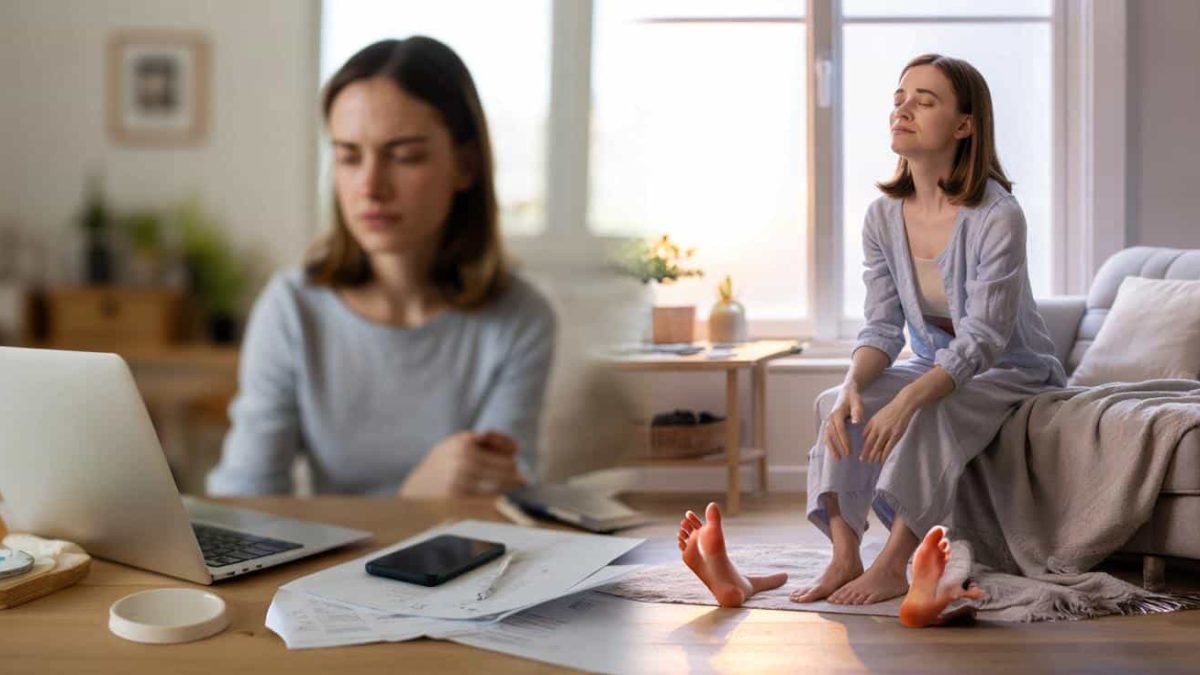
Stress can be a relentless companion, creeping into our daily lives and leaving us feeling overwhelmed, exhausted, and disconnected from ourselves. But what if I told you that there are two simple techniques that can help you regain control and find a sense of calm, even in the midst of the chaos? Prepare to discover the power of your own breath and body to combat the detrimental effects of stress.
In a world where we’re constantly bombarded with demands and distractions, it’s no wonder that so many of us struggle to find moments of peace. From tossing and turning at night to snapping at loved ones, the physical and emotional toll of stress can be severe. But by mastering these two accessible techniques, you can learn to navigate the stressful waters with greater ease and resilience.
Harness the Power of Your Breath
One of the most effective ways to calm the mind and body is through the simple act of breathing. When we’re stressed, our breathing often becomes shallow and rapid, further fueling the cycle of anxiety. By consciously slowing and deepening our breath, we can signal to our nervous system that it’s time to relax.
Try this breathing exercise: Inhale slowly through your nose, feeling your belly expand. Hold the breath for a few seconds, then exhale slowly through your mouth, letting your belly deflate. Repeat this cycle for several minutes, focusing on the sensation of the air moving in and out. You’ll be amazed at how quickly this can help to lower your heart rate and quiet the chatter in your mind.
Practicing this type of mindful breathing on a regular basis can have lasting benefits. It can improve sleep, reduce feelings of anxiety, and even boost your immune system. Incorporate it into your daily routine, whether it’s during your morning commute or right before bed.
Harness the Power of Your Body
In addition to the breath, our bodies can also be a powerful tool in combating stress. The concept of “tension and release” is a simple yet effective way to tap into the body’s natural ability to relax.
Start by tensing a specific muscle group, such as your shoulders or fists, and holding the contraction for several seconds. Then, consciously release the tension, allowing the muscles to fully relax. You may even notice a feeling of warmth or tingling as the tension melts away.
This technique works by creating a contrast between the two states, helping your body to more easily recognize and release the stress it’s been holding onto. It’s a quick, discreet way to find relief, whether you’re sitting at your desk or caught in traffic.
Consistency is Key
Like any skill, mastering these stress-reducing techniques takes practice. It’s important to be patient with yourself and commit to regular, even if brief, sessions. The more you engage with these methods, the more automatic they’ll become, and the more you’ll be able to tap into them when you need them most.
Remember, the goal isn’t to eliminate stress completely – that’s an unrealistic expectation. Instead, aim to develop a toolbox of strategies that you can use to manage stress in a healthy, sustainable way. By taking the time to care for your mind and body, you’ll be better equipped to navigate the challenges of daily life with greater ease and resilience.
Integrating Stress Management into Your Busy Life
We understand that finding the time and energy to prioritize self-care can be a challenge, especially when your schedule is already overflowing. But the truth is, these simple techniques can be easily woven into your daily routine, requiring just a few minutes of your time.
Try pausing for a few deep breaths during your lunch break, or taking a moment to tense and release your muscles while waiting in line. You can even practice mindful breathing while stuck in traffic or as you’re settling into bed at night. The key is to make it a habit, and soon it will become second nature.
Remember, small steps can lead to big changes. By making stress management a consistent part of your life, you’ll not only feel better in the moment but also build long-term resilience to handle whatever challenges come your way.
Additional Strategies for Calming the Mind and Body
While the breathing and tension-release techniques are powerful tools, they’re even more effective when combined with other stress-reducing practices. Consider incorporating activities like yoga, meditation, or gentle exercise into your routine. These holistic approaches can help to soothe both the mind and body, creating a sense of overall well-being.
It’s also important to pay attention to your self-care habits, such as getting enough sleep, eating a balanced diet, and making time for activities you enjoy. By addressing the root causes of stress, you’ll be better equipped to manage its effects when they do arise.
Remember, there’s no one-size-fits-all solution when it comes to stress management. Experiment with different techniques and find what works best for you. The key is to be patient, persistent, and kind to yourself along the way.
- ➡Geheimtipp in Kalifornien: Dieser beeindruckende Mammutwald übertrifft sogar den Sequoia Nationalpark
- ➡Alzheimer-Schock: Forscher finden möglichen Auslöser im Nerven-Inneren
- ➡Audi Q3 gegen BMW X1: welcher Premium-SUV überzeugt 2026 wirklich?
- ➡Warum du Pilze nie waschen sondern nur mit einem feuchten Tuch abreiben solltest
Reclaiming Your Sense of Calm
In a world that often feels like it’s moving at breakneck speed, the ability to find moments of peace and clarity can be truly transformative. By harnessing the power of your breath and body, you can take back control and cultivate a greater sense of calm and resilience.
Remember, you have the innate ability to soothe your own nervous system and quiet the mental chatter. All it takes is a few minutes of mindful practice, and you’ll be well on your way to reclaiming your sense of balance and well-being.
So, take a deep breath, tune into your body, and let the tension melt away. Your path to a more peaceful, stress-free life starts right here, right now.
FAQs
How often should I practice these stress-reducing techniques?
Aim to incorporate these techniques into your daily routine, even if it’s just for a few minutes at a time. Consistency is key, so try to make it a habit rather than relying on it only when you’re feeling overwhelmed.
Can these techniques be used in the moment when I’m feeling stressed?
Absolutely! Both the breathing exercise and the tension-release technique can be done discreetly, even in the middle of a busy day. They’re designed to provide quick relief and help you regain a sense of control.
Will I notice a difference right away, or does it take time to see the benefits?
You may start to feel the calming effects of these techniques almost immediately, as they work to directly activate the parasympathetic nervous system. However, the long-term benefits often take a bit more time and consistency to build. Be patient with yourself and trust the process.
Are there any other lifestyle changes I can make to support my stress management efforts?
Absolutely! In addition to the techniques mentioned, it’s important to focus on overall self-care, such as getting enough sleep, eating a balanced diet, and making time for activities you enjoy. Engaging in regular exercise, practicing mindfulness, and cultivating social connections can also be incredibly beneficial.
What if I forget to practice these techniques or have trouble making them a habit?
Don’t be too hard on yourself! Developing new habits takes time and patience. Try setting reminders or incorporating the techniques into your existing routines. If you slip up, simply acknowledge it and start again. The most important thing is to keep showing up for yourself, even in small ways.
Can these techniques be used by anyone, or are they only effective for certain types of stress?
These techniques can be beneficial for a wide range of stress-related issues, from work-related burnout to personal challenges. They’re designed to work with the body’s natural mechanisms for stress relief, making them accessible and effective for most people. Of course, if you’re dealing with more severe or chronic stress, it’s always a good idea to seek the guidance of a mental health professional.
How can I tell if these techniques are working for me, and what should I do if I don’t feel any different?
Pay attention to how you feel both during and after practicing these techniques. Do you notice a sense of calm, decreased heart rate, or a reduction in physical tension? If you don’t feel any immediate changes, don’t get discouraged. Keep practicing and be patient with yourself. You may also want to try different variations of the techniques or incorporate them into your routine in a way that feels more natural for you.
Are there any potential risks or side effects associated with these stress-reducing practices?
The breathing and tension-release techniques are generally safe and low-risk for most people. However, if you have any underlying health conditions or concerns, it’s always best to consult with your healthcare provider before starting a new practice. They can provide guidance on how to safely incorporate these techniques into your routine.