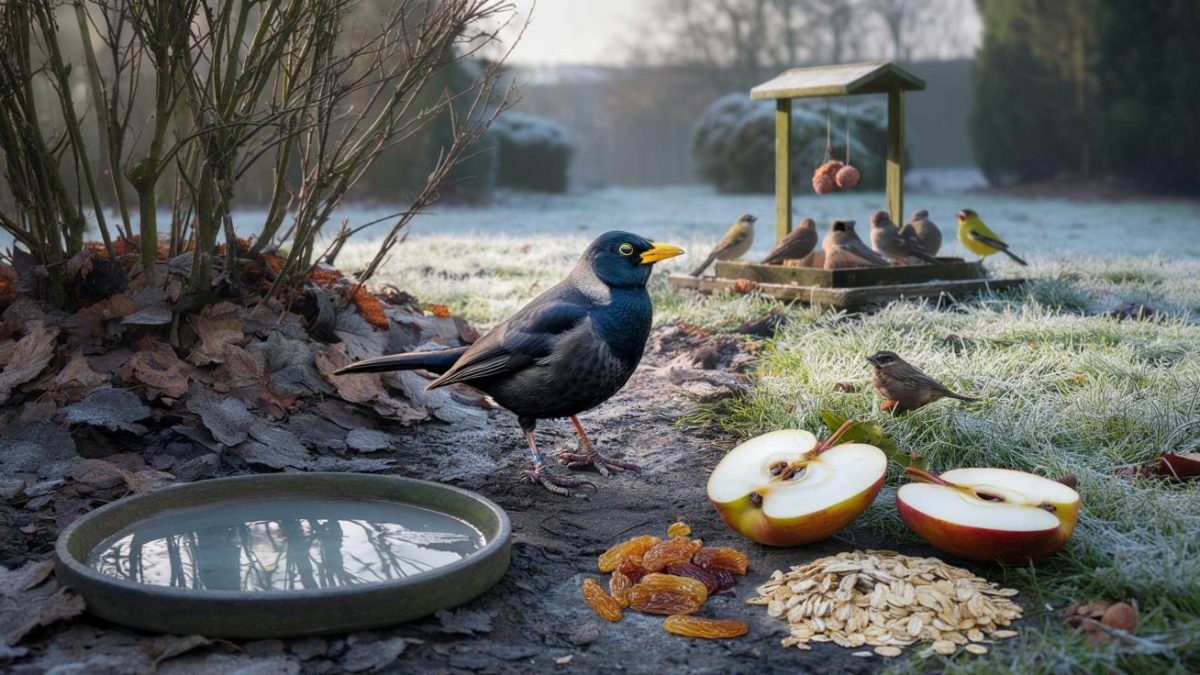
In the depths of winter, as the temperatures plummet and the ground is blanketed in snow, many bird enthusiasts eagerly await the arrival of their feathered friends at the backyard feeders. Yet, one species often remains conspicuously absent – the blackbird, or Amsel, as it’s known in German. While other birds flock to the buffet of seeds and suet, the Amsel seems to turn a blind eye to the temptation. Why is that?
Unbeknownst to many, the Amsel has a unique set of dietary preferences and survival strategies that set it apart from its more seed-loving counterparts. Far from being a simple case of finicky behavior, the Amsel’s avoidance of traditional feeders is a testament to its adaptability and the intricate relationship it has with its natural environment.
The “Soft Beak” and the Amsel’s Dietary Needs
The Amsel is a true omnivore, its diet encompassing a wide range of insects, berries, and even small invertebrates. This diverse palate is reflected in the unique structure of its beak, which is better suited for probing and grasping than for cracking open hard seeds. Unlike the sturdy, pointed beaks of finches and sparrows, the Amsel’s beak is relatively soft and rounded, making it ill-equipped to handle the tough exteriors of many common bird feeder offerings.
As a result, the Amsel often turns its attention to alternative food sources, such as the abundant earthworms and insects that can be found in the leaf litter and soil of its natural habitat. This adaptability allows the Amsel to thrive even in the harshest of winter conditions, when other birds may struggle to find adequate sustenance.
Interestingly, the Amsel’s preference for a varied diet may also contribute to its hesitance to rely on artificial feeders. By foraging for a diverse range of foods, the Amsel ensures that it receives a well-rounded nutritional intake, which can be difficult to replicate in a single feed-based offering.
Leaving the Leaves: A Crucial Survival Strategy
Another key factor in the Amsel’s avoidance of backyard feeders is its reliance on the leaf litter that accumulates on the forest floor. These fallen leaves not only provide shelter and nesting material for the Amsel, but they also harbor a rich source of invertebrate life that the bird depends on for sustenance.
In the winter, when other food sources may be scarce, the Amsel’s ability to forage through the leaf litter becomes a matter of life and death. By leaving the leaves undisturbed, gardeners and homeowners can ensure that the Amsel has access to the vital resources it needs to survive the coldest months of the year.
This strategy, however, may seem counterintuitive to those who are used to tidying up their yards and gardens in preparation for winter. But for the Amsel, the preservation of this natural habitat is essential for its continued wellbeing and the long-term sustainability of its population.
- ➡Warum Hochbegabte Gruppenarbeit im Unterricht oft nicht ertragen
- ➡Google Maps bekommt riesiges AI-Upgrade: 3D-Navigation und Chat-Assistent starten
- ➡Astrologie Warnung Am 24 März 2026 droht diesen Sternzeichen ein folgenschwerer Fehler
- ➡Nie mehr Colageysir: Mit diesem Trick bleibt die Dose beim Öffnen ruhig
Prioritizing Safety: The Amsel’s Cautious Approach
In addition to its dietary preferences and habitat requirements, the Amsel’s cautious nature also plays a role in its avoidance of backyard feeders. As a ground-dwelling bird, the Amsel is particularly vulnerable to predators, such as domestic cats, hawks, and other opportunistic hunters.
Feeders, with their exposed locations and high visibility, can present a significant risk for the Amsel, which prefers to forage in the relative safety of the leaf litter and undergrowth. By avoiding these potentially dangerous areas, the Amsel minimizes its chances of falling victim to predators and increases its chances of survival during the harsh winter months.
This safety-first approach is a hallmark of the Amsel’s behavior and a key factor in its long-term success as a species. By prioritizing its own well-being and understanding the potential risks associated with artificial feeding stations, the Amsel demonstrates a level of intelligence and adaptability that is truly remarkable.
Creating an Amsel-Friendly Garden
For those who wish to support the Amsel population in their local area, there are several steps that can be taken to make the garden a more inviting and supportive environment. The first and most important step is to leave the leaf litter alone, allowing the Amsel to forage undisturbed and access the vital resources it needs.
Additionally, providing dense, shrubby vegetation and evergreen trees can offer the Amsel much-needed cover and protection from predators. By creating a layered, naturalistic landscape, gardeners can mimic the Amsel’s preferred habitat and encourage the birds to take up residence in the area.
While traditional bird feeders may not be the best option for the Amsel, offering a variety of natural food sources, such as berries, suet, and mealworms, can be a welcome supplement to the bird’s diet. By catering to the Amsel’s unique needs and preferences, gardeners can play a crucial role in supporting the long-term survival and well-being of this remarkable species.
The Amsel’s Resilience and Adaptability
Despite its apparent avoidance of traditional bird feeders, the Amsel remains a resilient and adaptable species, capable of thriving in a variety of environments. Its ability to rely on a diverse range of food sources, its dependence on the natural leaf litter, and its cautious approach to potential threats all contribute to its long-term success as a bird species.
By understanding and respecting the Amsel’s unique needs and behaviors, gardeners and bird enthusiasts can play a vital role in preserving this remarkable bird’s presence in our local ecosystems. Through simple actions, such as leaving the leaves alone and providing suitable habitat, we can ensure that the Amsel continues to grace our gardens with its striking black plumage and melodious calls for generations to come.
As we navigate the challenges of the winter season, let us remember that the Amsel’s apparent absence from our feeders is not a sign of disinterest, but rather a testament to its incredible adaptability and the delicate balance it maintains with its natural environment. By embracing the Amsel’s unique requirements, we can foster a deeper appreciation for the diversity and complexity of the avian world that surrounds us.
Feeding Amseln Effectively in Winter
While the Amsel may not be the most frequent visitor to traditional backyard feeders, there are still ways to support this species during the winter months. One effective approach is to offer a varied selection of natural food sources, such as berries, suet, and mealworms, which cater to the Amsel’s diverse dietary needs.
Positioning these food offerings in discreet, sheltered areas of the garden, rather than in exposed feeders, can also help to make the Amsel feel more comfortable and secure. By creating a safe and inviting environment, gardeners can encourage the Amsel to take advantage of these supplementary food sources and boost its chances of survival during the harshest winter conditions.
It’s also important to remember that the Amsel’s reliance on the leaf litter and natural vegetation is a critical component of its survival strategy. By leaving fallen leaves and other organic matter undisturbed, gardeners can ensure that the Amsel has access to the essential invertebrates and shelter it requires, even when other food sources may be scarce.
- ➡Mit 337 Metern Länge und 100000 Tonnen Verdrängung ist dieser Flugzeugträger der größte der Welt und dominiert die Ozeane wie kein anderes Kriegsschiff
- ➡Warum stromlose Pelletöfen jetzt zum Geheimtipp für Zuhause werden
- ➡Was wirklich passiert, wenn du eine Woche lang 8 Gläser Wasser trinkst
- ➡Typ‑2‑Diabetes früh stoppen: So senken Sie Ihr persönliches Risiko
FAQs: Supporting the Amsel in Winter
Why do Amseln avoid traditional bird feeders?
Amseln have a unique dietary preference and beak structure that makes them less suited to the typical seed-based offerings found in many bird feeders. They prefer a varied diet of insects, berries, and invertebrates, which they can better access from the leaf litter and natural vegetation in their environment.
How can I make my garden more Amsel-friendly?
To attract Amseln to your garden, focus on providing dense, shrubby vegetation and leaving the leaf litter undisturbed. Offer a variety of natural food sources, such as berries, suet, and mealworms, in sheltered, discreet locations. Avoid aggressive clearing of the garden, as this can disrupt the Amsel’s preferred habitat.
What are the key benefits of supporting Amseln in winter?
By supporting Amseln in the winter, you’re not only helping to ensure the long-term survival of this species but also contributing to the overall health and biodiversity of your local ecosystem. Amseln play a vital role in controlling insect populations and dispersing seeds, making them an important part of the natural balance.
How do Amseln’s dietary needs differ from other backyard birds?
Unlike many seed-eating birds, Amseln have a more varied and omnivorous diet, relying on a range of insects, berries, and invertebrates. Their unique beak structure is better suited for probing and grasping than cracking open hard seeds, which is why they often avoid traditional bird feeders.
- ➡Beziehungsangst verstehen: Wie Sie emotionale Unsicherheit Schritt für Schritt lösen
- ➡Turbo-Baum aus Asien: Warum der Blitzturbo-Paulownia Gärtner begeistert – und Experten warnt
- ➡Banküberweisungen stehen vier Tage still: Diese Daten treffen alle
- ➡Neue Puma-Sneaker: Dieses Modell macht weiße Turnschuhe plötzlich alt
Is it true that Amseln prefer to forage in leaf litter?
Yes, the leaf litter is a crucial resource for Amseln, as it provides both shelter and a rich source of the invertebrates and insects they depend on for sustenance. Leaving the leaves undisturbed in your garden can greatly benefit the Amsel population, especially during the harsh winter months.
How can I tell if Amseln are visiting my garden?
Look for the distinctive black plumage and yellow beak of the Amsel, as well as their characteristic hopping and foraging behavior on the ground. You may also hear their melodious, whistling calls, which are a reliable sign of their presence in your garden.
Are there any other ways I can support Amseln beyond providing food?
In addition to offering natural food sources and leaving the leaf litter undisturbed, you can also create a more Amsel-friendly environment by planting dense, shrubby vegetation and evergreen trees that provide cover and protection from predators.
How do Amseln’s survival strategies differ from other backyard birds?
Amseln’s focus on a varied, natural diet, their reliance on the leaf litter, and their cautious approach to potential threats set them apart from many other backyard bird species. This adaptability and emphasis on safety are key to the Amsel’s long-term survival, especially during the harsh winter months.