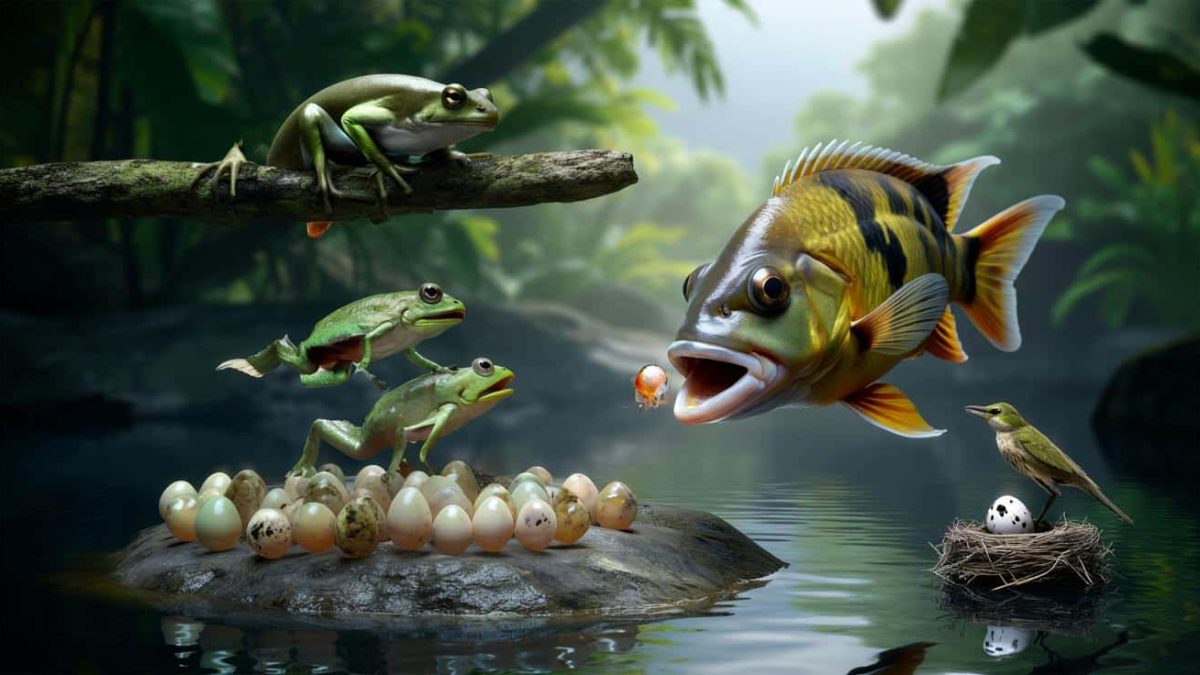
The thought of a mother devouring her own offspring is the stuff of nightmares, but for certain animals in the wild, it is a harsh reality. While the very idea may seem unnatural and disturbing to the human mind, the practice of filial cannibalism – when parents eat their young – is a survival strategy employed by various species across the animal kingdom.
From rodents to birds, and even some fish, this behavior may seem shocking, but it serves a crucial purpose in the harsh realities of nature. Understanding the reasons behind this seemingly unnatural act can shed light on the delicate balance that often exists between parental instinct and the harsh demands of survival.
As we delve deeper into this complex and often misunderstood phenomenon, we’ll explore the biological and evolutionary drivers that can compel even the most nurturing of parents to turn on their own offspring, and how this behavior, while abhorrent to our sensibilities, is a testament to the raw power of natural selection.
The Prevalence of Filial Cannibalism in the Animal Kingdom
Filial cannibalism, the act of a parent consuming its own offspring, is not as rare as one might assume. This behavior has been documented in a wide range of species, from small rodents and birds to larger predators like bears and lions. The reasons behind this practice vary, but often boil down to the harsh realities of survival in the wild.
In some cases, parents may resort to eating their young when resources are scarce, or when the offspring are perceived as weak or unhealthy. This can be a pragmatic decision, as it allows the parent to conserve energy and resources that can be redirected towards the care of healthier, more viable offspring.
Additionally, the act of filial cannibalism can be a means of population control, as it helps to ensure the survival of the fittest by weeding out the weakest members of a litter or brood. This can be especially prevalent in species with large litter sizes, where the parents may need to make tough choices to ensure the overall success of the group.
The Evolutionary Advantage of Filial Cannibalism
While it may seem counterintuitive, filial cannibalism can actually confer significant evolutionary advantages to certain species. By consuming their own young, parents can redirect valuable resources, such as energy and nutrients, towards their own survival and the care of their remaining offspring.
This strategy can be particularly beneficial in environments where resources are scarce or unpredictable, as it allows the parent to adapt and respond to changing conditions. In times of food scarcity, for example, a parent may choose to prioritize its own survival over that of its young, ensuring that at least some of its genetic material is passed on to the next generation.
Additionally, the act of filial cannibalism can serve as a form of population control, helping to maintain a balanced ecosystem and prevent overpopulation of a particular species. By selectively consuming the weakest or least viable offspring, parents can ensure the survival of the strongest and most resilient members of the group.
The Emotional and Psychological Impact of Filial Cannibalism
While the concept of filial cannibalism may be deeply unsettling to the human psyche, it is important to recognize that this behavior is not driven by the same emotional and psychological factors that would influence a human parent’s actions. In the animal kingdom, the decision to consume one’s own offspring is often a pragmatic one, rooted in the harsh realities of survival.
However, the emotional impact of this behavior on the animals themselves is still a subject of debate and research. Some studies suggest that certain species, such as primates, may experience a degree of psychological distress or even grief when engaging in filial cannibalism, indicating that the decision is not made lightly.
Ultimately, the emotional and psychological implications of filial cannibalism in the animal world remain complex and nuanced, underscoring the need for continued scientific exploration and a deeper understanding of the intricate relationship between parental instinct and the demands of survival.
- ➡Geheimnisvolle Würstchen im Teppich: Was Haarballen mit deinem Katze-Magen anrichten
- ➡Ex-Banker macht Brot aus Urgetreide – und züchtet Würmer gegen Lebensmittelverschwendung
- ➡Heuschnupfen im Alter: Mit diesen simplen Tricks bleibt der Frühling endlich erträglich
- ➡Genialer Flaschentipp: Mit diesem Trick gießt du seltener und hältst Schnecken fern
The Role of Stress and Environmental Factors in Filial Cannibalism
Stress and environmental factors play a significant role in the occurrence of filial cannibalism among various species. When animals are faced with challenging conditions, such as food scarcity, overcrowding, or habitat disruption, they may be more likely to resort to consuming their own young as a means of survival.
For example, studies have shown that rodents living in high-density environments are more prone to filial cannibalism, as the competition for resources and the increased stress levels can lead parents to prioritize their own survival over the care of their offspring. Similarly, animals living in areas with unpredictable or scarce food supplies may be more likely to engage in this behavior as a last resort to ensure their own survival.
Understanding the environmental and stress-related factors that contribute to filial cannibalism is crucial for developing effective conservation strategies and mitigating the impact of human activity on vulnerable animal populations. By addressing the root causes of this behavior, we can work towards creating more sustainable and harmonious coexistence between humans and the natural world.
The Ethical Dilemma of Filial Cannibalism
The phenomenon of filial cannibalism in the animal kingdom presents a significant ethical dilemma for human observers. While we may be repulsed by the idea of a parent devouring its own young, it is essential to recognize that this behavior is often a necessary adaptation for survival in the wild.
From a human perspective, the act of a parent consuming its offspring can be seen as a betrayal of the inherent bond between parent and child. However, in the animal kingdom, this behavior is not driven by the same emotional and psychological factors that would influence a human’s actions. Instead, it is a pragmatic response to the harsh realities of life in the natural world.
As we grapple with the ethical implications of filial cannibalism, it is crucial to maintain a balanced and objective understanding of the role it plays in the broader context of natural selection and the survival of species. By recognizing the evolutionary drivers behind this behavior, we can work towards developing more compassionate and effective approaches to conservation and wildlife management.
The Future of Filial Cannibalism Research
As our understanding of the natural world continues to evolve, the study of filial cannibalism remains an important area of scientific exploration. Researchers are constantly working to unravel the complex web of biological, environmental, and behavioral factors that contribute to this phenomenon, with the ultimate goal of developing more comprehensive strategies for wildlife conservation and management.
One promising avenue of research involves the use of advanced technologies, such as tracking devices and remote monitoring, to gain a deeper insight into the behavioral patterns and decision-making processes of animals that engage in filial cannibalism. By better understanding the triggers and environmental conditions that lead to this behavior, scientists can work towards developing more effective interventions and mitigation strategies.
- ➡Fünf prägende Kindheitserinnerungen, die unsere Psyche ein Leben lang beeinflussen
- ➡5 unauffällige Verhaltensweisen, die auf tiefe Einsamkeit hinweisen
- ➡Forscher finden gemeinsamen Faktor bei Menschen, die langsamer altern
- ➡Dank Satelliten: Wie Bodenfeuchte hilft, Gewitter 2 bis 5 Tage im Voraus vorherzusagen
Additionally, the study of filial cannibalism has broader implications for our understanding of the evolution of parental care and the complex interplay between individual and group survival strategies in the natural world. As we continue to explore this fascinating and often perplexing aspect of animal behavior, we may uncover valuable insights that can inform our approach to conservation, ecosystem management, and our relationship with the natural world.
FAQ
What is filial cannibalism?
Filial cannibalism is the act of a parent consuming its own offspring. This behavior has been observed in a variety of animal species, from small rodents to larger predators.
Why do some animals engage in filial cannibalism?
Filial cannibalism can serve as a survival strategy for animals, allowing them to conserve resources, control population size, and prioritize the health and viability of their offspring. It is often a response to environmental stressors and resource scarcity.
Is filial cannibalism more common in certain species?
Filial cannibalism has been documented in a wide range of species, from rodents and birds to larger predators like bears and lions. It tends to be more prevalent in species with large litter sizes or where resources are scarce and unpredictable.
- ➡Dieser schlanke Obstbaum liefert Rekordernte im einfachen Blumentopf
- ➡März-Geheimtipp im Garten: Diese Flammenblume färbt Beete bis in den Herbst
- ➡Verbotene Zone im Sahara-Sand: Archäologen stoßen auf uralten Friedhof
- ➡Monty Dons März-Trick für Hortensien: Der einfache Schnitt, mit dem deine Beete jeden Sommer explodieren
How do environmental factors influence filial cannibalism?
Stress and environmental conditions, such as food scarcity, overcrowding, and habitat disruption, can significantly increase the likelihood of animals engaging in filial cannibalism as a means of survival.
What are the ethical implications of filial cannibalism?
Filial cannibalism can be a deeply unsettling concept for human observers, as it challenges our own emotional and psychological bonds with our offspring. However, it is important to recognize that this behavior is driven by the harsh realities of survival in the natural world, rather than the same emotional factors that would influence human actions.
How can research on filial cannibalism inform conservation efforts?
By understanding the environmental, biological, and behavioral factors that contribute to filial cannibalism, researchers can develop more effective strategies for wildlife conservation and ecosystem management. This knowledge can help mitigate the impact of human activity on vulnerable animal populations and promote more sustainable coexistence between humans and the natural world.
What are the future directions of filial cannibalism research?
Future research on filial cannibalism may involve the use of advanced technologies, such as tracking devices and remote monitoring, to gain deeper insights into the decision-making processes and behavioral patterns of animals that engage in this practice. Additionally, studying the evolutionary and ecological implications of filial cannibalism can inform our broader understanding of parental care and survival strategies in the natural world.
How common is filial cannibalism in the animal kingdom?
Filial cannibalism is surprisingly common across a variety of animal species, from small rodents to larger predators. While the exact prevalence varies by species and environmental conditions, it is a behavior that has been widely documented and studied by researchers.