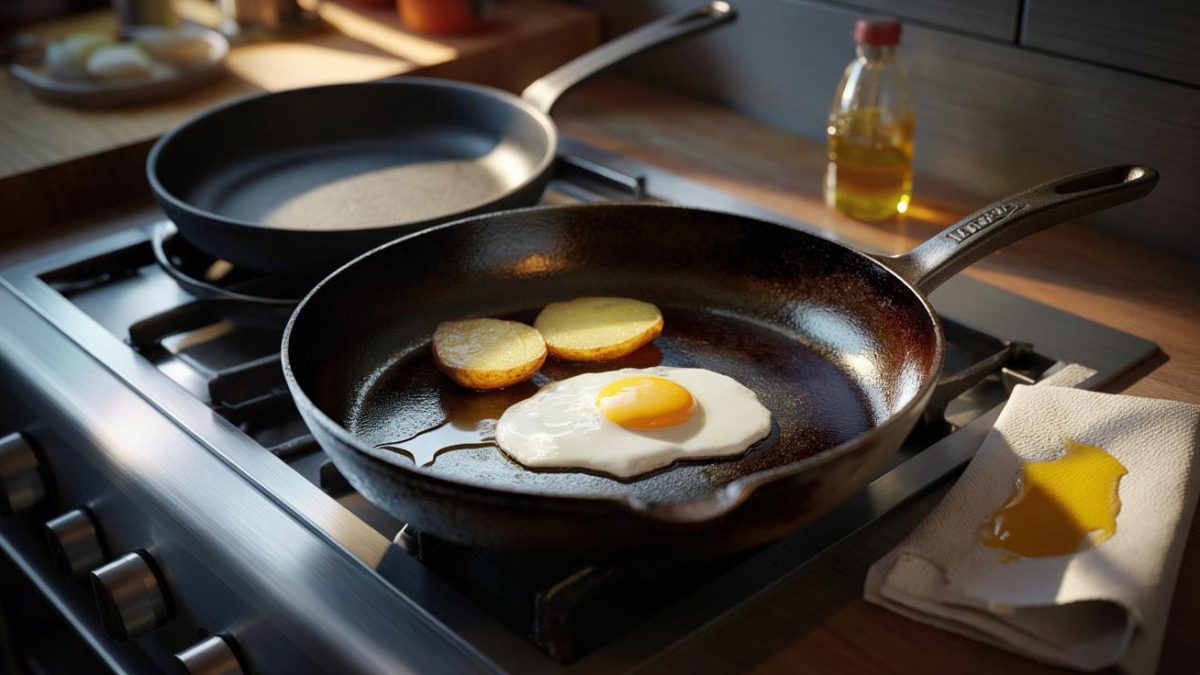
It’s a common kitchen dilemma: your grandmother’s trusty cast-iron skillet looks great but always seems to leave food stuck and burned. Meanwhile, the nonstick Teflon pan may be convenient, but its coating wears off over time. Is there a way to get the best of both worlds – the durability and even heating of cast iron with the easy release of modern nonstick surfaces? As it turns out, there is a solution, and it lies in an old-school technique called “seasoning.”
Seasoning a cast-iron pan may sound like a lot of work, but it’s actually a simple process that can transform your cooking experience. By building up a thin, natural nonstick layer on the pan’s surface, you can enjoy the benefits of cast iron without the hassle of constant scrubbing and scraping. The key is to do it right – and to maintain the seasoning over time.
The Lost Art of Seasoning Cast Iron
Seasoning cast iron may seem like an arcane technique, but it was once a standard practice in every kitchen. Before the advent of modern nonstick coatings, cast iron was the workhorse of home cooking, prized for its ability to retain and distribute heat evenly. However, the downside was that food tended to stick, requiring vigorous scrubbing that could damage the pan.
The solution was to “season” the cast iron, creating a thin, slick coating that prevented sticking. This was done by heating the pan, coating it with a thin layer of fat or oil, and then baking it in the oven. Over time, this process would build up a natural nonstick patina that made cooking a breeze.
Unfortunately, this technique fell out of favor as nonstick pans became more popular. But now, as people become more conscious of the environmental and health impacts of synthetic coatings, cast iron is making a comeback – and the lost art of seasoning is being rediscovered.
How to Season a Cast-Iron Pan
Seasoning a cast-iron pan is a simple process, but it does require a bit of time and patience. The basic steps are as follows:
- Wash the pan thoroughly with warm, soapy water to remove any factory coatings or residue.
- Dry the pan completely, either on the stovetop or in the oven.
- Apply a thin, even layer of cooking oil or fat (such as vegetable oil, canola oil, or shortening) to the entire surface of the pan, including the sides and bottom.
- Place the pan in a preheated oven at 400°F (200°C) and bake for about an hour.
- Turn off the oven and let the pan cool completely inside, allowing the seasoning to set.
Repeat this process a few times, and you’ll have a well-seasoned pan that’s ready to use. The more you use and re-season the pan, the better the nonstick surface will become.
Maintaining the Seasoning
Once you’ve seasoned your cast-iron pan, it’s important to take care of it to maintain the nonstick coating. Here are a few tips:
- Avoid using soap when cleaning the pan, as this can strip away the seasoning. Instead, use hot water and a stiff brush or scrubber to remove any stuck-on food.
- Dry the pan thoroughly after cleaning, either on the stovetop or in the oven, to prevent rust.
- Apply a thin layer of cooking oil to the surface after each use, and wipe off any excess.
- Avoid cooking highly acidic foods, such as tomatoes or vinegar, which can damage the seasoning.
With proper care and maintenance, your cast-iron pan can last for decades, providing a nonstick surface that’s far superior to any synthetic coating.
The Benefits of Cast Iron
Beyond the nonstick properties, cast-iron pans offer several other advantages over their modern counterparts:
| Benefit | Explanation |
|---|---|
| Even Heat Distribution | Cast iron heats up evenly and retains heat well, resulting in more consistent cooking temperatures and better-seared foods. |
| Durability | Cast-iron pans are virtually indestructible, able to withstand high temperatures and heavy use without warping or degrading over time. |
| Natural Nonstick Surface | A well-seasoned cast-iron pan can provide a natural nonstick surface that’s superior to many synthetic coatings, which can wear off over time. |
| Improved Flavor | The seasoning process can impart a subtle, savory flavor to food, and cast iron is known for its ability to sear meats and vegetables to perfection. |
For many home cooks, the appeal of cast iron lies in its combination of old-world craftsmanship and modern performance. With a little effort, you can transform a humble cast-iron skillet into a kitchen workhorse that outperforms even the most advanced nonstick pans.
Common Mistakes and How to Avoid Them
While seasoning a cast-iron pan is a relatively straightforward process, there are a few common pitfalls to watch out for:
- Overheating the pan: Heating the pan too hot during the seasoning process can cause the oil to polymerize unevenly, leading to a patchy or uneven finish.
- Using the wrong oil: Not all oils are created equal when it comes to seasoning. Stick to oils with a high smoke point, such as vegetable, canola, or grapeseed oil, to ensure a durable, long-lasting finish.
- Neglecting maintenance: Failing to properly clean and re-season the pan after each use can cause the seasoning to wear away over time, leading to increased sticking and a shorter lifespan for the pan.
- Cooking acidic foods: As mentioned earlier, highly acidic foods like tomatoes, wine, and vinegar can damage the seasoning and cause the pan to become sticky or discolored.
By keeping these common pitfalls in mind and following the proper seasoning and maintenance steps, you can enjoy the benefits of a well-seasoned cast-iron pan for years to come.
Recipes and Cooking Tips
Once you’ve got your cast-iron pan seasoned and ready to go, there are countless ways to put it to use. Here are a few ideas to get you started:
| Dish | Cooking Tips |
|---|---|
| Seared Steak | Preheat the pan until it’s ripping hot, then add a bit of oil and sear the steak for a perfect crust. |
| Frittata | Cast iron is ideal for baking frittatas, as the even heat helps the eggs cook through evenly. |
| Cornbread | Bake cornbread in a cast-iron skillet for a crispy, golden-brown crust. |
| Roasted Vegetables | The high heat of a cast-iron pan caramelizes vegetables beautifully, bringing out their natural sweetness. |
With a well-seasoned cast-iron pan in your arsenal, the possibilities are endless. So why not rediscover the lost art of cast-iron cooking and see how it can transform your kitchen routine?
FAQs
Is cast iron safe to use?
Yes, cast iron is generally considered safe for cooking, as long as you follow proper care and maintenance guidelines. The seasoning process creates a natural, nontoxic coating that prevents the leaching of any harmful metals.
How often should I re-season my cast-iron pan?
You should re-season your cast-iron pan anytime the seasoning starts to wear down, which can happen after heavy use or if the pan is not properly cleaned and dried. As a general rule, try to re-season it every few months or whenever you notice food starting to stick more.
Can I use soap to clean my cast-iron pan?
It’s generally best to avoid using soap when cleaning cast iron, as it can strip away the seasoning. Instead, use hot water and a stiff brush or scrubber to remove any stuck-on food. If you do need to use a bit of soap, make sure to re-season the pan afterward.
Can I put my cast-iron pan in the dishwasher?
No, it’s not recommended to put cast-iron pans in the dishwasher. The harsh detergents and high heat can damage the seasoning and cause the pan to rust. Always hand-wash and dry your cast-iron cookware.
Can I cook acidic foods in my cast-iron pan?
While you can cook acidic foods like tomatoes or wine in a cast-iron pan, it’s best to avoid doing so frequently, as the acid can damage the seasoning over time. If you do need to cook something acidic, make sure to re-season the pan afterward.
Do I need to oil my cast-iron pan after every use?
It’s a good idea to apply a thin layer of oil to your cast-iron pan after each use, as this helps to maintain the seasoning and prevent rust. Just a few drops of oil, wiped around the surface with a paper towel, is all you need.
Can I use my cast-iron pan on the stovetop and in the oven?
Absolutely! Cast-iron pans are incredibly versatile and can be used on the stovetop, in the oven, or even over a campfire. Just be sure to use oven mitts when handling the hot pan.
How do I know if my cast-iron pan is properly seasoned?
A well-seasoned cast-iron pan will have a smooth, glossy surface that’s free of any rust or discoloration. When you run your hand over the surface, it should feel slick and almost nonstick. If you notice food starting to stick more, it’s time to re-season the pan.