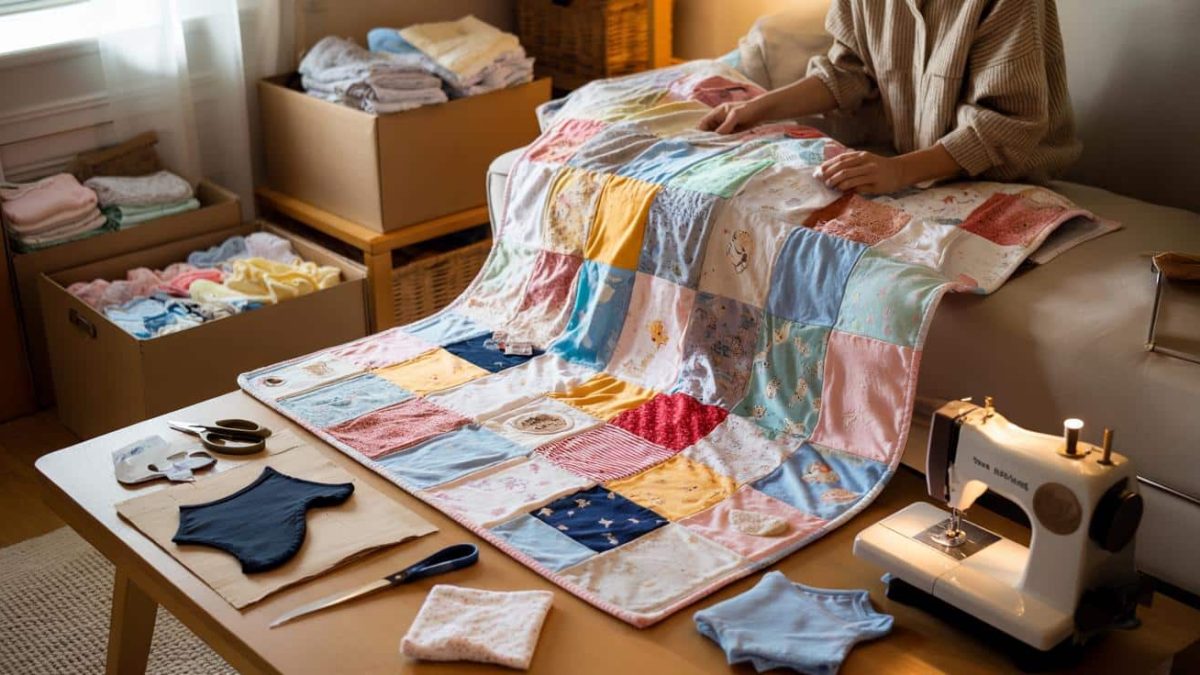
As parents, we often find ourselves drowning in a sea of baby clothes and accessories, unable to part with the cherished memories they hold. But what if there was a way to transform these tiny treasures into a lasting legacy? Enter the memory quilt – a captivating craft that turns old baby bodysuits into a cozy, personalized blanket that can be passed down through generations.
The idea of upcycling beloved baby clothes into a memory quilt is not new, but the process has evolved, becoming more accessible and creative than ever before. With a little skill and a lot of love, parents can now create a unique textile keepsake that celebrates their child’s early years, while also decluttering their home and preserving those precious memories.
Upcycling Baby Clothes: A Sentimental Journey
For many parents, the thought of parting with their child’s first outfits can be daunting. After all, these tiny garments hold a special place in our hearts, reminding us of the tiny fingers and toes that once filled them. But the reality is that these clothes often end up tucked away in storage, taking up valuable space and collecting dust.
That’s where the memory quilt comes in. By carefully selecting and repurposing these beloved baby clothes, parents can create a one-of-a-kind heirloom that will be cherished for years to come. The process is not only satisfying but also a meaningful way to preserve the memories of those early, fleeting days.
Whether it’s a favorite bodysuit, a cozy onesie, or a tiny pair of socks, each piece of fabric holds a story – a moment in time that can be stitched into the fabric of the quilt. The result is a tangible, tactile representation of a child’s growth and development, a keepsake that can be wrapped around them, shared with loved ones, and passed down through the generations.
Turning Bodysuits into Blankets: The Transformation
The process of transforming old baby clothes into a memory quilt may seem daunting, but with a little guidance and a steady hand, it can be a remarkably rewarding experience. The key is to approach the project with a clear plan and a willingness to experiment.
One of the first steps is to carefully select the pieces that will be included in the quilt. Parents should choose a variety of fabrics, textures, and colors to create a visually interesting and cohesive design. From there, the clothes must be carefully washed, pressed, and prepared for cutting.
Next, the real work begins. Using a stabilizing technique, such as fusing the jersey fabric to a lightweight interfacing, the clothes can be cut into precise squares or rectangles, creating a patchwork of memories. These individual pieces are then carefully arranged and sewn together, with special attention paid to the placement and orientation of each fabric swatch.
Stitching Memories: Techniques and Considerations
As the quilt takes shape, parents will need to make a few key decisions. Will they opt for a simple, minimalist design, or will they incorporate intricate quilting patterns and embellishments? Will they include additional fabrics, such as coordinating cotton or linen, to create a cohesive and visually appealing whole?
Another important consideration is the backing and binding of the quilt. This final layer not only provides structure and stability but also sets the tone for the overall aesthetic. Whether it’s a soft, muted solid or a playful, patterned fabric, the backing and binding can elevate the memory quilt from a simple keepsake to a true work of art.
Throughout the process, it’s important to remember that the memory quilt is a deeply personal and meaningful project. While there are certainly techniques and best practices to consider, the true beauty of this craft lies in the emotional connection and the sense of accomplishment that comes from creating something so unique and meaningful.
Preserving Memories: Caring for Your Memory Quilt
Once the memory quilt is complete, it’s time to consider how to best care for and preserve this cherished heirloom. Regular gentle washing, using a mild detergent and cool water, can help maintain the integrity of the fabrics and the stitching. Avoid using hot water or harsh cleaning products, as these can cause the fabrics to fade or the stitches to loosen.
When not in use, the quilt should be stored in a cool, dry place, away from direct sunlight and other environmental factors that could cause damage. Folding the quilt and placing it in a breathable garment bag or acid-free box can help protect it from dust, pests, and other potential threats.
With proper care and attention, a memory quilt can become a cherished heirloom, passed down through generations and serving as a tangible reminder of a child’s early years. It’s a testament to the power of upcycling, the value of sentimental keepsakes, and the enduring love of a parent for their child.
Embracing the DIY Spirit: Sewing Your Own Memory Quilt
For those with a creative flair and a passion for crafting, the opportunity to sew their own memory quilt can be a deeply rewarding experience. By taking on the project themselves, parents can infuse the quilt with even more personal touches and ensure that every stitch is imbued with love and care.
Of course, sewing a memory quilt from scratch is not without its challenges. It requires a certain level of sewing expertise, as well as the patience and attention to detail needed to create a cohesive and visually appealing final product. However, for those willing to put in the time and effort, the sense of accomplishment and the personal connection to the finished quilt can be truly priceless.
For those who prefer a more hands-off approach, or who lack the necessary sewing skills, there are also professional services available that can transform old baby clothes into a custom memory quilt. These services often come with the added benefit of expert guidance, ensuring that the final product is not only beautiful but also structurally sound and built to last.
Embracing the Sentimental Value: How Memory Quilts Enrich Our Lives
Beyond the practical benefits of decluttering and preserving cherished memories, memory quilts offer a deeper, more emotional value that can enrich our lives in profound ways. These textile keepsakes serve as a tangible connection to our past, a physical embodiment of the love and joy that surrounded our children’s early years.
When wrapped in a memory quilt, children can feel the warmth and comfort of their parents’ embrace, even as they grow and change. The quilt becomes a source of security and nostalgia, a touchstone that grounds them in their family’s history and instills a sense of belonging.
For parents, the memory quilt serves as a powerful reminder of the fleeting nature of childhood. As we watch our children grow and change, the quilt becomes a cherished artifact, a tangible link to a time that has passed but will never be forgotten. It’s a bittersweet testament to the relentless march of time, a physical manifestation of the love and pride we feel for our children.
Conclusion: Embracing the Memory Quilt Movement
In a world that often moves at a breakneck pace, the memory quilt movement offers a chance to slow down, reflect, and savor the precious moments of parenthood. By transforming old baby clothes into a cherished heirloom, parents can not only declutter their homes but also preserve the emotional connection to their child’s early years.
Whether you choose to sew your own memory quilt or entrust the task to a professional, the end result is a unique, personal, and deeply meaningful keepsake that will be cherished for generations to come. So, embrace the sentimental value of your baby’s clothes and let the memory quilt movement guide you on a journey of upcycling, preservation, and the creation of a lasting family legacy.
| Benefits of a Memory Quilt | Considerations for Creating a Memory Quilt |
|---|---|
|
|
“The memory quilt is more than just a blanket – it’s a tangible representation of the love and memories that surround a child’s early years. It’s a keepsake that will be cherished for generations to come.”
Also Read– Joanna Gaines, Interior Designer and Author
“Creating a memory quilt is a labor of love, but the end result is truly priceless. It’s a way to honor the precious moments of childhood and pass them down through the generations.”
– Emma Perez, Quilting Expert and Instructor
“The memory quilt is a beautiful way to upcycle and repurpose old baby clothes, turning them into a cherished heirloom that will be a constant reminder of a child’s early years.”
Also Read
- ➡Frühlingsputz neu gedacht: So macht ein 15-Stunden-Ritual Ihr Zuhause wirklich frisch
- ➡Nach 26 Jahren: Spieler startet erstmals Pokémon Gelb – und erlebt einen völlig verrückten Bug
- ➡Diese Haarfarbe lässt Frauen ab 50 sofort frischer und strahlender wirken
- ➡Netflix-Hype aus Istanbul: Diese Liebesserie basiert auf einem Nobelpreis-Roman
– Dr. Sarah Johnson, Child Development Specialist
How do I choose the right fabrics for my memory quilt?
When selecting fabrics for your memory quilt, aim for a mix of textures, colors, and patterns that reflect your child’s early wardrobe. Look for a balance of soft, cozy knits (like bodysuits and onesies) and sturdier woven fabrics (like pants and shirts). Avoid heavily stained or damaged pieces, as these may not hold up well during the sewing process.
What’s the best way to stabilize the jersey fabric before cutting?
Stabilizing the jersey fabric is key to ensuring a crisp, clean finish on your memory quilt. The best method is to fuse a lightweight interfacing to the wrong side of the fabric, following the manufacturer’s instructions. This will prevent the fabric from stretching or becoming distorted during the cutting and sewing process.
How do I design the layout and pattern of the quilt?
The layout and pattern of your memory quilt can be as simple or as complex as you’d like. Start by arranging the fabric squares or rectangles in a way that is visually appealing and tells a story about your child’s early years. You can opt for a classic grid pattern, a more intricate patchwork design, or even incorporate additional fabrics to create a unique, personalized look.
- ➡Comeback der Locken: Dieser 90er-Föhnstyle sprengt 2026 das Glätteisen
- ➡Frühjahrsfehler beim Pelletofen: Diese Nachlässigkeit wurde richtig teuer
- ➡Dieses Wintergericht koche ich immer vor – abends bleibt nur Genießen
- ➡Mit 65 Jahren mit leichtem Krafttraining starten: Wie einfache Übungen helfen können, die Muskelkraft zu erhalten
What type of backing and binding should I use?
The backing and binding of your memory quilt can have a significant impact on the overall aesthetic. Consider using a soft, neutral-colored fabric (like cotton or linen) that complements the colors and textures of the quilt top. For the binding, you can either use a coordinating fabric or opt for a contrasting color to make the quilt edges pop.
How do I properly care for and store my memory quilt?
To ensure your memory quilt lasts for years to come, it’s important to follow proper care and storage guidelines. Wash the quilt gently in cool water using a mild detergent, and avoid using hot water or harsh cleaning products. When not in use, store the quilt in a cool, dry place, away from direct sunlight and in a breathable garment bag or acid-free box to protect it from dust and pests.
Can I have a professional create a memory quilt for me?
Absolutely! If you don’t feel confident in your sewing skills or simply don’t have the time to create a memory quilt yourself, there are professional services available that can transform your child’s old clothes into a beautiful, custom-made keepsake. These services often come with the added benefit of expert guidance and attention to detail, ensuring that the final product is both visually stunning and structurally sound.
How can I incorporate special touches into my memory quilt?
To make your memory quilt truly unique, consider incorporating special touches that reflect your child’s personality or your family’s story. This could include embroidering their name or initials, adding fabric patches with meaningful designs, or even sewing in small keepsakes like buttons or tags from their favorite outfits.
- ➡Seltsame Wellen am Zungenrand? Dieses Zeichen warnt vor nächtlichem Zähnepressen
- ➡Diese einfache 90-Tage-Regel bringt zwei Sternzeichen plötzlich zu Geld
- ➡Psychologe verrät: Zwei Kindheitserinnerungen sagen dein Lebensglück voraus
- ➡Mit Schnittlauch gegen Schädlinge: 13 Pflanzpartner, die dein Beet retten
How do I ensure my memory quilt is a lasting heirloom?
To ensure your memory quilt becomes a cherished heirloom, focus on using high-quality materials and construction techniques. Invest in durable fabrics, sturdy batting, and strong thread. Additionally, take the time to properly care for and store the quilt, following the guidelines outlined earlier. With the right care and attention, your memory quilt can be passed down through generations, serving as a tangible connection to your family’s history.