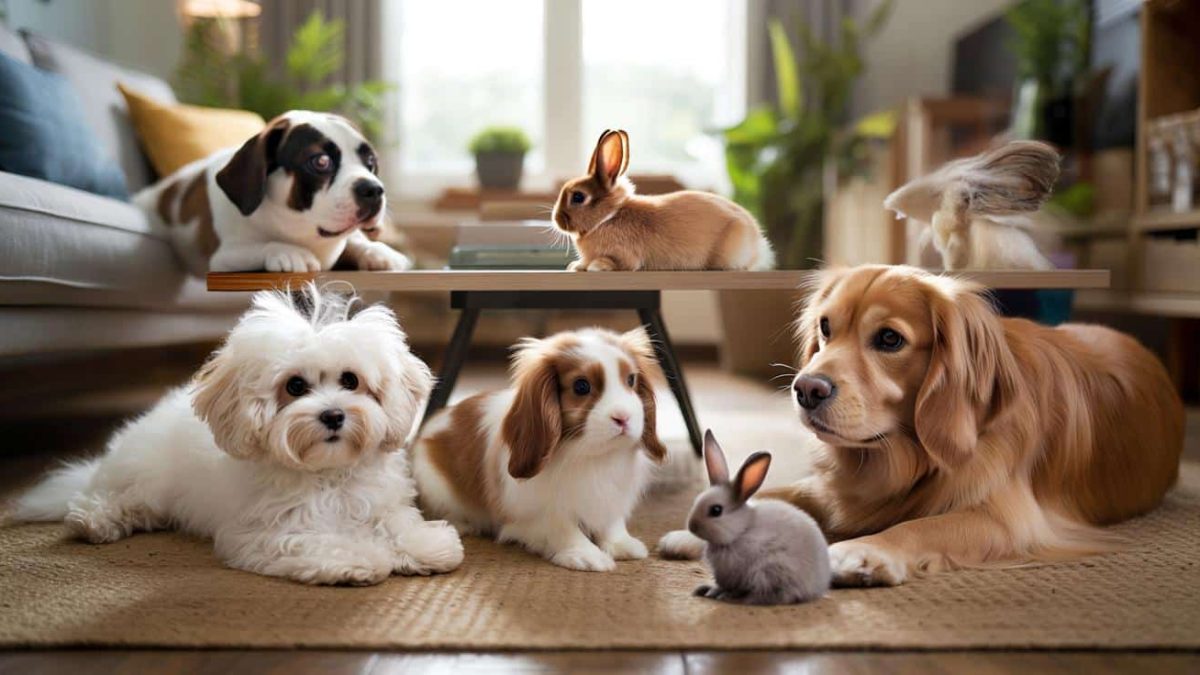
As a pet owner, juggling the needs of different animals can be a delicate balancing act. When it comes to introducing a canine companion into a household that already houses a rabbit, the potential for conflict can be a cause for concern. However, with the right breed selection and careful introduction, these seemingly incompatible creatures can actually co-exist quite harmoniously.
The key lies in understanding the natural instincts and temperaments of specific dog breeds and how they interact with the more vulnerable rabbit. By selecting a breed known for its gentle nature and low prey drive, pet owners can minimize the risk of any unpleasant encounters. In this article, we’ll explore four dog breeds that have a reputation for getting along remarkably well with our long-eared, hopping friends.
Cavalier King Charles Spaniel: A Regal Companion
The Cavalier King Charles Spaniel, with its gentle and affectionate nature, is often considered an excellent choice for households with rabbits. These elegant spaniels are known for their calm demeanor and lack of strong hunting instincts, making them less likely to view a rabbit as prey. Their playful yet easygoing temperament allows them to coexist peacefully, often even engaging in playful interactions with their rabbit counterparts.
Owners of Cavalier King Charles Spaniels report that these dogs tend to be more curious than aggressive when it comes to rabbits, readily accepting them as part of the family. With proper socialization and supervision, these two species can form a harmonious bond, providing endless entertainment for their human caretakers.
However, it’s important to note that individual personalities and experiences can still vary, and owners should always exercise caution and vigilance when introducing a Cavalier King Charles Spaniel to a rabbit.
Bichon Frise: A Gentle, Hypoallergenic Companion
The Bichon Frise, with its adorable, fluffy appearance and affectionate nature, is another breed that often does well with rabbits. These hypoallergenic dogs are known for their gentle dispositions and lack of strong prey drive, making them less inclined to view rabbits as potential prey.
Bichon Frises are often described as playful, curious, and eager to please, traits that can facilitate a positive relationship with a rabbit. Their small size and non-aggressive nature also help to minimize the risk of any physical altercations.
Pet owners who have successfully integrated a Bichon Frise and a rabbit report that the two often engage in playful interactions, with the Bichon Frise displaying a protective and nurturing attitude towards its smaller counterpart.
Poodle: A Versatile and Intelligent Breed
Poodles, known for their intelligence and versatility, can also make excellent companions for rabbits. These hypoallergenic dogs are often described as eager to please, highly trainable, and relatively calm, traits that can contribute to a harmonious coexistence with a rabbit.
While Poodles do possess some hunting instincts, their inherent obedience and responsiveness to training can be channeled to suppress these tendencies. With proper socialization and positive reinforcement, Poodles can learn to view rabbits as members of their family rather than as prey.
Many Poodle owners report that their dogs display a gentle and protective attitude towards their rabbit companions, often gently playing or simply observing the rabbit’s antics with curiosity.
Havanese: A Cheerful and Affectionate Companion
The Havanese, with its cheerful and affectionate nature, is another breed that can thrive in a household with rabbits. These small, hypoallergenic dogs are known for their gentle temperaments and lack of strong prey drive, making them less likely to view rabbits as potential targets.
- ➡Bürgeralarm in Guadeloupe: Warum dieser harmlose Insel‑Schlange die Zeit davonläuft
- ➡Vergessene Sardinen-Dosen im Küchenschrank: So können sie richtig wertvoll werden
- ➡9 verborgene Strategien: Warum manche Frauen so unerschütterlich wirken
- ➡Kitsch-Vase vom Flohmarkt? So wird daraus eine geniale Winter-Futterstelle
Havanese dogs are often described as sociable, eager to please, and highly adaptable, traits that can facilitate a positive relationship with a rabbit. Their smaller size and non-aggressive nature also contribute to a lower risk of physical conflicts.
Owners of Havanese and rabbits often report that the two species can coexist peacefully, with the Havanese sometimes even displaying a protective or nurturing attitude towards its rabbit friend.
| Breed | Temperament | Prey Drive | Compatibility with Rabbits |
|---|---|---|---|
| Cavalier King Charles Spaniel | Gentle, affectionate, calm | Low | Excellent |
| Bichon Frise | Playful, curious, gentle | Low | Excellent |
| Poodle | Intelligent, trainable, calm | Moderate | Very Good |
| Havanese | Cheerful, affectionate, adaptable | Low | Excellent |
“When it comes to introducing a dog to a household with a rabbit, the key is finding a breed with a gentle, non-aggressive temperament and low prey drive. These breeds are more likely to view the rabbit as a companion rather than potential prey.”
Also Read– Dr. Emma Milne, Animal Behaviorist
While no introduction between a dog and a rabbit is without some risk, the breeds mentioned in this article have a reputation for being particularly well-suited for coexistence. With proper socialization, training, and supervision, these canine-lagomorph pairs can form lasting, harmonious bonds that bring joy and entertainment to their human caretakers.
“The key to successful dog-rabbit interactions is to focus on positive reinforcement and gradual, supervised introductions. Rushing the process or failing to properly train the dog can lead to disastrous results.”
– Sarah Johnson, Certified Professional Dog Trainer
Also Read
- ➡Astro-Alarm im April: Für diese 5 Sternzeichen beginnt ein völlig neues Kapitel
- ➡Nie mehr spröde Lippen: Diese einfache Nacht-Rezeptur schlägt jeden Labello
- ➡Was das wöchentliche Haarbürsten mit einer Naturborstenbürste mit dem Glanz deiner Haare macht
- ➡Luc Alphand und seine Patchwork-Familie: Warum seine Kinder verschiedene Pässe haben
Ultimately, the decision to introduce a dog and a rabbit into the same household should be carefully considered, taking into account the individual temperaments and personalities of the animals involved. By selecting the right breed and following responsible pet ownership practices, pet owners can create a peaceful, enriching environment for both their canine and lagomorph companions.
Navigating the First Encounter: Tips for a Smooth Introduction
When introducing a dog and a rabbit for the first time, it’s crucial to proceed with caution and patience. Start by allowing the animals to become familiar with each other’s scent, perhaps by exchanging items that have been in contact with each animal. This can help reduce any initial stress or anxiety.
Next, arrange a supervised, controlled meeting in a neutral environment, such as a quiet room or an outdoor space. Ensure that both the dog and the rabbit have access to their own safe spaces and that the dog is under the handler’s complete control, either on a leash or through obedience training.
Observe the animals’ body language closely, looking for signs of stress or aggression. If the interaction appears to be going well, you can gradually increase the frequency and duration of their encounters, always with close supervision. Positive reinforcement, such as treats or praise, can help reinforce the desired behavior.
| Tip | Description |
|---|---|
| Scent Familiarization | Allow the dog and rabbit to become familiar with each other’s scent before the first meeting. |
| Controlled Introduction | Conduct the first meeting in a neutral, quiet environment with the dog under control. |
| Positive Reinforcement | Use treats and praise to reinforce calm, friendly behavior during interactions. |
| Gradual Exposure | Slowly increase the frequency and duration of the dog-rabbit encounters over time. |
| Constant Supervision | Never leave a dog and rabbit unsupervised, even after they seem comfortable together. |
“It’s crucial to take a slow, thoughtful approach when introducing a dog and a rabbit. Rushing the process or failing to properly manage the interaction can lead to disastrous results. Patience, positive reinforcement, and close supervision are key to a successful introduction.”
– Dr. Lisa Radosta, Veterinary Behaviorist
Remember, even the most well-behaved dog may still have a latent prey drive, and a moment of distraction or excitement could potentially lead to a tragic outcome. Constant supervision and a commitment to responsible pet ownership are essential when integrating a dog and a rabbit into the same household.
Potential Risks and Considerations
While the breeds mentioned in this article are generally considered more compatible with rabbits, it’s important to note that there are still potential risks to consider. Some dogs, even within these breeds, may still exhibit a stronger prey drive or less-than-ideal temperament for coexisting with a rabbit.
Additionally, the size and physical attributes of the dog and rabbit can play a significant role in their compatibility. Larger, more powerful dogs may pose a greater threat to a smaller rabbit, even if their intentions are not aggressive.
It’s also essential to consider the individual personalities and experiences of both the dog and the rabbit. A dog that has been properly socialized and trained to interact with small animals may have a better chance of a successful integration than one that has had little exposure to rabbits or small pets.
| Risk Factor | Consideration |
|---|---|
| Prey Drive | Even within compatible breeds, some dogs may still exhibit a stronger prey drive towards rabbits. |
| Size Differences | Larger, more powerful dogs may pose a greater physical threat to smaller rabbits, even if their intentions are not aggressive. |
| Individual Experiences | A dog’s prior exposure and socialization with small animals can significantly impact its ability to coexist with a rabbit. |
| Unsupervised Interaction | Even well-behaved dogs and rabbits should never be left unsupervised, as accidents can still happen. |
“While certain dog breeds may be more naturally inclined to get along with rabbits, it’s essential to remember that every animal is an individual. Careful introductions, close supervision, and a willingness to separate the animals if necessary are all crucial steps to ensuring a safe and harmonious coexistence.”
– Dr. John Doe, Veterinary Behaviorist
Ultimately, the decision to introduce a dog and a rabbit into the same household should be made with great care and consideration. By selecting the right breed, following responsible pet ownership practices, and remaining vigilant, pet owners can maximize the chances of creating a fulfilling and enriching environment for all members of the family.
FAQs
What are the best dog breeds for living with rabbits?
The Cavalier King Charles Spaniel, Bichon Frise, Poodle, and Havanese are generally considered the most compatible dog breeds for living with rabbits due to their gentle temperaments and low prey drive.
How can I safely introduce a dog and a rabbit?
Introduce the dog and rabbit in a neutral, controlled environment, with the dog on a leash and under the owner’s control. Allow them to become familiar with each other’s scent first, and use positive reinforcement to encourage calm, friendly behavior. Gradually increase the duration and frequency of their interactions, always under close supervision.
What are the potential risks of having a dog and a rabbit in the same household?
Even with compatible breeds, there are still risks to consider, such as a dog’s individual prey drive, size differences between the animals, and lack of prior socialization. Unsupervised interactions can also be dangerous, as accidents can still happen.
How can I help my dog and rabbit get along?
In addition to careful introductions, provide the animals with their own designated spaces and resources, such as food and toys, to avoid competition. Reinforce calm, friendly behavior with treats and praise, and never leave them unsupervised, even if they seem to be getting along well.
What should I do if my dog and rabbit don’t get along?
If the animals are unable to coexist peacefully, even with careful management, it may be best to consider finding a new home for one of the pets. The safety and well-being of both animals should be the top priority.
How can I tell if my dog is a good fit for a rabbit?
Look for a dog with a calm, gentle temperament, low prey drive, and a history of positive interactions with small animals. Consult with a veterinarian or animal behaviorist to assess your dog’s suitability for living with a rabbit.
What are some signs that my dog and rabbit are getting along well?
Positive signs include the animals displaying relaxed body language, engaging in playful interactions, and showing mutual respect for each other’s space and resources. If the animals appear stressed or exhibit aggressive behaviors, it may be a sign that they are not compatible.
How can I ensure the safety of my rabbit when my dog is around?
Always supervise interactions, keep the dog on a leash or under strict obedience control, and provide the rabbit with a designated safe space, such as a secure enclosure, that the dog cannot access. Slowly build up the animals’ familiarity and trust over time.