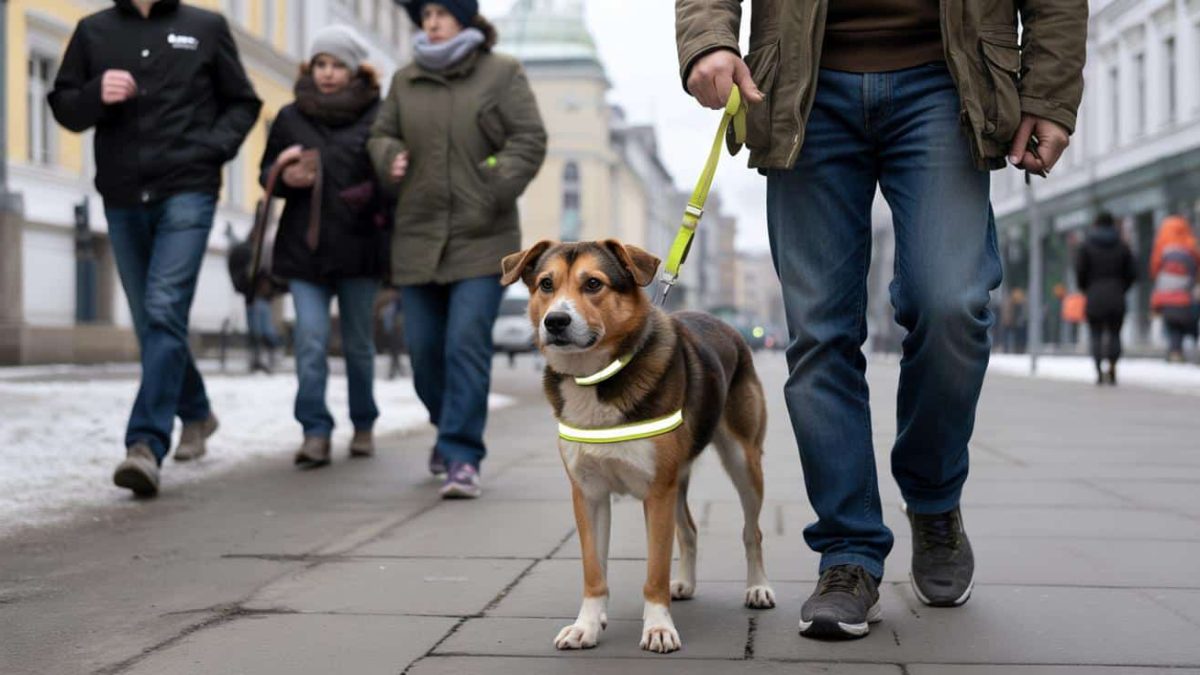
As the winter chill sets in, the streets come alive with a symphony of furry companions and their devoted owners. But amidst the sea of wagging tails and playful pups, a curious sight has caught the attention of many – a simple, yet meaningful, yellow band adorning the leashes of some canine companions.
This unassuming accessory carries a hidden message, a silent signal that speaks volumes about the needs and sensitivities of the four-legged friends we cherish. For those unfamiliar with this subtle yet powerful symbol, the presence of a yellow band on a dog’s leash is more than just a fashion statement – it’s a discreet way for owners to communicate the unique requirements of their beloved pets.
The Meaning Behind the Yellow Band
The yellow band on a dog’s leash is a way for owners to indicate that their furry friend may require extra space or caution when interacting with others. This could be for a variety of reasons, such as the dog being in training, recovering from an illness or injury, or simply having a shy or anxious temperament.
By adopting this simple yet effective communication tool, dog owners can help to prevent potentially uncomfortable or even dangerous situations, allowing them to better manage their pet’s interactions and ensure the safety of both their canine companion and the people they encounter.
The yellow band serves as a subtle, yet powerful, signal to those around the dog, informing them that this particular pup may need a little more personal space or a gentler approach.
Why Some Dogs Need More Distance
It’s important to understand that not all dogs are created equal when it comes to their social needs and comfort levels. While some pups thrive on the attention and affection of strangers, others may feel overwhelmed or even threatened by sudden interactions.
For these dogs, the yellow band is a way for their owners to communicate their unique requirements, allowing them to feel safe and secure in their surroundings. This could be due to a range of factors, including past traumas, underlying health conditions, or simply individual temperament and personality.
By respecting the space and needs of these dogs, we can create a more inclusive and welcoming environment for all members of the canine community.
How to Respond to the Yellow Band
When you encounter a dog with a yellow band on its leash, it’s important to respond with understanding and caution. Resist the urge to approach the dog or initiate physical contact, as this could be perceived as a threat or cause the animal distress.
Instead, keep a respectful distance and avoid making sudden movements or loud noises. If the dog’s owner is present, you may politely ask if it’s okay to interact with the animal, but be prepared to accept their guidance and decision.
By respecting the yellow band and the needs of the dog, you can help create a safe and harmonious environment for all who share public spaces.
The Importance of Awareness
Despite the growing popularity of the yellow band, it’s unfortunate that many members of the public remain unaware of its significance. This lack of understanding can lead to well-meaning but misguided interactions, potentially causing discomfort or even harm to the dog and its owner.
- ➡Ab wann Ihre Betriebszugehörigkeit einen Extra-Monatslohn wert ist
- ➡Nur bis 10. März: Dieser Schnitt-Trick macht vier Obstbäume zur Erntemaschine
- ➡Dieser orange blühende Mini-Strauch macht selbst winzige Gärten zum Hingucker
- ➡Unsichtbare Gefahr im Garten: Warum dieser Schlauch plötzlich Schlangen anzieht
It’s crucial that we educate ourselves and spread the word about this simple yet effective communication tool, empowering dog owners to use it confidently and empowering the public to respond appropriately.
By raising awareness and fostering a culture of respect and consideration for the needs of all dogs, we can create a more inclusive and enjoyable experience for both canine and human companions alike.
The Consequences of Ignoring the Yellow Band
Ignoring the yellow band and the needs it represents can have serious consequences, both for the dog and the people involved. Unwanted interactions, such as approaching the dog or attempting to pet it, can trigger a stress response in the animal, potentially leading to aggressive behavior or even a bite.
Not only does this put the dog at risk of harm, but it can also endanger the person who initiated the interaction. Furthermore, it can undermine the trust and confidence that the dog’s owner has worked hard to build with their pet, potentially setting back training or rehabilitation efforts.
By respecting the yellow band and the message it conveys, we can prevent these unfortunate incidents and ensure a safer, more harmonious coexistence between dogs and humans.
Harnessing the Power of the Yellow Band
For dog owners who have adopted the yellow band as a means of communicating their pet’s needs, it’s important to use this tool effectively and responsibly. This means not only displaying the band but also being prepared to explain its significance to those who may be unfamiliar with it.
| Dos | Don’ts |
|---|---|
|
|
By embracing the power of the yellow band and using it as a tool to foster understanding and cooperation, dog owners can create a more inclusive and welcoming environment for their beloved companions.
The Yellow Band’s Impact Beyond the Dog Community
The yellow band’s significance extends beyond the dog-owning community, as it serves as a reminder for all of us to be more mindful and considerate of the needs of those around us.
Just as we should respect the personal space and unique requirements of dogs wearing the yellow band, we should also strive to be more aware and accommodating of the diverse needs and challenges faced by our fellow human beings.
By cultivating a culture of empathy, understanding, and respect, we can create a more inclusive and harmonious society for all.
“The yellow band on a dog’s leash is a simple yet powerful tool that allows owners to communicate their pet’s needs and promote a safer, more inclusive environment for all.” – Dr. Emily Weiss, animal behaviorist and director of ASPCA’s Shelter Research and Development program.
Also Read
- ➡„Eine Tortur“: Er lehnt Top-Gehalt ab, weil die Firma ihn zu Windows 11 statt Mac zwingt
- ➡Nie wieder Ameisen im Garten: Mit diesen Pflanzen klappt’s natürlich
- ➡Krebsfrühwarnsystem aus der Kanalisation: Wie Abwasser Darmtumoren verraten soll
- ➡Warum Hochbegabte Gruppenarbeit im Unterricht oft nicht ertragen
“Respecting the yellow band is not just about being kind to dogs, but about cultivating a more compassionate and considerate society as a whole. When we take the time to understand and accommodate the unique needs of others, we all benefit.” – Sarah Johnson, policy analyst and author of “Inclusive Spaces: Designing for Diverse Communities”.
“The yellow band is a subtle yet effective way for dog owners to advocate for their pets and ensure their safety and well-being. By embracing this simple signal, we can create a more harmonious and understanding public space for both canine and human companions.” – Dr. Michael Silverman, veterinary behaviorist and founder of the Institute for Animal Behavior.
As we navigate the ebb and flow of daily life, let us remember the power of a single, unassuming accessory – the yellow band on a dog’s leash. It serves as a reminder to slow down, observe, and extend the same compassion and consideration we wish to receive.
By embracing the message of the yellow band, we can foster a more inclusive and understanding world, where the needs of all creatures, both two-legged and four-legged, are respected and accommodated.
Why do some dogs wear yellow bands on their leashes?
The yellow band on a dog’s leash is a signal that the dog may require extra space or a more cautious approach from others. This could be due to the dog being in training, recovering from an illness or injury, or having a shy or anxious temperament.
What should I do if I see a dog with a yellow band on its leash?
When you encounter a dog with a yellow band, it’s best to keep a respectful distance and avoid approaching or initiating contact with the animal. If the owner is present, you can politely ask if it’s okay to interact with the dog, but be prepared to accept their guidance.
Why is it important to respect the yellow band?
Respecting the yellow band is crucial to prevent potentially dangerous or uncomfortable situations for the dog and its owner. Ignoring the band’s message can lead to unwanted interactions that may trigger stress or aggression in the dog, putting both the animal and the person at risk.
How can dog owners use the yellow band effectively?
Dog owners who use the yellow band should display it prominently on the leash and be prepared to explain its significance to those who are unfamiliar with it. They should also reinforce the band’s message through their own calm and controlled interactions with the dog.
- ➡Warum Vogelfans im Winter einen Küchenwecker stellen – und damit Leben retten
- ➡Flugangst? So beruhigt eine erfahrene Stewardess selbst panische Passagiere
- ➡Mehr essen, weniger wiegen: Wie unverarbeitete Lebensmittel die Pfunde schmelzen lassen
- ➡Vogelschutz im Winter: Warum ungesalzene Fettfütterung jetzt überlebenswichtig ist
How does the yellow band’s significance extend beyond the dog community?
The yellow band serves as a reminder to be more mindful and considerate of the unique needs and challenges faced by others, both human and animal. By cultivating a culture of empathy and understanding, we can create a more inclusive and harmonious society for all.
Is the yellow band a legal requirement for dogs?
No, the yellow band is not a legal requirement for dogs. It is a voluntary communication tool used by some dog owners to signal their pet’s needs. However, its use is becoming more widespread, and many dog owners find it a helpful way to promote safety and understanding.
How can I spread awareness about the meaning of the yellow band?
You can help spread awareness about the yellow band by sharing information about its meaning with friends, family, and members of your local community. You can also encourage dog owners to use the band and educate others when you encounter it in public spaces.
What are some alternative ways to communicate a dog’s needs?
In addition to the yellow band, dog owners can use other visual cues, such as vests or patches, to indicate their pet’s unique requirements. They can also verbally inform others about their dog’s needs and request respectful distance or interaction.
- ➡Astrologie Warnung Am 24 März 2026 droht diesen Sternzeichen ein folgenschwerer Fehler
- ➡Psychologie erklärt: Warum dein plötzliches „Nein“ kein Egoismus ist
- ➡Riesen Erdbeeren aus dem eigenen Garten gelingen mit einem einfachen Dünger Trick für besonders große Früchte
- ➡Genies sagen bei Streit immer diesen einfachen Satz – und alles ändert sich