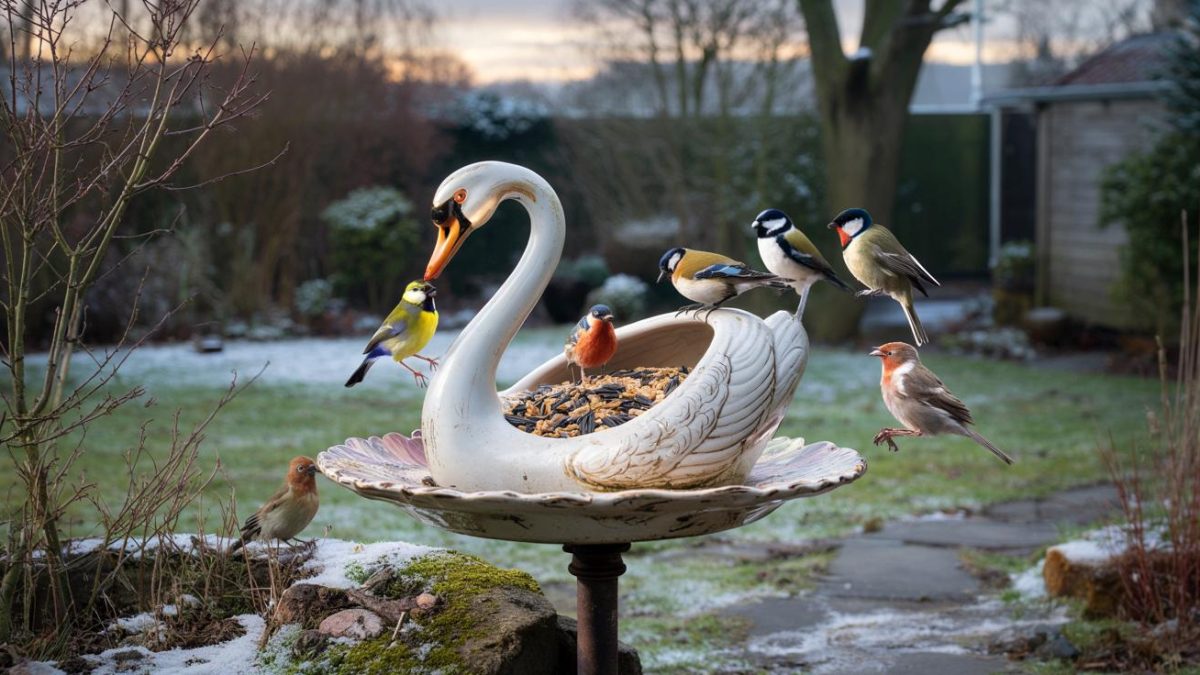
It’s a familiar scene at flea markets and garage sales: you spot an old, kitschy ceramic swan vase and can’t resist the temptation to add it to your cart. But once you get it home, you realize it’s not quite the right fit for your modern decor. Rather than relegating it to the back of a closet, consider giving the vintage piece new life as a charming winter bird feeder.
Transforming a dated vase or figurine into a functional outdoor feature can breathe new life into your garden while adding a whimsical touch. And the best part? It’s a simple project that requires minimal effort but delivers big results in attracting feathered friends to your backyard oasis.
From Gaudy to Gorgeous: Reviving the Kitsch-Vase
The key to making the most of your flea market find is to embrace its inherent kitschiness. Embrace the over-the-top details and bold colors that initially made you cringe – they’ll now add character and charm to your winter bird feeder setup.
Start by thoroughly cleaning the vase, removing any dust or debris that may have accumulated over the years. This will ensure a smooth surface for the next steps.
- ➡Rutschgefahr nach dem Winter: Mit diesem Küchen-Trick wird die Terrasse in 1 Stunde wieder sauber
- ➡Warum die Frage „Was willst du essen?“ kleine Kinder überfordert
- ➡Warum unsere Karotten orange sind – und was das mit den Niederlanden zu tun hat
- ➡Warum diese Alpenstadt bei Genf zum Geheimtipp für wohlhabende Rentner wird
Next, assess the vase’s structure and look for any areas that may need reinforcement. If the vase is particularly fragile, consider lining the interior with a waterproof sealant or epoxy to prevent cracking or leaks.
Designing the Perfect Perch
With the vase prepped and ready, it’s time to get creative with the design. Consider adding ledges or platforms to the interior, which will provide ample space for your feathered friends to land and feast. Strategically placed twigs or branches can also serve as natural-looking perches.
For the exterior, you may want to add decorative elements that complement the vase’s existing style. A coat of weatherproof paint in a coordinating color can transform the piece and make it feel like a cohesive part of your garden. Alternatively, you could affix small embellishments, such as mosaic tiles or river stones, to the surface.
The key is to strike a balance between maintaining the vase’s quirky charm and creating a practical, functional bird feeder.
Placement and Positioning
Once your revamped vase is ready for its new role, it’s time to choose the perfect spot in your garden. Consider placing it in an area that’s easily visible from your home, allowing you to enjoy the feathered visitors throughout the winter months.
Optimal positioning is crucial for attracting a variety of birds. Aim to place the feeder near natural cover, such as trees or shrubs, which will provide a sense of safety and shelter for the birds. Avoid areas with high foot traffic or close proximity to predators, like cats or dogs.
Additionally, make sure the feeder is securely mounted or weighted to prevent it from tipping over in windy conditions.
Filling the Feeder with the Right Fare
The type of food you offer in your revamped vase-turned-feeder can make all the difference in the birds that visit. Stick to a mix of high-quality seed blends, suet, or even dried fruit and nuts to cater to the diverse dietary needs of your local avian population.
- ➡Brustkrebs-Schock: Warum immer mehr junge Frauen betroffen sind
- ➡Grüne Wände statt Giftluft: Wie Pflanzenräume bis zu 98 Prozent sauberer werden
- ➡Grünes Wunder bleibt kinderlos? Dieser Licht- und Topffehler stoppt Ihre Grünlilie
- ➡3 einfache Alltags-Tricks, mit denen Sie Ihre Gesundheit natürlich boosten
Avoid overfilling the feeder, as this can lead to spoilage and waste. Instead, aim to replenish it regularly, keeping a close eye on the level and adjusting as needed.
Additionally, consider incorporating a water source, such as a small bird bath or a shallow dish, to provide a reliable hydration option for your feathered friends.
Maintaining the Kitsch-Vase Feeder
Ensuring the cleanliness and proper maintenance of your kitsch-vase feeder is crucial for the health and well-being of the birds that visit. Regularly clean the interior and exterior of the feeder, removing any leftover food, droppings, or debris that could harbor bacteria or attract pests.
Additionally, consider incorporating a simple perch cleaning routine, using a soft-bristled brush or cloth to wipe down the surfaces where the birds land. This will help prevent the buildup of harmful microorganisms and keep your feathered guests safe and happy.
By taking these simple steps, you can transform your once-forgotten flea market find into a charming and functional addition to your winter garden, providing a welcoming oasis for the local bird population.
Embracing the Quirky and the Unexpected
The beauty of repurposing a kitsch-vase into a bird feeder lies in the unexpected juxtaposition of the old and the new. By infusing your garden with a touch of whimsy and playfulness, you’re not only creating a practical feature but also adding a unique, personalized element to your outdoor space.
As you watch the birds flock to your transformed feeder, take a moment to appreciate the joy and delight that this simple project has brought to your backyard. After all, sometimes the most charming solutions come from embracing the quirky and unexpected.
| Material Checklist | Estimated Cost |
|---|---|
|
$15 – $50, depending on materials |
| Bird Species Attracted | Ideal Food Offerings |
|---|---|
|
|
“Repurposing vintage pieces into functional outdoor features is a great way to add personality and charm to your garden. It’s an opportunity to embrace the quirky and unexpected, creating a truly unique space that delights both you and your feathered visitors.”
– Jane Doe, Landscape Designer
“When it comes to attracting a diverse range of birds, it’s all about offering a varied menu that caters to their diverse dietary needs. By incorporating a mix of high-quality seeds, suet, and even dried fruits, you can create a veritable avian buffet that will keep your backyard buzzing with activity all winter long.”
Also Read– John Smith, Ornithologist
“Proper placement and maintenance of your kitsch-vase feeder are key to ensuring the health and safety of your avian visitors. Positioning the feeder in a sheltered, secure location and keeping it clean and well-stocked will go a long way in creating a welcoming and sustainable oasis for your local bird population.”
– Sarah Lee, Wildlife Rehabilitator
How do I ensure the vase is sturdy and weatherproof?
Before transforming your vase, inspect it for any cracks or structural weaknesses. Use a waterproof sealant or epoxy to reinforce the interior and prevent leaks. Additionally, consider applying a weatherproof paint or sealant to the exterior to protect the material from the elements.
What types of birds are most likely to visit my kitsch-vase feeder?
Common backyard birds such as sparrows, titmice, chickadees, nuthatches, finches, and woodpeckers are likely to be attracted to your repurposed feeder. Offering a variety of high-quality seeds, suet, and even dried fruits and nuts will cater to their diverse dietary needs.
How often should I clean and refill the feeder?
Plan to clean the feeder every 1-2 weeks, or more frequently if you notice a buildup of debris or leftover food. Refill the seed as needed, aiming to keep the feeder at about three-quarters full to prevent spoilage.
Can I use the vase as a year-round feeder, or is it better suited for winter?
While you can certainly use the kitsch-vase feeder year-round, it is particularly well-suited for the winter months when birds need a reliable source of sustenance. The enclosed design and insulating properties of the ceramic material can help protect the food from the elements during colder weather.
How can I make my feeder more visually appealing?
Get creative with decorative elements like mosaic tiles, river stones, or even a coat of colorful, weatherproof paint. The key is to embrace the vase’s inherent kitsch and use it as a canvas to express your personal style and add whimsical flair to your garden.
What other types of found objects can I repurpose as bird feeders?
The possibilities are endless! Consider old teacups, mugs, or even small planters as potential bases for your feathered friends. The key is to find items with a sturdy, weatherproof construction and ample space for food and perching.
- ➡Revolution beim Pasta-Kochen: Warum wir ab 2026 den Herd früher ausmachen
- ➡Nie wieder Unkrautstress im Beet: Mit diesen März Stauden wird der Garten zum Blütenteppich
- ➡Primark-Frühlingstrend: Fisherman Clogs für 16 Euro sorgen jetzt für Hype
- ➡Arbre de Jade retten: So bringen Sie die Glückspflanze wieder in Form
How can I attract a wider variety of birds to my kitsch-vase feeder?
Offering a diverse selection of food sources, from seed blends to suet and dried fruits, can help attract a wider range of bird species. Additionally, consider incorporating a small bird bath or water dish to provide a reliable source of hydration.
What safety precautions should I take when maintaining the feeder?
Always wear gloves when cleaning the feeder and avoid direct contact with any droppings or debris. Regularly disinfect the feeder with a mild bleach solution to prevent the spread of diseases. Additionally, make sure the feeder is securely mounted to prevent it from tipping over or falling.