As the warmer weather arrives, many gardeners are gearing up to tackle the persistent weed growth that can quickly overtake their beloved outdoor spaces. With the increasing restrictions on chemical weed killers, finding an effective and eco-friendly solution has become a top priority. Fortunately, there’s a hardy perennial plant that can help solve this problem: the bergenia.
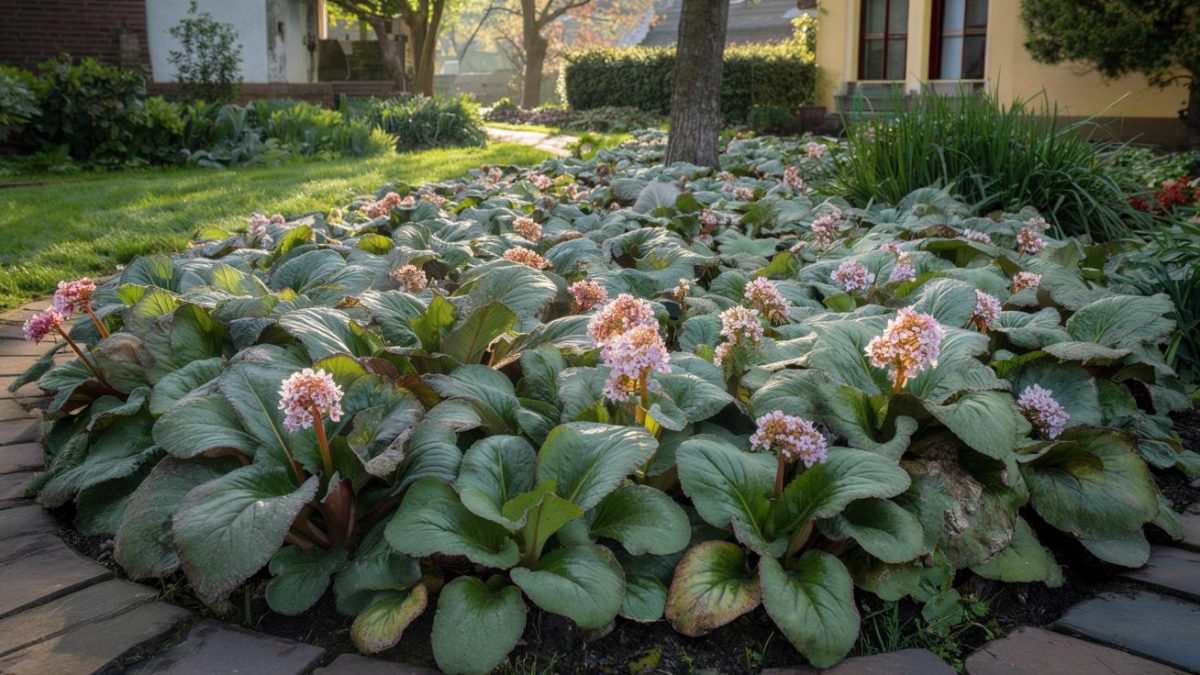
Also known as the “elephant’s ear” or “pigsqueak,” the bergenia is a versatile and resilient ground cover that thrives in a variety of garden settings. Its large, leathery leaves and robust root system make it a formidable competitor against the unwanted invaders that can creep in between plants and around the base of trees and shrubs.
Gardeners who have discovered the power of this unassuming plant are raving about its ability to outcompete weeds and create a lush, low-maintenance carpet of foliage. With the planting season upon us, now is the perfect time to learn more about how the bergenia can transform your outdoor space.
The Bergenia’s Superpower: Outcompeting Weeds
The bergenia’s secret weapon lies in its dense, spreading growth habit and its ability to quickly establish a strong, fibrous root system. As the plant grows, its leaves form a thick, overlapping canopy that blocks out sunlight and prevents weed seeds from germinating.
Unlike bare soil or mulch, which can still allow weeds to push through, the bergenia’s living groundcover creates a physical barrier that weeds simply can’t penetrate. The plant’s roots also have the added benefit of stabilizing the soil, making it harder for weeds to gain a foothold.
According to gardening expert Julia Baumgartner, “The bergenia is a true powerhouse when it comes to weed suppression. Its rapid spread and hardy nature mean that it can quickly form a dense, impenetrable mat that leaves little room for unwanted plants to thrive.”
Choosing the Right Spot for Your Bergenia
While the bergenia is a relatively low-maintenance plant, it does have some specific preferences when it comes to its growing conditions. Ideally, it should be planted in a spot that receives partial shade to full sun, depending on your local climate.
In areas with hot, dry summers, a partially shaded location can help the bergenia’s leaves retain their lush, green appearance and prevent them from becoming scorched or wilted. Conversely, in cooler, northern climates, the plant may thrive better in a sunnier spot.
Soil type is another important consideration. Bergenias prefer well-draining, nutrient-rich soil that retains moisture but doesn’t become waterlogged. Amending the planting area with compost or other organic matter can help create the ideal growing conditions for this hardy perennial.
| Bergenia Growing Conditions | Ideal Range |
|---|---|
| Sunlight | Partial shade to full sun |
| Soil Type | Well-draining, nutrient-rich |
| Soil Moisture | Moist, but not waterlogged |
Planting a Bergenia Carpet
When it comes to incorporating bergenias into your garden, the key is to plant them close together to create a dense, overlapping groundcover. Experts recommend spacing the plants about 12-18 inches apart, depending on the variety and the desired coverage.
To establish a lush, weed-blocking carpet, gardeners can plant bergenia divisions or rooted offsets in the spring or fall. These hardy plants can also be grown from seed, although this method may take longer to achieve the desired coverage.
As the bergenia plants grow and spread, they will eventually form a seamless, living mulch that requires minimal maintenance. Regular watering during the first year will help the plants become well-established, but after that, they are relatively drought-tolerant and can thrive with less attention.
| Bergenia Planting Tips | Recommendation |
|---|---|
| Planting Spacing | 12-18 inches apart |
| Planting Time | Spring or fall |
| Propagation Method | Divisions, offsets, or seeds |
| Watering Needs | Regular in first year, then drought-tolerant |
“The bergenia is like a living, breathing mulch that doesn’t need to be replenished year after year. It’s a game-changer for gardeners who want to reduce their weed-pulling workload.”
– Horticulturist Emma Slater, Botanical Gardens
One of the great things about the bergenia is that it can thrive in a variety of garden settings, from shady perennial beds to sunny borders. By planting it in strategic locations, gardeners can create a cohesive, weed-resistant groundcover that enhances the overall aesthetic of their outdoor spaces.
Low-Maintenance Care for Bergenias
While the bergenia is often touted as a “set it and forget it” kind of plant, it does require some basic care and attention to maintain its best appearance and performance. Regular deadheading of spent flowers can help keep the plant looking tidy, and occasional division of the rhizomes can rejuvenate older clumps.
Gardeners should also be mindful of the plant’s water needs, especially during extended dry spells or periods of drought. A layer of organic mulch around the base of the plants can help retain soil moisture and keep the roots cool and hydrated.
With just a little bit of TLC, the bergenia can continue to thrive and outcompete weeds for years to come. Its resilience and versatility make it a valuable addition to any garden, and its ability to reduce the need for arduous weed-pulling is a bonus that any green-thumbed enthusiast can appreciate.
- ➡Warum hohe Intelligenz so weh tun kann, wenn andere falsche Entscheidungen treffen
- ➡Geniale Küchen-Trick: So entsorgst du altes Frittieröl ohne Rohrverstopfung
- ➡Wir reisen, wir erledigen unsere Einkäufe: alles auf Staatskosten“ : Ohne je gearbeitet zu haben, kassiert dieses Rentnerpaar über 1.600 Euro im Monat dank Solidaritätsrente
- ➡Terrasse in einer Stunde moosfrei: Dieser 35-Cent-Trick schlägt jeden Hochdruckreiniger
“The bergenia is a true hero in the war against weeds. Its dense, spreading growth and hardy nature make it a low-maintenance, highly effective groundcover that can transform even the most weed-prone areas of the garden.”
– Landscape designer, Maria Fernandez
The Impact of Bergenias on Weed Reduction
While the bergenia’s weed-suppressing abilities are well-documented, quantifying the actual impact can be a bit tricky. The extent to which it reduces the need for manual weed removal can vary depending on factors like the specific garden layout, the types of weeds present, and the plant’s growing conditions.
However, studies have shown that a well-established bergenia groundcover can reduce weed growth by as much as 80-90% in some cases. This dramatic reduction in weeds not only saves gardeners time and effort but also helps to maintain the overall health and aesthetics of their outdoor spaces.
- ➡Saturn schlägt Jupiter deutlich: Astronomen finden zwölf neue Mini-Monde
- ➡Schock-Studie 2026: Dieses beliebte Grünzeug ist der größte Pestizid-Fallensteller
- ➡Beliebtes Fitness-Frühstück entzaubert: Warum Joghurt-Banane oft zur Kalorienfalle wird
- ➡Nie mehr Lampenstress: So tauschen Sie eine Deckenfassung in 15 Minuten sicher aus
As more gardeners discover the power of the bergenia, the demand for this hardy perennial is on the rise. Its ability to provide a living, low-maintenance solution to a persistent problem is making it a go-to choice for those seeking a more sustainable approach to weed management.
“The bergenia is a true workhorse in the garden. Its dense, spreading growth and competitive nature make it an excellent choice for anyone looking to reduce their weed-pulling workload while still maintaining a beautiful, healthy outdoor space.”
– Horticulturist, Dr. Liam Hartley
FAQs: Mastering the Art of Bergenia Gardening
How do I get started with planting bergenias in my garden?
The best time to plant bergenias is in the spring or fall, when the soil is moist and cool. Start by choosing a location that receives partial shade to full sun, and amend the soil with compost or other organic matter to ensure good drainage. Space the plants 12-18 inches apart and water regularly during the first year to help them become well-established.
Can bergenias grow in full shade?
While bergenias can tolerate partial shade, they do best in areas that receive at least 4-6 hours of direct sunlight per day. In very shady spots, the plants may struggle to form the dense, spreading growth that makes them effective at suppressing weeds.
How can I divide and propagate my existing bergenia plants?
Bergenias are easily divided in the spring or fall. Carefully dig up the plant, then use a sharp spade or knife to separate the rhizomes into smaller sections, each with at least one growing point. Replant the divisions in the desired location, water well, and enjoy your new, expanded bergenia groundcover.
Do bergenias require a lot of maintenance?
Bergenias are relatively low-maintenance once established. Regular deadheading of spent flowers and occasional division of the rhizomes can help keep the plants looking their best. During extended dry spells, watering may be necessary to prevent the leaves from wilting or discoloring.
Can bergenias be used in containers or raised beds?
Absolutely! Bergenias can thrive in containers, raised beds, or other confined spaces, as long as they have well-draining soil and access to the appropriate amount of sunlight. Just be sure to provide enough room for the plant’s spreading growth habit.
How long does it take for bergenias to become established and start suppressing weeds?
Newly planted bergenias typically take 1-2 years to fully establish and reach their weed-suppressing potential. During this time, it’s important to keep the plants well-watered and free of competing weeds. Once the bergenia groundcover is fully formed, it can provide up to 80-90% weed reduction in the surrounding area.
Are there any downsides or drawbacks to using bergenias in the garden?
One potential downside of bergenias is that their large, leathery leaves can create a dense, impenetrable canopy that may compete with other nearby plants for light and nutrients. Gardeners should be mindful of their placement and ensure that the bergenia groundcover doesn’t overwhelm or crowd out other desirable plants in the garden.
Can bergenias be used in shady, north-facing areas of the garden?
While bergenias prefer partial to full sun, they can still thrive in shadier areas of the garden, especially in cooler climates. In these conditions, the plants may grow a bit more slowly and have slightly smaller leaves, but they can still effectively suppress weeds and provide valuable groundcover.
How do I care for my bergenia plants during the winter months?
Bergenia leaves may become discolored or damaged by frost, but the plants are generally quite hardy and resilient. In cold climates, a layer of mulch around the base of the plants can help insulate the roots and prevent frost heaving. Pruning away any damaged or unsightly foliage in early spring will help the bergenia bounce back and thrive once the warmer weather arrives.
- ➡Studie zeigt: In dieser Region Frankreichs sind Supermärkte am günstigsten
- ➡Drei Monate Omega‑3: Neue Studie zeigt überraschende Effekte auf Stress und Schlaf
- ➡Genialer Putztrick: Mit einem Küchenkraut werden stumpfe Böden wieder glänzend
- ➡Glücksstrauch für den Saisonstart: Warum Gärtner jetzt auf Ilex setzen