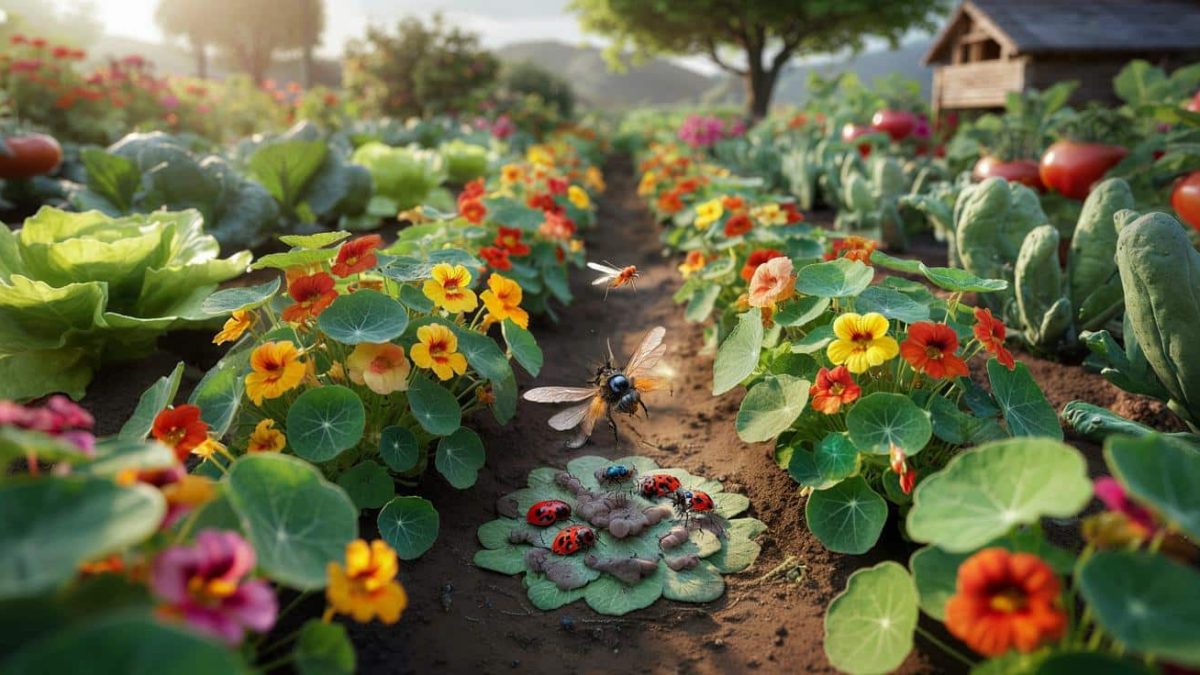
Gardeners are often surprised to learn that a seemingly ordinary ornamental flower can be the secret superstar of their vegetable patch. The humble Nasturtium, often dismissed as just a pretty face, is actually a powerful ally in the fight against garden pests. As gardeners eagerly sort through their seed packets for the upcoming planting season, it’s time to give this unsung hero the recognition it deserves.
The Nasturtium, with its vibrant blooms and distinctive leaves, is not just a charming addition to flower beds – it’s a natural pest repellent that can help create a virtually pest-free vegetable garden. This versatile plant has a unique superpower: it attracts a wide range of common garden pests, drawing them away from your precious crops and providing a living shield of protection.
Intrigued? Read on to discover why the Nasturtium is making a remarkable comeback in gardens across the country, and how you can harness its natural abilities to create a thriving, low-maintenance vegetable oasis.
Unleashing the Pest-Repelling Power of Nasturtiums
Nasturtiums are often overlooked in the garden, relegated to the status of a simple ornamental. But savvy gardeners are now recognizing the plant’s true potential as a natural pest deterrent. The key lies in the Nasturtium’s ability to attract a wide range of common garden pests, including aphids, whiteflies, and even some types of caterpillars.
- ➡Gärtner-Trick vor März: Mit diesem Nährstoff explodieren Ihre Hortensien in Blüten
- ➡Seit zwei Jahren keine Mehlpackung mehr: Diese fluffigen Kuchen retten jeden Süßhunger
- ➡Lidl bringt Pilates-Reformer für zuhause: Was taugt das 299-Euro-Gerät?
- ➡Winziger Turbo-Fisch verrät, wie schnell wir wirklich altern
By strategically planting Nasturtiums around the perimeter of your vegetable garden, you can create a living barrier that lures these unwanted visitors away from your precious crops. The pests will be drawn to the Nasturtiums, effectively shielding your vegetables from harm.
But the benefits don’t stop there. Nasturtiums also produce a pungent, spicy aroma that can repel other garden pests, such as slugs and snails. This natural pest-fighting power means you can reduce your reliance on chemical pesticides, creating a healthier, more sustainable garden environment.
Versatile and Edible: Nasturtiums Offer More Than Meets the Eye
The Nasturtium’s versatility extends beyond its pest-repelling abilities. This vibrant flower is also edible, with both the leaves and the colorful blooms adding a delightful peppery flavor to salads, sauces, and even as a garnish.
Incorporating Nasturtiums into your culinary creations can add a delightful twist to your meals, while also providing a nutritional boost. The leaves are rich in vitamins, minerals, and antioxidants, making them a valuable addition to a healthy, balanced diet.
Beyond the kitchen, Nasturtiums can also be used as a natural dye, with the flowers and leaves producing a range of vibrant hues. This adds an extra layer of creativity to the gardening experience, allowing you to explore the plant’s diverse applications.
Effortless Gardening: Nasturtiums Thrive with Minimal Effort
One of the most appealing aspects of the Nasturtium is its ease of care. This hardy plant is remarkably low-maintenance, requiring little attention or specialized knowledge to cultivate successfully.
Nasturtiums are self-seeding, meaning they will readily reseed themselves year after year, reducing the need for constant replanting. They also tolerate a wide range of soil conditions, from poor, sandy soils to rich, loamy ones, making them an ideal choice for gardeners of all skill levels.
Furthermore, Nasturtiums are drought-tolerant, requiring minimal watering once established. This makes them an excellent choice for gardeners who may have limited time or resources to devote to their outdoor spaces.
Maximizing the Impact: Strategically Placing Nasturtiums in Your Garden
To fully harness the power of Nasturtiums, it’s important to understand where to position them in your garden. The most effective placement is around the perimeter of your vegetable beds, creating a protective barrier against pests.
By planting Nasturtiums in this strategic location, you can lure away harmful insects and create a natural buffer zone, shielding your crops from potential damage. Additionally, you can incorporate Nasturtiums into companion plantings, allowing them to work in harmony with your other vegetables and herbs.
Experiment with different placements and companion planting combinations to find the optimal setup for your garden. This will ensure that your Nasturtiums are working hard to maintain a healthy, thriving vegetable patch.
Embracing the Unexpected: Exploring the Versatility of Nasturtiums
As gardeners delve deeper into the world of Nasturtiums, they often discover an array of unexpected benefits and applications for this unassuming flower. Beyond its pest-repelling properties and edible potential, Nasturtiums can also be used as a natural dye, providing a vibrant and eco-friendly alternative to synthetic options.
The flowers and leaves of the Nasturtium can be used to create a range of beautiful hues, from deep oranges and reds to delicate yellows and greens. This opens up a world of creative possibilities, allowing gardeners to explore the plant’s versatility and incorporate its natural dyes into their crafting and textile projects.
Whether you’re looking to create a sustainable, low-maintenance vegetable garden or expand your artistic horizons, the humble Nasturtium is a plant that deserves a closer look. Its multifaceted abilities and easy-going nature make it a must-have addition to any outdoor space.
Embracing the Unexpected: Exploring the Versatility of Nasturtiums
| Pest Attractant | Natural Pest Repellent |
|---|---|
| Aphids | Slugs and Snails |
| Whiteflies | – |
| Caterpillars | – |
“Nasturtiums are a gardener’s secret weapon. They attract a wide range of common pests, drawing them away from your valuable crops and creating a natural protective barrier around your vegetable patch.” – Emily Greenstein, Organic Gardening Specialist
- ➡Geniale Garten-Hack: So werden Klopapierrollen zu Mini-Gewächshaus für Tomaten
- ➡Kiwi-Schock im Supermarkt: wie die Verpackung den Preis fast verdoppelt
- ➡Handy-Alarm: Dieses Putzmittel zerstört heimlich dein Display
- ➡Osterschock an der Supermarktkasse: Als mein Mann die Kassenbons sah, war unsere Ehe vorbei
“By incorporating Nasturtiums into your garden, you can significantly reduce your reliance on chemical pesticides. This plant’s pest-repelling abilities allow you to maintain a healthy, sustainable garden environment.” – Dr. Julia Hernandez, Horticulture Research Scientist
“Beyond their pest-fighting prowess, Nasturtiums are a wonderfully versatile plant. From their edible leaves and flowers to their use as natural dyes, this unassuming flower has so much to offer gardeners.” – Sarah Wilkins, Culinary Herbalist
Frequently Asked Questions
How do I plant Nasturtiums in my garden?
Nasturtiums are easy to grow from seed. Simply scatter the seeds directly in your garden beds, spacing them about 12 inches apart. They prefer well-drained soil and full sun. Water the seeds regularly until they germinate, then water as needed to keep the soil moist but not waterlogged.
When is the best time to plant Nasturtiums?
Nasturtiums can be planted in the spring once the threat of frost has passed. They thrive in warm weather, so aim to plant them after the last frost date in your area. You can also sow seeds indoors a few weeks before your last frost date and transplant the seedlings outside.
How do Nasturtiums help repel garden pests?
Nasturtiums produce a pungent, spicy aroma that is attractive to a variety of common garden pests, including aphids, whiteflies, and certain caterpillars. By planting Nasturtiums around the perimeter of your vegetable garden, you create a living barrier that lures these pests away from your crops, protecting them from damage.
Can I eat Nasturtium flowers and leaves?
Yes, both the flowers and leaves of the Nasturtium plant are edible and can be used in a variety of culinary applications. The leaves have a peppery, slightly pungent flavor, while the flowers add a vibrant pop of color and a unique flavor to salads, sauces, and garnishes.
How do I use Nasturtiums as a natural dye?
To use Nasturtiums as a natural dye, you can extract the pigments from the flowers and leaves. The flowers typically produce a range of orange and red hues, while the leaves can yield shades of green. The dye can be used to color fabrics, paper, and other materials in an eco-friendly way.
Do Nasturtiums require special care or maintenance?
Nasturtiums are quite low-maintenance and easy to grow. They thrive in well-drained soil and full sun, but can tolerate partial shade. Once established, they are drought-tolerant and require minimal watering. Deadheading spent flowers can encourage more blooms, but overall, Nasturtiums are a hassle-free addition to the garden.
- ➡Dacia bestätigt vier neue Elektroautos und neuen Einstiegspreis: unter 18.000 Euro
- ➡Frühling im Garten: Warum Sie diese 3 „Unkräuter“ lieber stehen lassen sollten
- ➡Ab wann Vogelfutter gefährlich wird – Experten nennen klare Temperatur-Grenze
- ➡Trainer-Trick: Diese einfache Übung zu Hause stärkt den ganzen Körper
Can I grow Nasturtiums in containers?
Yes, Nasturtiums are well-suited for growing in containers, hanging baskets, or other small spaces. They have a trailing habit that makes them perfect for cascading over the edges of pots. Be sure to use a well-draining potting mix and provide them with ample sunlight.
How do I companion plant Nasturtiums with my vegetables?
Nasturtiums make excellent companion plants for a variety of vegetables. Plant them around the perimeter of your vegetable beds to create a protective barrier against pests. You can also intersperse them among your crops, allowing the Nasturtiums to lure pests away while potentially benefiting the nearby plants through their natural pest-repelling abilities.