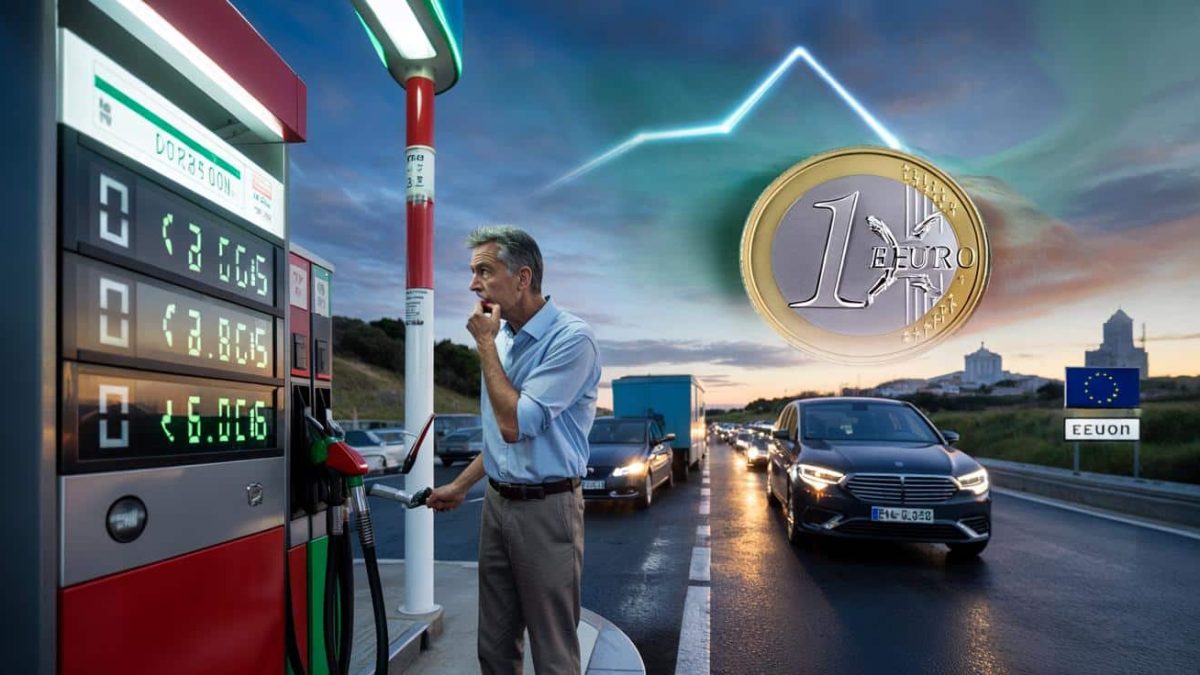
As the world grapples with soaring oil prices, one European country has taken a bold step to shield its drivers from the sting of skyrocketing fuel costs. Portugal, facing the same economic pressures as its neighbors, has introduced an innovative “automatic discount brake” system to keep prices at the pump in check.
This unprecedented move comes as the global oil market experiences turmoil, with the price of a barrel reaching over $100. The ripple effects are being felt across the continent, with motorists in Portugal and beyond facing the painful reality of paying more to fill up their tanks.
But Portugal’s government has acted swiftly to address this challenge, unveiling a groundbreaking solution that could serve as a model for other nations struggling to keep their citizens mobile in the face of these economic headwinds.
Automatic Discount Brake: Portugal’s Answer to Surging Fuel Prices
At the heart of Portugal’s new fuel price regulation is the “automatic discount brake,” a mechanism that promises to provide relief to drivers as global oil prices continue to soar. This innovative system, set to be implemented in the coming weeks, will automatically trigger a reduction in the value-added tax (VAT) on fuel whenever the price at the pump exceeds a certain threshold.
The specifics of the plan are still being finalized, but the general principle is clear: as fuel prices rise, the government will step in to cushion the impact on consumers by lowering the tax burden. This move is aimed at ensuring that the burden of these global price hikes does not fall solely on the shoulders of Portuguese drivers.
The implementation of this automatic discount brake represents a departure from the traditional approach of setting fixed fuel taxes. Instead, Portugal is embracing a more dynamic and responsive system, one that can adapt to the volatile market conditions and provide real-time relief to its citizens.
Navigating the Collision Course with Brussels
Portugal’s decision to implement the automatic discount brake has not been without its challenges. The move has put the country on a potential collision course with the European Union, as the bloc’s regulations around state aid and market distortions come into play.
The European Commission has expressed concerns about the legality of such a system, as it could be seen as a form of state intervention in the fuel market. Portugal, however, is adamant that the measure is necessary to protect its citizens from the devastating effects of soaring fuel prices.
The debate over the extent to which governments can intervene to shield their citizens from global market forces is a complex one, and the outcome of this standoff between Portugal and Brussels will be closely watched by other EU member states grappling with similar challenges.
The Delicate Balance: Automakers, Consumers, and the State
As Portugal navigates this tricky situation, it must carefully balance the interests of various stakeholders, including automakers, consumers, and the government itself. The introduction of the automatic discount brake has the potential to disrupt established market dynamics, and it remains to be seen how different players in the automotive and fuel industries will respond.
Automakers, for example, may be concerned about the potential impact on consumer demand and the broader implications for their business models. Consumers, on the other hand, will be eager to see if the discount brake delivers the promised relief at the pump.
Meanwhile, the Portuguese government must walk a fine line, ensuring that its intervention does not cross the line into unlawful state aid or market distortion, while still providing the necessary support to its citizens. This delicate balancing act will be closely watched by experts and policymakers across Europe.
- ➡Alte Gärtnerregel im Februar: Mit dieser Bodenpflege verdoppeln Sie Ihre Ernte
- ➡Neuer Wohntrend im Frühling: Warum gefärbtes Glas jetzt den Rattan-Boom ablöst
- ➡Clevere Heizkörper-Lounge: So bleibt dein Stubentiger für 5 Euro warm
- ➡Garten-Trick für 1 Euro: Mit diesem Badezusatz wird der Rasen wieder sattgrün
The Ripple Effects: Implications for Europe and Beyond
Portugal’s decision to implement the automatic discount brake is not just a domestic matter; it has the potential to reverberate throughout Europe and even beyond. As other nations grapple with the same fuel price challenges, they will be closely monitoring the success or failure of Portugal’s experiment.
If the system proves effective in shielding Portuguese drivers from the brunt of the global oil price hikes, it could inspire similar initiatives in other countries. Conversely, if the plan encounters legal or practical hurdles, it may serve as a cautionary tale for those considering similar interventions.
The broader implications of Portugal’s move extend beyond the fuel market, touching on larger questions of national sovereignty, the limits of EU regulation, and the role of governments in protecting their citizens from the volatility of global economic forces.
The Road Ahead: Navigating Uncertainty and Seeking Long-Term Solutions
As Portugal forges ahead with its innovative fuel price regulation, the road ahead is far from certain. The success or failure of the automatic discount brake will depend on a complex interplay of factors, including the continued volatility of the global oil market, the legal challenges posed by Brussels, and the reactions of key industry players.
- ➡Forscher finden gemeinsamen Faktor bei Menschen, die langsamer altern
- ➡Nie mehr Unkraut im Kies: Mit diesem Profi-Trick bleibt der Garten dauerhaft sauber
- ➡Wie Pferde unsere Angst riechen – und warum das im Sattel gefährlich wird
- ➡Astro-Schock im März: Bei diesen zwei Sternzeichen platzt eine alte Sache
Ultimately, the long-term solution to the problem of soaring fuel prices may lie not in temporary interventions, but in a more fundamental transformation of the energy landscape. Investments in renewable energy, advancements in electric vehicle technology, and the development of sustainable transportation infrastructure could all play a role in reducing the dependence on fossil fuels and insulating consumers from the whims of the global oil market.
As Portugal takes the lead in this uncharted territory, the world will be watching closely, eager to learn from its experience and perhaps adopt its innovative approach to the benefit of drivers everywhere.
Expert Insight: Analyzing the Implications of Portugal’s Fuel Price Regulation
“Portugal’s automatic discount brake is a bold and innovative move, but it remains to be seen whether it will withstand the legal scrutiny of the European Union. While the intention to shield consumers is understandable, the long-term solution likely lies in a more fundamental shift towards renewable energy and sustainable transportation solutions.”
– Dr. Sophia Anand, energy policy expert at the University of Lisbon
“This is a delicate balancing act for the Portuguese government. On one hand, they are trying to provide much-needed relief to their citizens, but on the other, they must navigate the complex web of EU regulations and the potential impact on the broader market. It will be crucial for them to strike the right balance and avoid unintended consequences.”
– Michael Reiner, automotive industry analyst at Euromonitor International
“The automatic discount brake is an intriguing concept, and if implemented effectively, it could serve as a model for other countries facing similar fuel price challenges. However, the potential for market distortion and legal complications means that Portugal must proceed with caution and be prepared to adapt its approach as circumstances evolve.”
– Julia Blackburn, senior policy advisor at the European Federation for Transport and Environment
Also Read
- ➡Wie oft sollte man die Unterhose wechseln ? Ärzte ziehen eine klare Hygiene-Grenze
- ➡Mit 78 Jahren Aquagym ausprobieren: Wie Wassertraining Gelenke entlastet und Muskeln aktiviert
- ➡Stur, schwierig, älter: 7 Verhaltensmuster, die fast jeder kennt
- ➡5 unscheinbare Gewohnheiten, die jede Frau außergewöhnlich wirken lassen
As the world grapples with the fallout from rising oil prices, Portugal’s bold move to introduce an automatic discount brake on fuel prices has captured the attention of both policymakers and the public. While the long-term solutions to this challenge may lie in a fundamental shift towards renewable energy and sustainable transportation, Portugal’s innovative approach could provide a blueprint for other nations seeking to protect their citizens from the volatility of the global energy market.
FAQ
What is the “automatic discount brake” system introduced by Portugal?
The “automatic discount brake” is a mechanism that will automatically trigger a reduction in the value-added tax (VAT) on fuel whenever the price at the pump exceeds a certain threshold. This is aimed at providing relief to drivers as global oil prices continue to soar.
How will the automatic discount brake work in practice?
The specifics of the plan are still being finalized, but the general principle is that as fuel prices rise, the Portuguese government will step in to cushion the impact on consumers by lowering the tax burden. This is a departure from the traditional approach of setting fixed fuel taxes.
Why is Portugal’s move putting it on a collision course with the European Union?
The European Commission has expressed concerns about the legality of such a system, as it could be seen as a form of state intervention in the fuel market. The debate over the extent to which governments can intervene to shield their citizens from global market forces is a complex one.
What are the potential implications of Portugal’s fuel price regulation for the rest of Europe?
If the automatic discount brake proves effective in shielding Portuguese drivers from the brunt of the global oil price hikes, it could inspire similar initiatives in other countries. Conversely, if the plan encounters legal or practical hurdles, it may serve as a cautionary tale for those considering similar interventions.
What are the long-term solutions to the problem of soaring fuel prices?
The long-term solution may lie in a more fundamental transformation of the energy landscape, including investments in renewable energy, advancements in electric vehicle technology, and the development of sustainable transportation infrastructure. These could help reduce the dependence on fossil fuels and insulate consumers from the volatility of the global oil market.
What are the potential impacts of Portugal’s fuel price regulation on the automotive industry and consumers?
Automakers may be concerned about the potential impact on consumer demand and the broader implications for their business models. Consumers, on the other hand, will be eager to see if the discount brake delivers the promised relief at the pump.
How will the success or failure of Portugal’s automatic discount brake be evaluated?
The success or failure of the system will depend on a complex interplay of factors, including the continued volatility of the global oil market, the legal challenges posed by the European Union, and the reactions of key industry players. Ongoing monitoring and evaluation will be crucial to assess the effectiveness of the measure.
- ➡Vergiss den Trenchcoat: Diese 30‑Euro-Regenjacke von Decathlon rockt den Frühling
- ➡Wissenschaftler finden heraus: Vier Tassen Ihres Lieblingsgetränks könnten vor Krebs schützen
- ➡Mit dieser simplen Pflege-Regel blüht dein Oleander im Sommer explodierend auf
- ➡Neue Igel-Karte zeigt: Hier werden die Stacheltiere in Frankreich noch gesichtet
What are the potential risks and challenges associated with Portugal’s fuel price regulation?
The primary risks and challenges include legal complications with the European Union, potential market distortions, and the need to strike a delicate balance between the interests of various stakeholders, such as automakers, consumers, and the government itself.