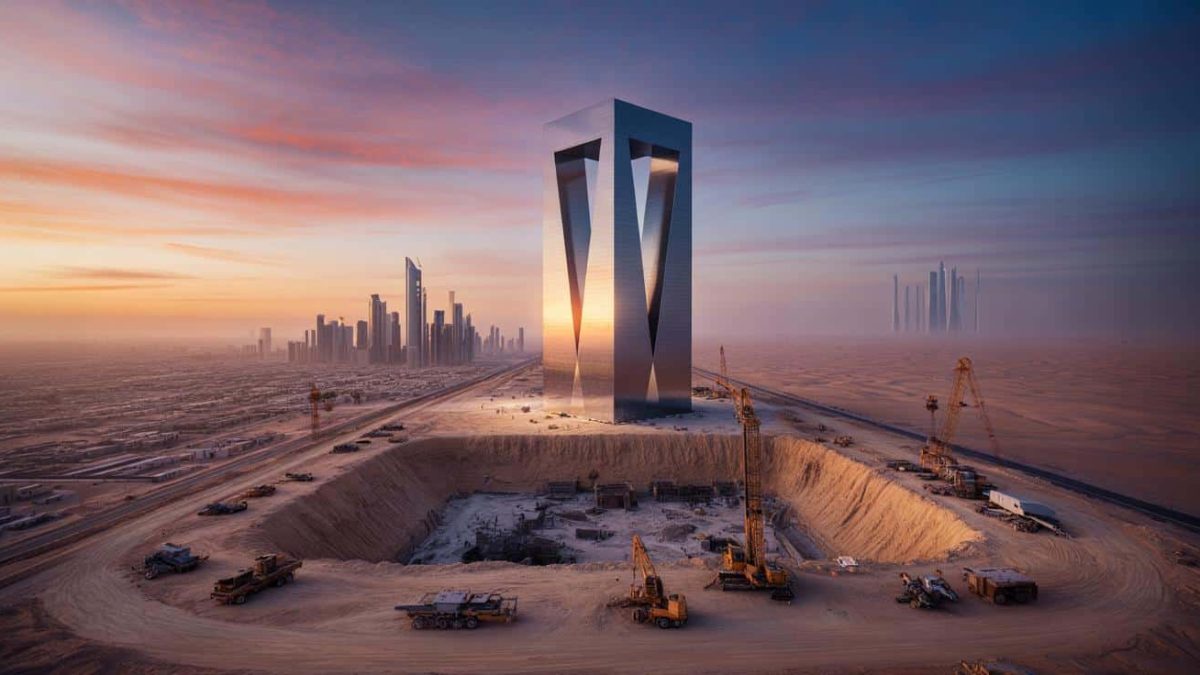
As the sun sets over the Saudi Arabian desert, a massive shadow looms on the horizon – the Mukaab, a colossal cube-shaped structure that was once touted as the largest building in human history. However, the grand vision for this architectural marvel has been put on hold, as the Saudi government has announced a surprise decision to halt the project.
The Mukaab, a towering structure of 400 meters on each side, was envisioned as the centerpiece of a new city called Neom, a futuristic metropolis being built from scratch in the kingdom’s northwest. But now, the project’s future hangs in the balance, leaving many to wonder about the reasons behind this unexpected move and the implications for Saudi Arabia’s ambitious plans.
The Rise and Pause of the Mukaab
The Mukaab was conceived as a bold statement, a symbol of Saudi Arabia’s drive to transform itself into a modern, technology-driven powerhouse. It was touted as a game-changer, a structure that would house a vast array of amenities, from commercial spaces to entertainment venues and even residential units.
However, the project’s sheer scale and complexity soon became apparent, leading to concerns about feasibility and cost. Now, the Saudi government has hit the pause button, halting construction and placing the Mukaab’s future on hold.
The decision to halt the Mukaab project comes as a surprise, given the kingdom’s relentless pursuit of ambitious projects as part of its Vision 2030 plan, a sweeping economic and social transformation aimed at reducing the country’s dependence on oil.
Grappling with Challenges and Priorities
The Mukaab’s pause is not an isolated incident. Other high-profile projects, such as the futuristic city of The Line, have also been scaled back, suggesting that Saudi Arabia is rethinking its approach to development.
Experts believe that the decision to halt the Mukaab project may be driven by a combination of factors, including concerns about the project’s cost, feasibility, and alignment with the country’s broader economic and social priorities.
Moreover, the global economic climate and fluctuations in oil prices may be playing a role in Saudi Arabia’s decision-making. The kingdom’s ability to finance such colossal projects has come under scrutiny, as the country grapples with the ongoing economic uncertainties.
The Symbolic Significance of the Mukaab
The Mukaab’s design and placement have also raised some concerns, with some observers drawing parallels between the cube-shaped structure and the Kaaba, Islam’s most sacred site in Mecca. This perceived proximity has sparked discussions about the project’s symbolic significance and its potential impact on religious and cultural sensitivities.
While the Mukaab was envisioned as a testament to Saudi Arabia’s ambition and technological prowess, the decision to pause the project may also be influenced by the need to navigate these complex cultural and religious considerations.
As Saudi Arabia navigates the challenges and evolving priorities, the fate of the Mukaab remains uncertain, leaving many to wonder about the long-term implications for the country’s grand vision and its ability to shape its future in the global landscape.
Implications for Saudi Arabia’s Vision 2030
The pause on the Mukaab project raises questions about the viability and execution of Saudi Arabia’s broader Vision 2030 plan. This ambitious blueprint, unveiled in 2016, aims to diversify the country’s economy, reduce its reliance on oil, and transform the kingdom into a global hub for investment, tourism, and technology.
- ➡Pilates-Reformer bei Lidl: Günstiges Home-Studio für 2026 im Check
- ➡Wenn du öfter das Gefühl hast, dein Körper sei plötzlich älter geworden, könnte fehlende Mobilität eine Rolle spielen – mit Expertenübungen
- ➡Australische Forscher zeigen Quantumbatterie, die kabellos in einer Sekunde lädt
- ➡Geniale Oma-Tricks: Mit diesen Küchenkräutern bleiben Spinnen draußen
The Mukaab was a centerpiece of this vision, showcasing the country’s aspirations to push the boundaries of architecture and urbanism. Its halting, however, suggests that Saudi Arabia may be rethinking its approach, prioritizing pragmatism over grand architectural statements.
Experts suggest that the decision to pause the Mukaab could signal a shift in the kingdom’s development strategy, with a focus on more realistic and sustainable projects that better align with the country’s economic and social realities.
A Shifting Landscape and Evolving Priorities
The pause on the Mukaab project reflects the broader changes and challenges facing Saudi Arabia as it navigates its ambitious transformation. The kingdom is grappling with a range of economic, social, and environmental factors that are shaping its development priorities.
As Saudi Arabia recalibrates its approach, the future of the Mukaab remains uncertain. However, the decision to pause the project may also open up new opportunities for the country to explore alternative strategies that better serve its long-term goals and the needs of its people.
Ultimately, the fate of the Mukaab will be closely watched as a barometer of Saudi Arabia’s ability to adapt to a rapidly changing global landscape and deliver on its transformative vision for the future.
The Mukaab’s Enduring Relevance
Despite the pause on the Mukaab project, the colossal structure and its symbolism continue to resonate globally. The Mukaab has become a testament to Saudi Arabia’s bold ambitions and its willingness to push the boundaries of what is possible.
Even as the project remains on hold, the Mukaab’s design and concept continue to captivate architects, urban planners, and futurists around the world. It has sparked discussions about the role of large-scale, visionary projects in shaping the built environment and the future of urban development.
While the Mukaab’s immediate future remains uncertain, its legacy and the lessons learned from this experience may continue to influence the way we think about the possibilities and challenges of creating transformative architectural and urban spaces.
FAQs
What is the Mukaab?
The Mukaab is a proposed 400-meter-tall cube-shaped building that was planned as the centerpiece of Neom, a futuristic city being built in Saudi Arabia. It was envisioned as the largest building in human history.
Why has the Mukaab project been put on hold?
The Saudi government has announced a surprise decision to halt the Mukaab project, citing concerns about feasibility, cost, and alignment with the country’s broader economic and social priorities.
What impact will the Mukaab’s pause have on Saudi Arabia’s Vision 2030?
The pause on the Mukaab project raises questions about the viability and execution of Saudi Arabia’s broader Vision 2030 plan, which aims to diversify the country’s economy and transform it into a global hub for investment, tourism, and technology.
Will the Mukaab project be revived in the future?
The future of the Mukaab project remains uncertain. While it has captured global attention, the decision to halt construction suggests that Saudi Arabia may be rethinking its approach and prioritizing more realistic and sustainable projects.
What are the symbolic and cultural concerns surrounding the Mukaab?
The Mukaab’s design and placement have raised concerns about its proximity to the Kaaba, Islam’s most sacred site in Mecca. This has sparked discussions about the project’s symbolic significance and its potential impact on religious and cultural sensitivities.
How does the Mukaab’s pause fit into the broader changes and challenges facing Saudi Arabia?
The decision to halt the Mukaab project reflects the broader changes and challenges facing Saudi Arabia as it navigates its ambitious transformation, including economic, social, and environmental factors that are shaping the country’s development priorities.
What is the long-term significance of the Mukaab, even with the project on hold?
Despite the pause, the Mukaab and its bold design continue to captivate architects, urban planners, and futurists around the world, sparking discussions about the role of large-scale, visionary projects in shaping the built environment and the future of urban development.
How does the Mukaab’s pause compare to other high-profile project changes in Saudi Arabia?
The Mukaab’s pause is not an isolated incident, as other ambitious projects, such as the futuristic city of The Line, have also been scaled back, suggesting that Saudi Arabia is rethinking its approach to development and prioritizing pragmatism over grand architectural statements.