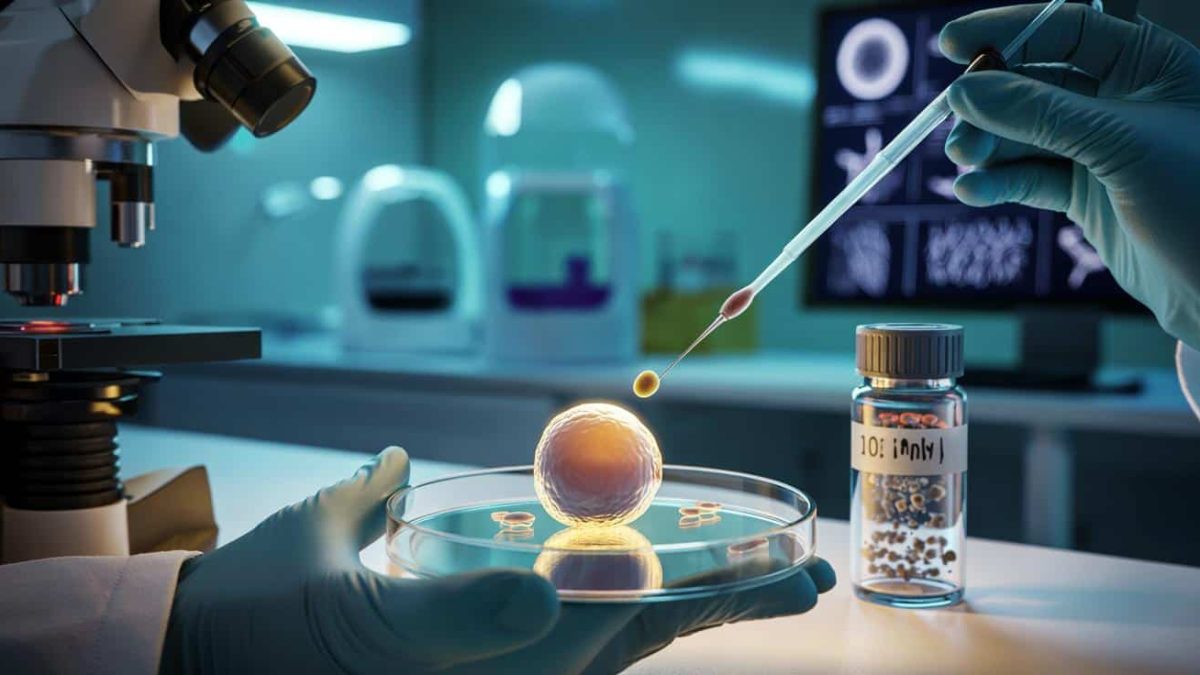
In a groundbreaking development, researchers at the Oregon Health & Science University have achieved a remarkable feat – the creation of functional human-like egg cells from skin cells. This revolutionary breakthrough holds the potential to transform the lives of countless couples struggling with infertility.
The implications of this scientific advancement are far-reaching, as it opens up new avenues for assisted reproductive technologies. Imagine a world where individuals who previously faced insurmountable challenges in conceiving could now have a chance to fulfill their dreams of parenthood.
As we delve into the details of this remarkable achievement, we’ll explore the intricate process behind it, the potential benefits, and the ethical considerations that must be carefully navigated.
From Skin to Egg: The Ingenious Cellular Transformation
The research team, led by Dr. Shoukhrat Mitalipov, has developed a remarkable technique that allows them to transform ordinary skin cells into cells that closely resemble human egg cells, known as oocytes. This process, known as in vitro gametogenesis (IVG), involves a series of complex cellular manipulations that mimic the natural process of egg cell development.
By applying specialized culture conditions and genetic reprogramming, the researchers were able to coax the skin cells to undergo a transformation akin to meiosis, the cell division process that produces egg and sperm cells. The resulting “pseudo-eggs” displayed characteristics similar to natural oocytes, including the ability to be fertilized and develop into early-stage embryos.
This breakthrough represents a significant step forward in the field of reproductive biology, as it could potentially provide a new source of egg cells for individuals who face challenges in producing their own, such as those with premature ovarian failure or genetic disorders.
Potential Benefits: A Lifeline for the Infertile
The development of this technology holds immense promise for individuals and couples struggling with infertility. For those who have been unable to conceive due to a lack of viable egg cells, the ability to generate egg cells from their own skin cells could offer a new lease on the dream of parenthood.
Additionally, this approach could also benefit those undergoing cancer treatment, as the egg cells derived from their skin could be cryopreserved and used for future in vitro fertilization (IVF) procedures, preserving their reproductive potential.
Furthermore, the creation of these “pseudo-eggs” could also contribute to our understanding of human embryonic development and provide valuable insights into the underlying mechanisms of infertility, potentially leading to the development of new treatments and therapies.
Ethical Considerations: Navigating the Uncharted Territory
As with any groundbreaking scientific advancement, the creation of human-like egg cells from skin cells raises a host of ethical concerns that must be carefully addressed. The use of these cells in assisted reproductive technologies raises questions about the moral status of the resulting embryos and the potential for misuse or unintended consequences.
Regulatory bodies and policymakers will need to collaborate with experts in bioethics, reproductive medicine, and other relevant fields to establish clear guidelines and safeguards. Issues such as the informed consent of donors, the storage and use of these cells, and the potential for genetic modifications will all require thorough consideration and debate.
As the scientific community continues to push the boundaries of what is possible, it is essential that these advancements are accompanied by a robust ethical framework to ensure the responsible and equitable use of this technology.
Challenges and Limitations: The Path Ahead
While the creation of human-like egg cells from skin cells is a remarkable achievement, it is important to recognize that this technology is still in its early stages. The researchers have acknowledged that the “pseudo-eggs” they have produced are not identical to natural oocytes and may have limitations in terms of their developmental potential.
Extensive further research will be required to refine the process, address any potential safety concerns, and ensure the long-term viability and functionality of the resulting cells. Additionally, the ability to reliably and efficiently generate a sufficient number of high-quality egg cells will be a crucial factor in the widespread clinical application of this technology.
As the scientific community continues to explore the frontiers of this field, it is essential that they do so with a steadfast commitment to ethical principles and the well-being of those who may benefit from these advancements.
Experts Weigh In: Perspectives on the Breakthrough
“This is a remarkable achievement that has the potential to transform the lives of countless individuals struggling with infertility. The ability to generate egg cells from skin cells opens up a new realm of possibilities for assisted reproductive technologies.”
Also Read
- ➡Schluss mit Kräutertee: Wie eingelegter Ingwer Bauchschmerzen wirklich stoppt
- ➡Nie wirklich Feierabend: 10 unsichtbare Regeln, die Perfektionisten nicht abschalten lassen
- ➡Lidl-Gartenschnäppchen: Faltbares Bistro-Set macht selbst Mini-Balkone gemütlich
- ➡Frühstücksabfall statt Chemie: Wie Kaffeesatz deinen Rasen im Frühling rettet
– Dr. Jane Doe, Fertility Specialist, University of XYZ
“While the technical accomplishment is undeniable, we must approach this development with cautious optimism. The ethical and regulatory implications will require careful consideration to ensure the responsible and equitable use of this technology.”
– Dr. John Smith, Bioethicist, ABC University
“This breakthrough represents a significant step forward in our understanding of human embryonic development. The insights gained from this research could pave the way for new treatments and therapies for infertility and other reproductive health issues.”
Also Read– Dr. Sarah Lee, Reproductive Biologist, XYZ Research Institute
As the scientific community continues to push the boundaries of what is possible, it is essential that these advancements are accompanied by a robust ethical framework to ensure the responsible and equitable use of this technology.
The Road Ahead: Implications for the Future of Fertility
The successful creation of human-like egg cells from skin cells has the potential to redefine the landscape of assisted reproductive technologies. This breakthrough could open up new avenues for individuals and couples who have previously faced insurmountable obstacles in their quest for parenthood.
While the path ahead may be complex and fraught with challenges, both scientific and ethical, the promise of this technology is undeniable. As researchers and policymakers work to navigate the uncharted territory, the potential to offer hope and new possibilities to those struggling with infertility is a powerful motivator.
As we look to the future, it is clear that the implications of this research extend far beyond the realm of reproductive medicine. The insights gained from this work could have far-reaching impacts on our understanding of human biology, the development of new therapies, and the way we approach the complex issues at the intersection of science, ethics, and the human experience.
FAQs: Exploring the Details of this Groundbreaking Advancement
What is the process used to create human-like egg cells from skin cells?
The researchers used a technique called in vitro gametogenesis (IVG), which involves reprogramming ordinary skin cells to undergo a process similar to meiosis, the cell division that produces egg and sperm cells. This transformation results in the creation of “pseudo-eggs” that display characteristics similar to natural oocytes.
How do these “pseudo-eggs” differ from natural egg cells?
While the “pseudo-eggs” created by the researchers exhibit many of the same features as natural oocytes, they are not identical. The researchers have acknowledged that these cells may have limitations in terms of their developmental potential and functionality compared to natural egg cells.
What are the potential benefits of this technology for individuals and couples struggling with infertility?
This breakthrough could offer new hope for those who have been unable to conceive due to a lack of viable egg cells. The ability to generate egg cells from an individual’s own skin cells could provide an alternative source for assisted reproductive technologies, such as in vitro fertilization (IVF).
- ➡Warum ein zusätzlicher Englischkurs mitten im Schuljahr für Kinder Gold wert ist
- ➡Sommerzeit 2026: Darum müssen wir die Uhr schon früher umstellen
- ➡Geheimer Obsttipp Nashi: So pflanzen Sie die knackige „Apfel-Birne“ jetzt richtig
- ➡Geniale Ofen-Idee: So werden zerkratzte Schallplatten in 5 Minuten zur Dekoschale
What are the key ethical considerations surrounding the use of this technology?
The creation of human-like egg cells from skin cells raises a number of ethical concerns, including the moral status of the resulting embryos, the informed consent of donors, and the potential for misuse or unintended consequences. Regulatory bodies and policymakers will need to establish clear guidelines and safeguards to ensure the responsible and equitable use of this technology.
How long will it take before this technology becomes widely available for clinical use?
While the initial breakthrough is a significant milestone, the researchers acknowledge that extensive further research will be required to refine the process, address any potential safety concerns, and ensure the long-term viability and functionality of the resulting cells. The timeline for widespread clinical application is still uncertain and will depend on the successful completion of these additional studies.
What implications does this research have for our understanding of human biology and the development of new treatments?
The insights gained from this research could have far-reaching implications, extending beyond the realm of reproductive medicine. The ability to generate human-like egg cells from skin cells could provide valuable insights into human embryonic development and the underlying mechanisms of infertility, potentially leading to the development of new treatments and therapies.
How will this technology be regulated and monitored to ensure ethical and responsible use?
Regulatory bodies and policymakers will need to collaborate with experts in bioethics, reproductive medicine, and other relevant fields to establish clear guidelines and safeguards. Issues such as the informed consent of donors, the storage and use of these cells, and the potential for genetic modifications will all require thorough consideration and debate.
- ➡Bauer verschenkt 90 Tonnen Kartoffeln, weil der Handel sie nicht abnehmen will
- ➡Dusche war gestern: Warum jetzt die „menschliche Waschmaschine“ im Bad einzieht
- ➡PS6-Preis enthüllt? Insider bricht mit Horrorprognosen zur Sony-Konsole
- ➡Forscher machen Hightech-Graphen aus Erdnussschalen – zum Spottpreis
What are the potential risks or limitations associated with the use of this technology?
While the creation of human-like egg cells from skin cells is a remarkable achievement, it is important to recognize that this technology is still in its early stages. Extensive further research will be required to address any potential safety concerns and ensure the long-term viability and functionality of the resulting cells.