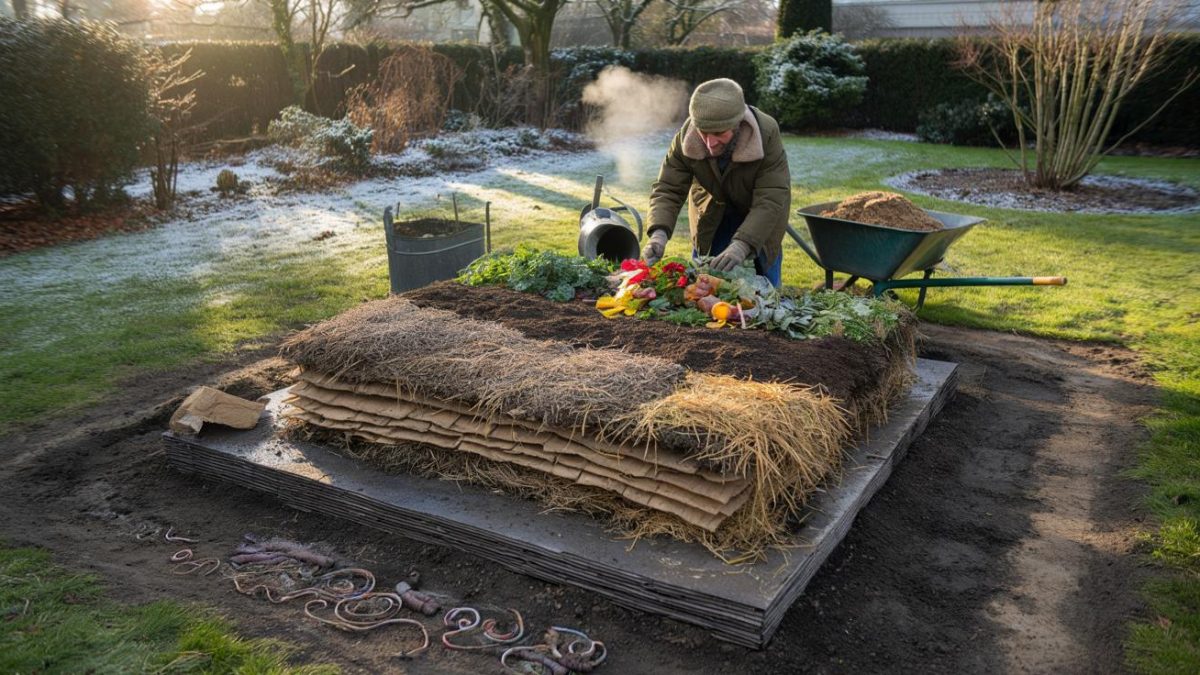
As the winter winds howl and the snow blankets the garden, many gardeners find themselves dreaming of the lush, vibrant beds to come in the spring. But what if I told you that the key to creating those picture-perfect planters is hidden in the chill of January?
Enter the “lasagne garden” technique – a revolutionary way to prep your soil for a bountiful harvest without the back-breaking work of traditional gardening. By layering organic materials in your beds, you can create a nutrient-rich foundation that will give your spring seedlings the perfect start. And the best part? You can do it all while staying cozy inside.
Why Winter is the Perfect Time to Start Your Lasagne Garden
When the mercury dips and the days grow short, most gardeners turn their attention to indoor pursuits. But savvy green thumbs know that this is the ideal moment to lay the groundwork for a lush, low-maintenance garden. As the organic materials in your lasagne garden break down over the winter, they’ll transform your soil into a veritable feast for your springtime plants.
By starting now, you’ll avoid the rush and chaos of the spring planting season. No more hurried trips to the nursery or aching muscles from hours of tilling – your beds will be ready to go when the first blooms start to appear.
And the best part? This revolutionary technique requires almost no physical labor. Simply layer your materials and let nature do the rest. It’s gardening at its easiest!
The First Step: Cardboard as a Secret Weapon Against Weeds
The foundation of any successful lasagne garden is a layer of cardboard or newspaper. This acts as a barrier, blocking out any pesky weeds or grasses that might try to take over your carefully curated beds. Simply lay down a thick layer of cardboard, making sure to overlap the edges to create a solid foundation.
Opt for plain, unprinted cardboard for best results – the chemicals in glossy or colored papers can harm your plants. And don’t worry about the ink from newsprint, as it will break down over time.
Once your cardboard base is in place, you’re ready to start building your lasagne!
Layering it Up: Getting the Right “Brown” to “Green” Ratio
The key to a successful lasagne garden is finding the perfect balance between “brown” and “green” materials. Browns, like dry leaves, shredded paper, or straw, provide carbon-rich matter that helps to aerate the soil. Greens, such as fresh grass clippings or vegetable scraps, bring nitrogen-rich nutrients.
Start by adding a 2-inch layer of your brown materials, followed by a 1-inch layer of greens. Continue alternating these layers, making sure to keep them evenly distributed across the bed. The final result should resemble a savory lasagne, with distinct layers of “noodles” and “fillings”.
As the winter progresses, these materials will break down, transforming your garden bed into rich, fertile soil that’s primed for planting come spring.
Your Own Backyard Compost Facility
One of the best things about the lasagne garden technique is that it allows you to create your own on-site compost facility. By layering in your kitchen scraps and yard waste, you’re turning waste into garden gold.
Not only does this reduce your environmental footprint, but it also ensures that your soil is filled with exactly the nutrients your plants need. No more guessing about which fertilizers to use – your homemade compost will provide a balanced, all-natural boost.
And the best part? You can keep adding to your lasagne garden all winter long, continually building up those nutrient-rich layers.
While You Sleep: Hardworking Helpers Underground
As you’re cozied up by the fire, your lasagne garden is hard at work underground. Earthworms and other beneficial microbes are busy breaking down the organic matter, transforming it into nourishing humus that will give your plants a strong foundation.
These unseen workers are the unsung heroes of the lasagne garden. By aerating the soil and cycling nutrients, they’re doing the heavy lifting so you don’t have to. All you have to do is sit back and let nature take its course.
- ➡Verstopft im Urlaub? 5 Darm-Tricks, die jede Reise retten
- ➡3 einfache Alltags-Tricks, mit denen Sie Ihre Gesundheit natürlich boosten
- ➡Warum geteilte Schmerzen milder machen – und ignorierte Herzen verhärten
- ➡Warum ein kurzer Spaziergang im Grünen laut Psychologen Stress schneller abbauen kann als ein intensives Workout im Fitnessstudio
Come springtime, your beds will be ready to plant – no back-breaking tilling required. Just gently part the layers and tuck in your seedlings. It’s gardening at its easiest!
Common Mistakes to Avoid
While the lasagne garden technique is relatively simple, there are a few pitfalls to watch out for. First and foremost, be sure to use only organic materials in your layers. Anything containing chemicals or preservatives can harm your plants.
It’s also important to maintain the right balance of browns and greens. Too much carbon-rich material can make your soil too acidic, while an excess of nitrogen-rich greens can lead to an unpleasant odor as they break down.
And don’t forget to water your lasagne garden regularly throughout the winter. The organic matter needs to stay moist in order to decompose properly.
Who Benefits Most from the Lasagne Garden Approach?
The beauty of the lasagne garden is that it can be tailored to fit any gardener’s needs. Whether you have a sprawling backyard or a petite patio planter, this technique can help you create thriving beds with minimal effort.
It’s particularly well-suited for those with limited mobility or time. By doing the bulk of the work in the off-season, you can avoid the physical strain of traditional spring planting. And the hands-off nature of the lasagne garden means you can enjoy a bountiful harvest with just a few minutes of maintenance per week.
So if you’re dreaming of a lush, low-maintenance garden, the lasagne method might just be your ticket to green-thumb glory. All it takes is a little winter prep work, and you’ll be reaping the rewards come springtime.
| Pros of the Lasagne Garden Technique | Cons of the Lasagne Garden Technique |
|---|---|
| – Minimal physical labor required – Nutrient-rich soil without chemical fertilizers – Reduces garden waste with built-in composting – Helps suppress weeds and grass |
– Requires planning and preparation in advance – May take several months for materials to fully decompose – Can be a bit messy during the initial layering process – Requires a consistent supply of organic materials |
- ➡Denken Sie an diesem Wochenende dringend wegen Folgen an die Zeitumstellung auf Winterzeit
- ➡Studie zeigt: Wirklich nette Menschen streamen vor allem diese Filmtypen
- ➡Gärtner-Trick gegen Moos: Dieses Pulver rettet deine Terrassenplatten
- ➡Gefährliche Futterfalle: Warum nasse Vogelfutter-Samen im Winter tödlich sein können
“The lasagne garden is a game-changer for busy gardeners. By doing the bulk of the work in the off-season, you can create beautiful, low-maintenance beds with a fraction of the effort.”
– Sarah Johnson, Master Gardener and Author
“This technique is a wonderful way to turn kitchen and yard waste into rich, fertile soil. It’s a true example of sustainable, closed-loop gardening.”
– Dr. Emily Walters, Soil Scientist and Sustainability Consultant
Also Read
- ➡Mit 337 Metern Länge und 100000 Tonnen Verdrängung ist dieser Flugzeugträger der größte der Welt und dominiert die Ozeane wie kein anderes Kriegsschiff
- ➡Radfahren auf Eis und Schnee: Mit diesen 5 Tricks bleibst du sicher
- ➡Geniale Winter-Idee: Mit diesem einfachen Spiel drehen Hühner richtig auf
- ➡Lidl bringt Pilates-Reformer für zuhause: Was taugt das 299-Euro-Gerät?
“The lasagne garden is a brilliant solution for gardeners with limited mobility or time. By doing the heavy lifting in advance, you can enjoy a thriving, productive garden with minimal ongoing effort.”
– Tony Greenfield, Horticulturist and Landscape Designer
As the winter winds howl and the snow blankets the garden, it might seem like the growing season is far away. But savvy gardeners know that the key to a lush, bountiful harvest lies in the chill of January. By embracing the lasagne garden technique, you can create the perfect foundation for your springtime beds – all while staying cozy indoors.
So why not give it a try? With a little bit of winter prep work, you can look forward to effortless, weed-free gardening come spring. Your future self (and your aching back) will thank you.
- ➡Diese Frühjahrs-Idee macht deinen Garten zum Vogel- und Beerenparadies
- ➡Forscher formen erstmals menschliche Eizellen aus Haut – Chance für unfruchtbare Paare?
- ➡Steuertrick 2026: So lassen sich über 300.000 Euro steuerfrei verschenken
- ➡Chinesisches Horoskop 2026: Dieser Glückspilz räumt im Frühling richtig ab
What is a lasagne garden?
A lasagne garden is a method of building raised garden beds by layering organic materials like cardboard, leaves, straw, and compostable kitchen scraps. As these materials break down over the winter, they create a rich, nutrient-dense soil that’s perfect for growing healthy plants.
When is the best time to start a lasagne garden?
The winter months, particularly January and February, are the ideal time to begin building a lasagne garden. This gives the organic materials plenty of time to decompose before the spring planting season.
What materials are used in a lasagne garden?
Common “brown” materials include dry leaves, shredded paper, straw, and cardboard. “Green” materials include fresh grass clippings, vegetable scraps, and other nitrogen-rich organic matter. The key is to layer these materials in a 2:1 ratio of browns to greens.
Do I need to turn or mix the layers in a lasagne garden?
No, one of the benefits of the lasagne garden technique is that you don’t need to do any back-breaking digging or tilling. Simply layer the materials and let nature take its course. The earthworms and other beneficial microbes will do the work of mixing and aerating the soil for you.
- ➡Das Hausmittel, das hartnäckige Rotweinflecken auf dem Sofa wirklich entfernt
- ➡Historisches Internetkabel aus dem Atlantik geborgen: Spektakuläre Bergungsaktion vor Portugal
- ➡TV-Star Faustine Bollaert schwört auf diese weißen Mega-Bequemsneaker
- ➡Genialer Butter-Trick: So werden Hafer-Apfel-Muffins saftig ohne Fettbombe
How do I maintain a lasagne garden over the winter?
The main maintenance task is to keep the layers moist by watering them regularly. You can also continue adding new materials to the top of the garden as you have them available. Just be sure to maintain the 2:1 brown-to-green ratio.
When can I start planting in a lasagne garden?
In most climates, you can begin planting in your lasagne garden as soon as the ground thaws in early spring. Simply part the layers and tuck in your seedlings or transplants. The rich, nutrient-dense soil will give them a strong start.
Do lasagne gardens require any special tools or equipment?
No, the beauty of this technique is that it can be done with basic household items. All you need are layers of cardboard or newspaper, organic materials like leaves and grass clippings, and a willingness to let nature do the work.
Can lasagne gardens be used for growing vegetables and herbs?
Absolutely! The nutrient-rich soil created by a lasagne garden is ideal for growing a wide variety of edible plants, from tomatoes and peppers to leafy greens and herbs. It’s a great way to create a productive, low-maintenance kitchen garden.
- ➡Darmbakterie im Kindesalter: Wie ein verstecktes Gift Darmkrebs früh auslösen kann
- ➡Sommerzeit-Umstellung: Mit diesen Arzt-Tipps kommen Sie gut durch die verlorene Stunde
- ➡Große Studie mit 48.500 Hunden räumt mit dem Dressur-Mythos auf
- ➡Genialer Wohntrend: Was aus vergilbten Bettlaken wirklich werden kann
Are there any downsides to the lasagne garden approach?
The main potential downsides are the initial time investment required to layer the materials, as well as the fact that it can take several months for the organic matter to fully decompose. You’ll also need a consistent supply of brown and green materials to keep the layers balanced.