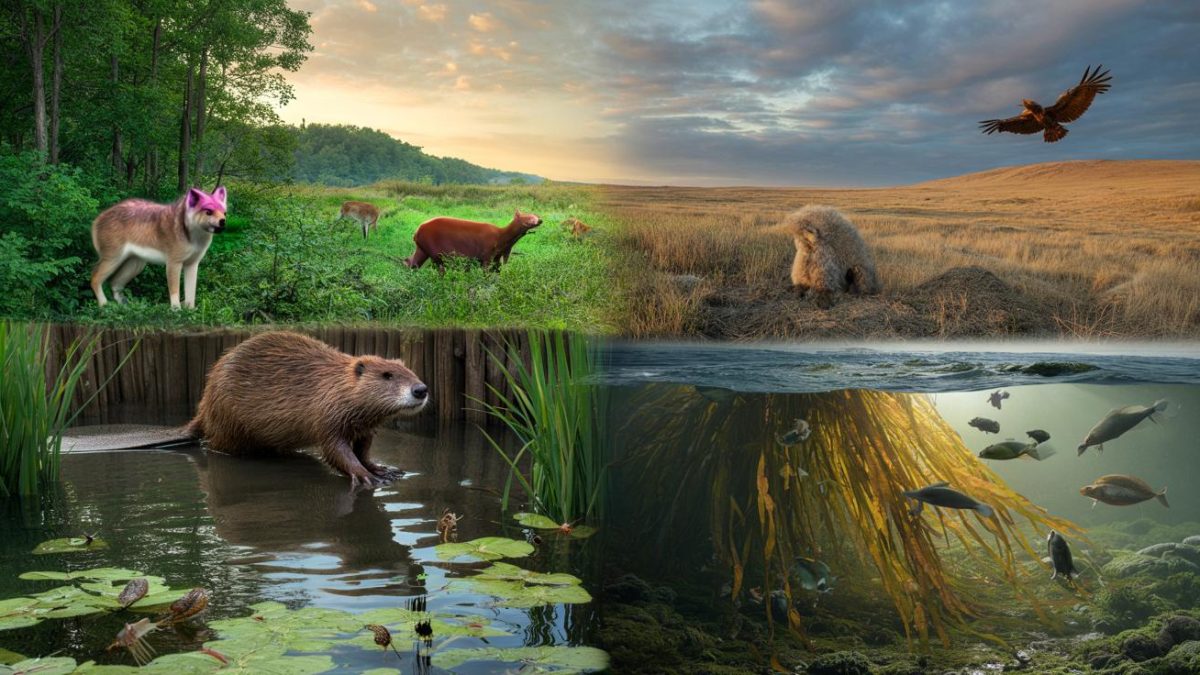
In the intricate tapestry of our natural world, certain species hold the power to shift the balance of entire ecosystems. These are the Schlüsselarten, or “key species,” whose presence or absence can trigger dramatic changes that reverberate through the delicate web of life. It’s a humbling realization that the fate of vast, sprawling environments can rest upon the survival of a few critical players.
What makes these Schlüsselarten so pivotal? Their unique roles, often as predators, prey, or ecosystem engineers, grant them an outsized influence on the well-being of their surroundings. When their numbers dwindle or disappear, the ripple effects can be catastrophic, leading to the collapse of entire habitats and the loss of countless other species.
As we grapple with the escalating environmental challenges of our time, understanding the critical importance of Schlüsselarten has become paramount. By shining a light on these key species and the fragile ecosystems they sustain, we can unlock the secrets to preserving the natural world’s delicate equilibrium.
Defining Schlüsselarten: The Lynchpins of Nature
Schlüsselarten are species that play a disproportionately large role in the structure and function of their ecosystems. They are often described as the “lynchpins” of nature, the essential cogs that keep the intricate machinery of the natural world in motion.
These species may be dominant predators, critical pollinators, or foundational habitat builders. Their presence or absence can trigger cascading effects, causing dramatic shifts in the abundance and diversity of other species, the flow of energy and nutrients, and the overall resilience of the ecosystem.
Identifying Schlüsselarten is not always straightforward, as their importance may not be immediately apparent. It often requires in-depth ecological research and a deep understanding of the complex interdependencies within a given ecosystem.
Four Awe-Inspiring Examples of Schlüsselarten
To fully grasp the power of Schlüsselarten, let’s explore four remarkable examples from around the world:
The Sea Otter: Guardians of the Kelp Forests
In the kelp forests of the North Pacific, the sea otter reigns as a keystone species. These charismatic marine mammals prey upon sea urchins, which in turn graze on the towering kelp plants. Without the sea otter’s predatory control, sea urchin populations can explode, decimating the kelp forests and transforming the entire ecosystem.
When sea otters are present, the kelp forests thrive, providing critical habitat and resources for a diverse array of marine life. But when sea otter populations decline, often due to hunting or habitat loss, the delicate balance is shattered, and the kelp forests give way to barren “urchin barrens.”
The fate of the sea otter, then, is inextricably linked to the health and resilience of the kelp forest ecosystems they call home.
The Gray Wolf: Architects of the Boreal Forests
In the rugged wilderness of North America’s boreal forests, the gray wolf stands as a Schlüsselart, shaping the landscape through its profound influence on prey species and vegetation patterns.
As apex predators, wolves exert a top-down control on populations of elk, deer, and other herbivores. This, in turn, allows the growth and regeneration of trees and other plant life, maintaining the delicate balance of the boreal forest ecosystem.
- ➡Nie wirklich Feierabend: 10 unsichtbare Regeln, die Perfektionisten nicht abschalten lassen
- ➡Ab 50 purzeln die Kilos nicht? Diese Eiweiß-Falle blockiert Ihre Abnahme
- ➡Geniale Winter-Trickmethode: Mit „Lasagne-Garten“ jetzt Traumbeete für den Frühling anlegen
- ➡Zwei Sternzeichen schlucken Kritik – warum ihr Schweigen Ende März kippen kann
When wolf populations decline, often due to human persecution, the unchecked grazing of herbivores can lead to the transformation of the boreal forests into grasslands or shrublands, dramatically altering the habitat and displacing countless other species.
The Keystone Coral: Builders of Underwater Cities
In the vibrant underwater realms of the world’s coral reefs, a single species can hold the key to the entire ecosystem’s survival: the keystone coral.
These foundation species, often reef-building corals, provide the physical structure and habitat that supports a dazzling array of marine life. Their growth, reproduction, and resilience to threats like bleaching and disease are critical to the persistence of the coral reef ecosystem.
When keystone coral species decline, the reefs can rapidly deteriorate, leading to a loss of biodiversity, reduced coastal protection, and the collapse of important fisheries that communities depend upon.
- ➡Wie du mit einem alten Zahnbürste deine Autolüftungsschlitze in Minuten sauber bekommst
- ➡Alte Küchenschwämme: Dieser simple Trick rettet deine Gartenpflanzen
- ➡Forscher formen erstmals menschliche Eizellen aus Haut – Chance für unfruchtbare Paare?
- ➡Renault plant Reichweiten-Revolution: 1.400 km und Laden in 10 Minuten
The Salmon: Lifeblood of the Pacific Northwest
In the rivers and streams of the Pacific Northwest, the salmon stands as a Schlüsselart, connecting the marine and terrestrial realms and sustaining the entire ecosystem.
Each year, vast numbers of salmon return from the ocean to spawn, bringing with them a rich influx of nutrients and energy that nourish everything from bears and eagles to the very trees lining the riverbanks. Without this annual salmon run, the intricate web of life in the region would unravel.
Overfishing, habitat degradation, and climate change-induced changes in ocean conditions have all contributed to the decline of salmon populations, threatening the delicate balance of the entire Pacific Northwest ecosystem.
Ecosystem Tipping Points: When Schlüsselarten Disappear
The loss or decline of Schlüsselarten can push ecosystems toward critical tipping points, where the entire system undergoes a dramatic shift in structure and function. This can happen rapidly, as the cascading effects amplify and feedback loops accelerate the transformation.
- ➡Warum hohe Intelligenz so weh tun kann, wenn andere falsche Entscheidungen treffen
- ➡Schmerzfrei ins Lauf-Frühjahr: Diese 10-Prozent-Regel schützt deine Knie
- ➡Schluss mit neugierigen Nachbarn: Dieser IKEA-Trick macht Mini-Gärten privat
- ➡GTA 6-Schock: Warum der Online-Modus für Millionen gesperrt sein könnte
When key species vanish, the web of life unravels, leading to the loss of biodiversity, the disruption of essential ecosystem services, and the potential for irreversible change. Restoring these systems once they’ve crossed the threshold can be an immense challenge, often requiring extensive intervention and a long-term commitment to conservation efforts.
Understanding the concept of ecosystem tipping points and the pivotal role of Schlüsselarten is crucial for developing effective strategies to protect the natural world. By safeguarding these keystone species, we can help ensure the resilience and stability of the ecosystems that sustain us all.
The Human Connection: Our Fate Entwined with Schlüsselarten
As humans, our well-being is inextricably linked to the health and resilience of the natural world. The Schlüsselarten that shape the ecosystems around us provide us with vital services, from regulating climate and water cycles to supplying food, raw materials, and medicinal resources.
When these key species decline or disappear, the consequences can be far-reaching, affecting human communities in profound ways. The loss of keystone corals can threaten coastal economies and food security, while the decline of salmon can disrupt the livelihoods and cultural traditions of indigenous peoples.
By recognizing the critical role of Schlüsselarten and taking steps to protect them, we can safeguard the delicate balance of the natural world and ensure a sustainable future for ourselves and generations to come. It is a sobering realization, but also a call to action – to become stewards of the Schlüsselarten that hold the key to the resilience of our shared home.
FAQ
What are Schlüsselarten, and why are they important?
Schlüsselarten, or “key species,” are organisms that play a disproportionately large role in the structure and function of their ecosystems. They are often described as the “lynchpins” of nature, as their presence or absence can trigger dramatic shifts that impact the entire ecosystem.
Can you provide some examples of Schlüsselarten?
Yes, some examples of Schlüsselarten include sea otters (guardians of kelp forests), gray wolves (architects of boreal forests), keystone corals (builders of underwater cities), and salmon (lifeblood of the Pacific Northwest).
How can the loss of Schlüsselarten lead to ecosystem collapse?
The decline or disappearance of Schlüsselarten can push ecosystems toward critical tipping points, where the entire system undergoes a dramatic shift in structure and function. This can happen rapidly, as the cascading effects amplify and feedback loops accelerate the transformation, leading to the loss of biodiversity and the disruption of essential ecosystem services.
Why is understanding Schlüsselarten important for human well-being?
Our well-being is inextricably linked to the health and resilience of the natural world, and Schlüsselarten provide us with vital services, from regulating climate and water cycles to supplying food, raw materials, and medicinal resources. Protecting these key species is crucial for ensuring a sustainable future for both the environment and human communities.
What are some strategies for conserving Schlüsselarten?
Strategies for conserving Schlüsselarten include habitat protection, species-specific conservation efforts, addressing threats like overhunting or pollution, and promoting ecosystem-based management approaches that recognize the critical role of these key species.
How can individuals contribute to the protection of Schlüsselarten?
Individuals can contribute to the protection of Schlüsselarten by supporting conservation organizations, reducing their environmental footprint, advocating for policies that protect these key species and their habitats, and educating themselves and others about the importance of Schlüsselarten.
Are there any challenges in identifying Schlüsselarten?
Yes, identifying Schlüsselarten can be challenging, as their importance may not be immediately apparent. It often requires in-depth ecological research and a deep understanding of the complex interdependencies within a given ecosystem.
How can the concept of Schlüsselarten inform conservation and environmental management efforts?
The concept of Schlüsselarten can inform conservation and environmental management efforts by highlighting the critical importance of protecting these keystone species and the ecosystems they sustain. By focusing on the preservation of Schlüsselarten, policymakers and land managers can develop more effective strategies for safeguarding the natural world and its long-term resilience.