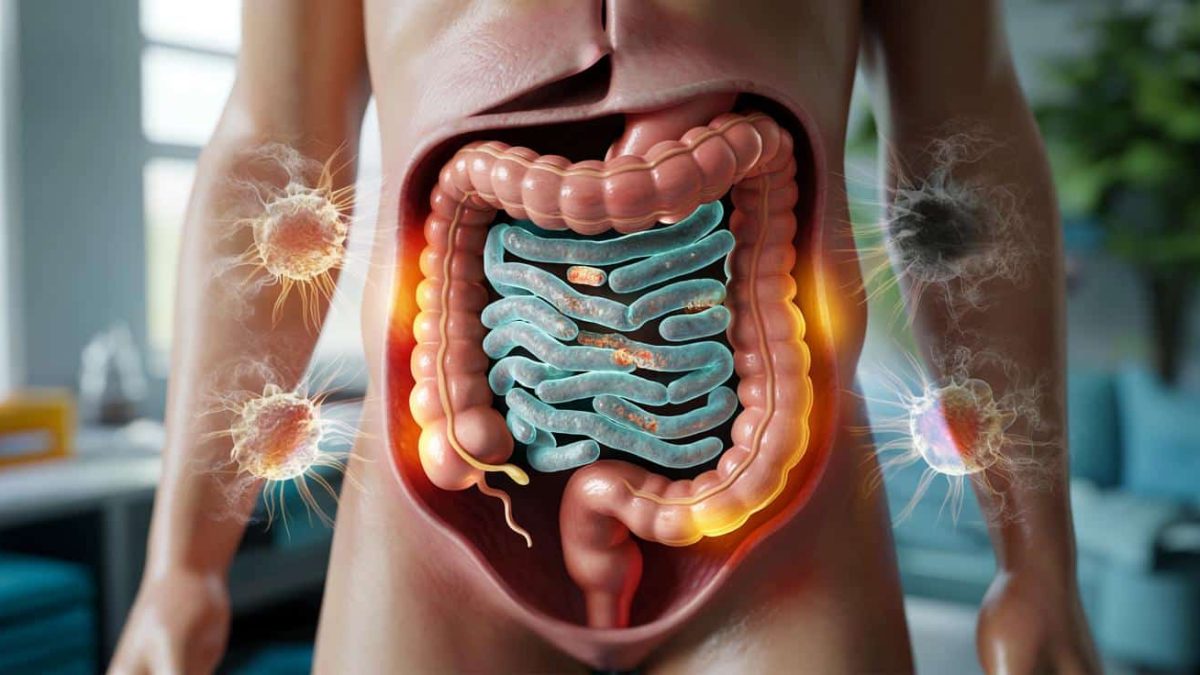
The Crohn’s disease epidemic silently raging within our guts may soon meet its match. Researchers in France have unveiled a groundbreaking approach that foregoes traditional treatments like pills, infusions, and surgeries — instead harnessing the power of a remarkable gut bacteria to quell this debilitating condition.
Crohn’s disease, a chronic inflammatory bowel disorder, has long defied a medical silver bullet. But the scientific community is abuzz with the potential of a novel biotherapeutic that could reshape the future of Crohn’s management. This new frontier doesn’t involve synthetic drugs or complex procedures — it lies within the delicate balance of our own intestinal microbiome.
The Protective Gut Bacteria Crucial for Crohn’s
At the heart of this breakthrough is a resilient microbe known as Faecalibacterium prausnitzii. This humble bacteria has long been recognized as a crucial member of a healthy gut ecosystem, but its role in Crohn’s disease has remained elusive — until now.
Researchers have discovered that Crohn’s patients often exhibit a troubling deficiency of F. prausnitzii, leaving their intestinal defenses vulnerable. This protective bacteria plays a vital part in regulating the immune system and maintaining a balanced inflammatory response — two critical factors in the Crohn’s puzzle.
By restoring the abundance of F. prausnitzii, the researchers believe they can help reset the body’s inflammatory pathways, potentially offering relief to those suffering from the painful flare-ups and debilitating symptoms of Crohn’s disease.
Reprogramming Immune Cells to Calm Inflammation
The secret to F. prausnitzii’s therapeutic potential lies in its unique ability to influence the behavior of immune cells. This gut bacteria has been shown to stimulate the production of interleukin-10 (IL-10), a powerful anti-inflammatory molecule that can help dampen the excessive immune response seen in Crohn’s disease.
In essence, F. prausnitzii acts as a “master regulator,” reprogramming the body’s immune cells to adopt a more balanced, anti-inflammatory profile. This nuanced interplay between the gut microbiome and the immune system holds the key to unlocking new avenues for Crohn’s management.
By harnessing the restorative power of this protective bacteria, researchers believe they can provide a much-needed alternative to the harsh pharmaceutical treatments that have long been the standard of care for Crohn’s patients.
From the Lab Bench to Living Biotherapeutic
The journey from laboratory discovery to viable clinical treatment is a long and arduous one, but the French research team is undaunted. They have already taken the first steps in transforming F. prausnitzii from a scientific curiosity into a living, breathing biotherapeutic.
Through rigorous testing and optimization, the researchers have developed a method to cultivate and stabilize this gut bacteria, paving the way for its potential use as a novel treatment option for Crohn’s disease. By delivering a concentrated dose of F. prausnitzii directly to the gut, they aim to tip the scales back in favor of a healthy, balanced immune response.
This innovative approach represents a paradigm shift in the way we think about managing Crohn’s disease. Rather than relying on drugs that broadly suppress the immune system, this biotherapeutic seeks to restore the natural harmony between the gut and the body’s defenses.
What This Means for Crohn’s Patients
For the millions of individuals living with the daily challenges of Crohn’s disease, this potential breakthrough offers a glimmer of hope. The opportunity to harness the body’s own protective mechanisms, rather than solely relying on harsh medications, could revolutionize the way this chronic condition is managed.
While the road to clinical implementation is still paved with hurdles, the research team is cautiously optimistic about the future. By continuing to unravel the intricate relationship between the gut microbiome and Crohn’s disease, they believe they can unlock new avenues for more targeted, personalized treatments.
For Crohn’s patients, the prospect of a gut-based biotherapeutic represents a chance to reclaim their quality of life, free from the debilitating symptoms and side effects that have long been the hallmark of this elusive disease.
Understanding the Key Concepts: IL-10, Microbiome, and Mitochondrial Respiration
To fully grasp the significance of this breakthrough, it’s important to delve into the underlying science. Interleukin-10 (IL-10) is a cytokine, or signaling molecule, that plays a vital role in regulating the immune system and dampening inflammation.
The gut microbiome, the diverse community of microorganisms that reside within our intestines, has emerged as a crucial player in maintaining overall health. Imbalances in this delicate ecosystem can contribute to the development of conditions like Crohn’s disease.
- ➡Dusche endlich streifenfrei: Warum Natron nervt – und diese Essig-Methode alles leichter macht
- ➡Verbotenes Ziergras: Warum Pampasgras in Frankreich zum Problem wurde
- ➡Mythos 50/50: Warum Frauen trotz „fairer“ Aufteilung mehr schuften
- ➡Geheimnis gelüftet: Wer hinter Mercadonas Kult-Brot für Torrijas steckt
Mitochondrial respiration, the process by which cells convert nutrients into energy, is closely linked to the function of the gut microbiome. Disruptions in this metabolic pathway can have far-reaching implications for immune function and inflammatory responses.
| Key Concept | Explanation |
|---|---|
| Interleukin-10 (IL-10) | A cytokine that plays a crucial role in regulating the immune system and dampening inflammation. IL-10 production is a key mechanism by which Faecalibacterium prausnitzii can help calm the excessive immune response seen in Crohn’s disease. |
| Gut Microbiome | The diverse community of microorganisms that reside within the human gut. Imbalances in the gut microbiome, such as a deficiency of Faecalibacterium prausnitzii, have been linked to the development of Crohn’s disease. |
| Mitochondrial Respiration | The process by which cells convert nutrients into energy. Disruptions in mitochondrial respiration can have far-reaching implications for immune function and inflammatory responses, potentially contributing to the pathogenesis of Crohn’s disease. |
“This innovative approach represents a paradigm shift in the way we think about managing Crohn’s disease. Rather than relying on drugs that broadly suppress the immune system, this biotherapeutic seeks to restore the natural harmony between the gut and the body’s defenses.”
– Dr. Émilie Désarmenien, lead researcher at the French National Institute of Health and Medical Research (INSERM)
“The opportunity to harness the body’s own protective mechanisms, rather than solely relying on harsh medications, could revolutionize the way this chronic condition is managed. This research holds immense promise for improving the quality of life for Crohn’s patients.”
– Dr. Isabelle Rouquet, gastroenterologist and Crohn’s disease specialistAlso Read
- ➡Gebrauchte E-Autos boomen: Darum greifen immer mehr Käufer zu
- ➡Nie wirklich Feierabend: 10 unsichtbare Regeln, die Perfektionisten nicht abschalten lassen
- ➡Unkraut zwischen Pflasterfugen: Warum Sie vor Mitte Mai nichts machen sollten
- ➡Elektroauto-Schock: Top-Hersteller von Wallbox-Ladern kämpft ums Überleben
“By continuing to unravel the intricate relationship between the gut microbiome and Crohn’s disease, we believe we can unlock new avenues for more targeted, personalized treatments. This is an exciting step forward in our understanding of this complex condition.”
– Dr. Olivier Guérin, Director of the Institute for Digestive Diseases at the University of Bordeaux
As the scientific community eagerly awaits the next steps in this groundbreaking research, one thing is clear: the future of Crohn’s disease management may very well lie within the delicate balance of our own gut microbiome.
What is Crohn’s disease?
Crohn’s disease is a chronic, inflammatory bowel disorder that can affect any part of the digestive tract. Symptoms can include abdominal pain, diarrhea, weight loss, and fatigue.
How common is Crohn’s disease?
Crohn’s disease affects approximately 3.1 million people in the United States and is considered a “silent epidemic” due to its rising prevalence in recent decades.
What are the current treatments for Crohn’s disease?
Conventional treatments for Crohn’s disease include anti-inflammatory medications, immunosuppressants, biologics, and in severe cases, surgery. These treatments aim to manage symptoms and prevent complications, but often come with significant side effects.
How does the Faecalibacterium prausnitzii approach work?
By restoring the levels of the protective gut bacteria Faecalibacterium prausnitzii, the researchers hope to rebalance the immune system and reduce the excessive inflammation associated with Crohn’s disease.
What are the potential benefits of this new biotherapeutic approach?
If successful, this gut-based biotherapeutic could offer Crohn’s patients a more targeted, natural treatment option with fewer side effects compared to traditional pharmaceutical interventions.
When will this new treatment be available?
The researchers are still in the early stages of testing and development, and it may take several years before this biotherapeutic approach is ready for clinical use. Continued research and clinical trials are needed to evaluate its safety and efficacy.
- ➡Bank friert 1.900-Euro-Gewinn eines Mädchens (10) einfach ein
- ➡Ärzte warnen: Diese häufige Bewegung beim Aufheben von Gegenständen belastet den Rücken unnötig
- ➡Rotwein schützt das Herz? Warum der Lieblings-Mythos nicht mehr hält
- ➡Zurück ins Lauftraining: Die einfache 10-Prozent-Regel rettet deine Knie
How can Crohn’s patients stay informed about this research?
Crohn’s patients should stay in touch with their healthcare providers and patient advocacy organizations, which often provide updates on the latest advancements in Crohn’s disease research and treatment options.
What can Crohn’s patients do to support this research?
Crohn’s patients can participate in clinical trials, contribute to patient registries, and engage with advocacy groups to help advance research and bring new treatment options to fruition.