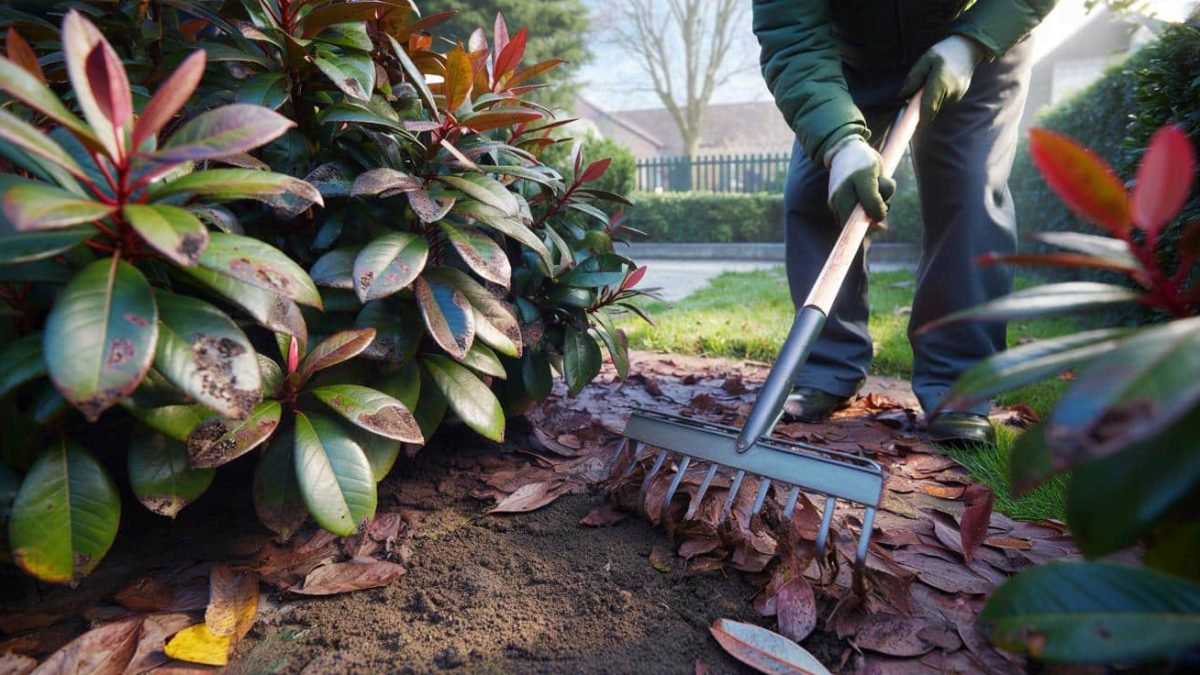
Springtime is a time of renewal and growth in the garden, but for some Photinia hedge owners, it can also bring an unwelcome sight: black spots spreading across the once-vibrant foliage. This unsightly problem can be alarming, leaving gardeners wondering what’s causing the issue and how to save their prized hedges.
The good news is that the solution to these black spots is often simpler than it may seem. By understanding the root cause and taking the right steps, you can help your Photinia hedge bounce back and regain its healthy, lush appearance.
Unraveling the Mystery of Photinia’s Black Spots
The black spots that appear on Photinia hedges are typically a sign of a fungal infection known as Entomosporium leaf spot. This disease thrives in cool, wet conditions, which are common during the spring months when the new growth is emerging.
The fungus attacks the leaves, causing the distinctive black or brown spots to form. As the infection progresses, the leaves can become distorted, discolored, and eventually drop off, leaving the hedge looking sparse and unsightly.
Caught early, the Entomosporium leaf spot can be managed, but it’s important to act quickly before the problem escalates.
Preventing the Photinia Plague: Early Intervention is Key
The key to saving your Photinia hedge from the black spot plague is to take action as soon as you notice the first signs of the infection. Regular inspections and prompt treatment can go a long way in keeping the fungus under control.
One of the most effective ways to prevent the spread of Entomosporium leaf spot is to prune out any affected leaves or stems. This removes the source of the fungus and helps to improve air circulation around the hedge, making it less hospitable for the disease.
It’s also important to ensure that your Photinia hedge is receiving the right amount of water and nutrients. Stressed plants are more susceptible to fungal infections, so maintaining optimal growing conditions can help boost the hedge’s natural defenses.
Nurturing Resilience: Strengthening Your Photinia’s Defenses
In addition to pruning and proper care, there are a few other steps you can take to help your Photinia hedge fend off the black spot fungus.
Applying a fungicide specifically formulated for Entomosporium leaf spot can help to kill the existing fungus and prevent new infections from taking hold. Be sure to follow the product instructions carefully and reapply as needed to maintain protection.
You can also consider introducing beneficial microorganisms to the soil around your Photinia hedge. These natural “allies” can help to boost the plant’s immune system and make it less susceptible to fungal diseases.
Weathering the Storm: Dealing with Severe Photinia Infections
In some cases, the black spot fungus may have already gained a stronghold, and the hedge may be in a more advanced state of decline. If this is the case, you may need to take more drastic measures to save your Photinia.
Severe infections may require more frequent and intensive pruning to remove all affected foliage. You may also need to consider applying a stronger fungicide or even replacing the hedge entirely if the damage is too extensive.
It’s important to remember that Photinia is a resilient plant, and with the right care and attention, it can often recover from even the most severe fungal infections. By staying vigilant and taking action at the first sign of trouble, you can help your hedge bounce back and regain its beautiful, healthy appearance.
Embracing the Resilience: Photinia’s Path to Recovery
While the black spot fungus can be a frustrating and unsightly problem, it’s important to remember that Photinia hedges are generally quite resilient. With the right care and attention, they can often bounce back from even severe infections.
By taking proactive steps to prevent and manage the Entomosporium leaf spot, you can help your Photinia hedge weather the spring storm and emerge stronger than ever. With a little patience and persistence, you can enjoy the vibrant, healthy hedge you’ve worked so hard to cultivate.
- ➡Seit ich diese Morgenroutine habe, landen Meisen täglich am Fenster
- ➡Legendärer Zelda-Klassiker kehrt völlig unerwartet auf Dreamcast zurück
- ➡Wohntrend 2025: So holst du dir ruhige Japandi-Harmonie mit SHEIN ins Zuhause
- ➡Forscher finden Superkraft von Hummelköniginnen: Sie können eine Woche unter Wasser überleben
So, don’t let those black spots get you down. With the right approach, you can keep your Photinia hedge thriving and looking its best, even in the face of this common springtime challenge.
Frequently Asked Questions
What causes the black spots on my Photinia hedge?
The black spots are typically caused by a fungal infection known as Entomosporium leaf spot. This disease thrives in cool, wet conditions and attacks the leaves, causing them to become discolored and distorted.
How can I prevent the black spots from spreading?
The best way to prevent the black spot fungus from spreading is to act quickly. Prune out any affected leaves or stems, ensure your Photinia is receiving the right amount of water and nutrients, and consider applying a fungicide specifically formulated for Entomosporium leaf spot.
What should I do if my Photinia hedge is already heavily infected?
If your Photinia hedge is severely affected, you may need to take more intensive measures, such as more frequent pruning, stronger fungicide applications, or even replacing the hedge entirely if the damage is too extensive.
- ➡Alte Handtücher clever nutzen: So machen Sie daraus perfekte Boden-Wischpads
- ➡Sport ab 80: Warum Bewegung auch im hohen Alter Lebensqualität verbessern kann
- ➡Studie warnt: KI könnte in Frankreich jeden sechsten Job kippen
- ➡Verrostete Grillroste? Mit diesem Küchenklassiker wird dein BBQ-Rost wieder wie neu
Can my Photinia hedge recover from a black spot infection?
Yes, Photinia hedges are generally quite resilient and can often recover from even severe fungal infections, with the right care and attention. By taking proactive steps to manage the Entomosporium leaf spot, you can help your hedge bounce back and regain its vibrant, healthy appearance.
How often should I inspect my Photinia hedge for black spots?
It’s a good idea to inspect your Photinia hedge regularly, especially during the spring when the new growth is emerging. Look for the first signs of discoloration or distortion, and take action as soon as you notice any issues.
What are some natural ways to prevent black spots on Photinia?
In addition to pruning and fungicide applications, you can also consider introducing beneficial microorganisms to the soil around your Photinia hedge. These natural “allies” can help to boost the plant’s immune system and make it less susceptible to fungal diseases.
How can I tell if my Photinia hedge is beyond saving?
If the black spot infection has caused extensive damage to your Photinia hedge, with a large number of leaves or stems affected, it may be necessary to consider replacing the hedge entirely. However, with proper care and attention, many Photinia hedges can recover, even from severe infections.
When is the best time to treat black spots on Photinia?
The best time to treat black spots on Photinia is as soon as you notice the first signs of the infection. Acting quickly, before the fungus has a chance to spread, is key to preventing the problem from escalating and saving your hedge.