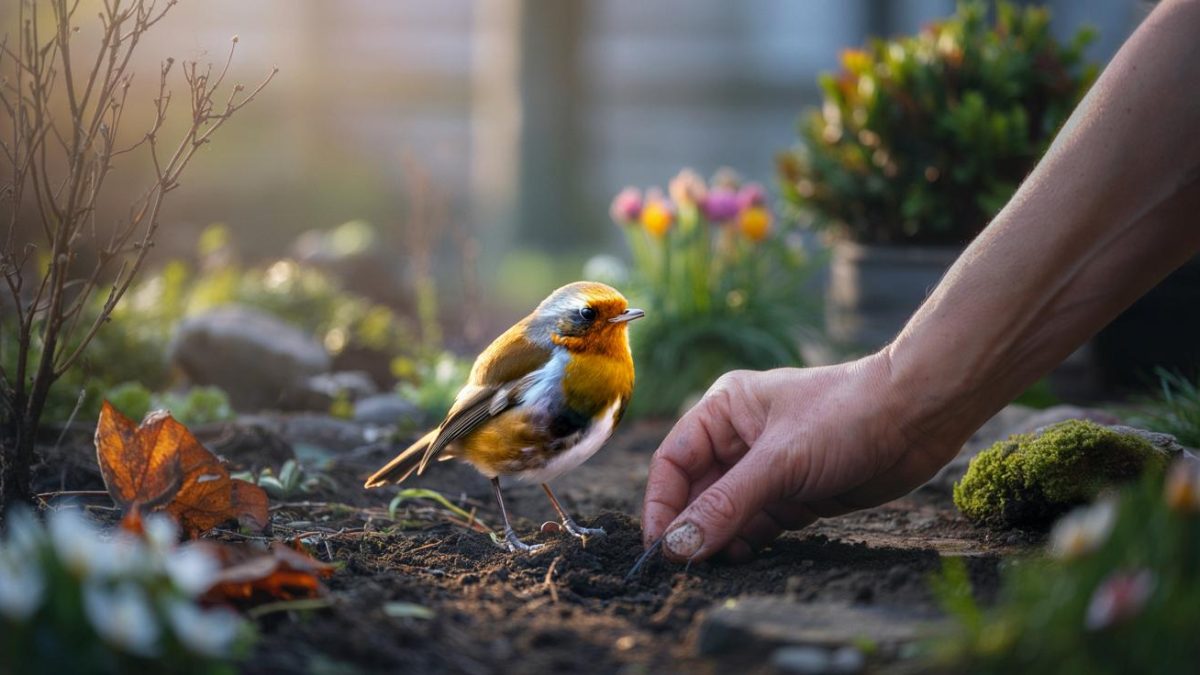
The sight of a robin hopping along the garden path is a familiar and comforting one for many people. But there’s more to this little bird than meets the eye. What does the presence of a robin really mean, and why do they hold such a special place in the hearts of so many?
Robins have long been associated with messages from the divine, serving as a symbolic link between the earthly and the spiritual realms. In ancient folklore, these birds were believed to be messengers, carrying tidings and blessings from the heavens. Their bright red breasts were often seen as a sign of hope, a reminder that even in the darkest of times, new beginnings and renewal are always possible.
For many, the appearance of a robin can evoke a sense of nostalgia and comfort, conjuring memories of childhood or cherished moments spent in the garden. Their cheerful song and inquisitive nature make them a welcome sight, and their presence can be seen as a warm greeting from the natural world.
The Symbolic Significance of the Robin
Robins have long held a special place in the cultural and spiritual traditions of many societies. In some belief systems, they are seen as the embodiment of the soul of a departed loved one, returning to offer solace and guidance. Their ability to thrive in both urban and rural settings has also contributed to their status as a symbol of resilience and adaptability.
Moreover, the timing of a robin’s appearance can hold deeper meaning. Seeing one during the winter months, for example, is often interpreted as a sign of hope and the impending arrival of spring. This connection to the cycle of the seasons has led many to view the robin as a harbinger of renewal and new beginnings.
Ultimately, the significance of the robin goes beyond its physical presence in the garden. It is a creature that has captured the human imagination, serving as a reminder of the intricate relationship between the natural world and our own emotional and spiritual experiences.
Attracting Robins to Your Garden
If you’re hoping to welcome robins into your garden, there are a few simple steps you can take. Providing a reliable source of food and water is key, as these birds are particularly fond of mealworms, berries, and suet. Leaving areas of your garden untended can also create the ideal habitat, as robins thrive in environments with a mix of open spaces and dense vegetation.
It’s important, however, to strike a delicate balance. While robins may seem approachable, they are still wild creatures and should be respected as such. Avoid overcrowding your garden with feeders or disturbing their nesting sites, as this can have a detrimental effect on their well-being.
By creating a welcoming and sustainable environment, you can increase the likelihood of regular robin visits, and perhaps even witness the wonder of their breeding and nesting behaviors up close. And with each encounter, you’ll have the opportunity to connect with the deeper significance of this beloved bird.
The Biology and Behavior of Robins
Robins are members of the thrush family, a diverse group of songbirds found across the Northern Hemisphere. Their distinctive red breasts and bold, inquisitive nature have made them one of the most recognizable birds in many parts of the world.
Biologically, robins are well-adapted to a wide range of habitats, from dense woodland to urban gardens. Their varied diet, which includes insects, worms, and berries, allows them to thrive in both natural and human-modified environments. Their ability to sing throughout the year, even in the depths of winter, is another remarkable trait that has contributed to their enduring popularity.
Understanding the biology and behavior of robins can provide valuable insights into their role in the broader ecosystem. By observing their foraging patterns, nesting habits, and social interactions, we can gain a deeper appreciation for these remarkable creatures and the important function they serve in the natural world.
- ➡Wer mühelos mit Fremden plaudert, hat meist genau dieses Persönlichkeitsmerkmal
- ➡Locker, schnell, ohne Ofen: Dieser Joghurtkuchen aus dem Airfryer klappt immer
- ➡Adieu altes Brot: Ein Bäcker verrät den Trick, mit dem Brot tagelang frisch bleibt
- ➡Nach dem Urlaub total down? Ärzte verraten 5 Tricks gegen den Rückkehr-Blues
The Robin in Literature and the Arts
The robin’s cultural significance extends far beyond the natural world, as it has long been a source of inspiration for artists, writers, and poets. In literature, the robin has been featured in countless works, from the whimsical children’s stories of Beatrix Potter to the haunting poetry of Emily Dickinson.
In the visual arts, the robin’s striking appearance has made it a frequent subject for painters and illustrators. From the delicate watercolors of 19th-century naturalists to the bold, contemporary interpretations of modern artists, the robin has been captured in a wide variety of media, each rendering reflecting the unique perspective and style of the creator.
These artistic depictions not only capture the physical beauty of the robin but also explore the deeper symbolism and emotional resonance that the bird holds for many people. Through these creative expressions, the robin’s significance as a cultural icon is reinforced, ensuring that its legacy will continue to be celebrated for generations to come.
The Robin’s Role in the Ecosystem
While the robin’s cultural and symbolic significance is undeniable, it’s important to recognize the vital role these birds play within the natural world. As insectivores, robins are important predators, helping to control populations of pests and other invertebrates that can be harmful to plants and crops.
- ➡Warum Menschen ihr Wochenende lieber allein verbringen – und was das über ihre Persönlichkeit verrät
- ➡Nasser Vogelfutter-Fehler im Winter: Warum feuchte Körner tödlich enden können
- ➡Genialer Küchentrick: So bleiben Bananen tagelang gelb und frisch
- ➡Inès de la Fressange setzt beim Chanel-Défilé auf die weiße Hose
Moreover, robins’ omnivorous diets and their ability to thrive in a variety of habitats make them valuable indicators of the overall health of an ecosystem. By monitoring the presence and behavior of robins, ecologists and conservationists can gain valuable insights into the state of the natural world and identify potential areas of concern.
As we continue to grapple with the challenges of environmental degradation and climate change, the robin’s resilience and adaptability may serve as a beacon of hope, reminding us of the incredible resourcefulness and tenacity of the natural world. By understanding and respecting the robin’s place in the ecosystem, we can work to ensure that these beloved birds continue to thrive for generations to come.
Connecting with the Robin’s Deeper Meaning
The robin’s significance extends far beyond its physical presence in the garden. Through its association with symbolism, folklore, and the arts, the robin has become a powerful metaphor for the human experience, a reminder of the enduring connections between the natural world and our own emotional and spiritual lives.
By taking the time to observe and appreciate the robins that visit our gardens, we have the opportunity to connect with something deeper – a sense of wonder, hope, and the timeless rhythms of the natural cycle. In doing so, we may just find that the robin’s presence offers us a profound and meaningful message, one that speaks to the very essence of what it means to be human.
- ➡Steuertrick 2026: So lassen sich über 300.000 Euro steuerfrei verschenken
- ➡Forscher finden „Katzenzungen-Pflanze“ in Indonesien – und warnen vor ihrem Verschwinden
- ➡Großer Waschmittel Check zeigt, welche flüssige Marke selbst hartnäckige Flecken am besten entfernt
- ➡Brustkrebs: Sechs Alltagsgewohnheiten, die jede vierte Erkrankung verhindern könnten
Whether it’s the robin’s cheerful song, its resilient spirit, or its timeless symbolism, there is something about this little bird that continues to captivate and inspire us. By embracing the robin’s significance, we can cultivate a deeper appreciation for the natural world and the many ways in which it enriches our lives.
FAQ
What does it mean when a robin visits my garden?
The appearance of a robin in your garden can hold various symbolic meanings, from a message of hope and renewal to a connection with the spiritual world. Robins are often seen as harbingers of spring and are associated with themes of resilience, adaptability, and the cycle of the seasons.
How can I attract robins to my garden?
To attract robins to your garden, provide a reliable source of food and water, such as mealworms, berries, and suet. Leave areas of your garden untended to create the ideal habitat, with a mix of open spaces and dense vegetation. Avoid overcrowding the garden with feeders or disturbing their nesting sites to ensure the robins’ well-being.
What do robins eat?
Robins are omnivores, with a varied diet that includes insects, worms, berries, and other small invertebrates. Their ability to thrive on a diverse range of food sources has contributed to their success in adapting to both natural and human-modified environments.
- ➡Spanien erlebt den nassesten Winter seit Jahrzehnten – Gefahr von Extremfluten wächst
- ➡Neue Liebestrends: Warum viele Frauen keinen Beziehungsstress mehr wollen
- ➡Gartenarbeit im März: Diese Pflanzen dürfen jetzt kräftig zurückgeschnitten werden
- ➡Archäologen finden „Weltraum-Metall“ in 3000 Jahre altem Goldschatz
Are robins aggressive birds?
While robins can be territorial, especially during the breeding season, they are generally not considered aggressive birds. They may defend their nesting sites and food sources, but they are more likely to retreat or display warning behaviors rather than engage in direct confrontation.
How long do robins live?
The average lifespan of a robin in the wild is around 2-3 years, though some individuals may live up to 5-6 years. Their lifespan is influenced by a variety of factors, including predation, disease, and environmental conditions.
Do robins migrate?
Robins are known to be partially migratory, with some populations moving to warmer regions during the winter months. However, many robins, especially those in urban and suburban areas, may remain in their territories year-round, relying on the availability of food and shelter to survive the colder seasons.
What is the significance of the robin’s red breast?
The robin’s distinctive red breast has long been a source of fascination and symbolic meaning. In many cultures, the red feathers are believed to represent the bird’s connection to the divine, or to serve as a reminder of the cycle of life and death. The red breast is also thought to be a sign of the robin’s courage and resilience.
Can robins be kept as pets?
While robins may seem approachable, they are wild birds and are generally not suitable for keeping as pets. Robins require specialized care and a large, naturalistic environment to thrive, and keeping them in captivity can be detrimental to their well-being. It’s best to appreciate robins in their natural habitats and avoid disturbing them unnecessarily.