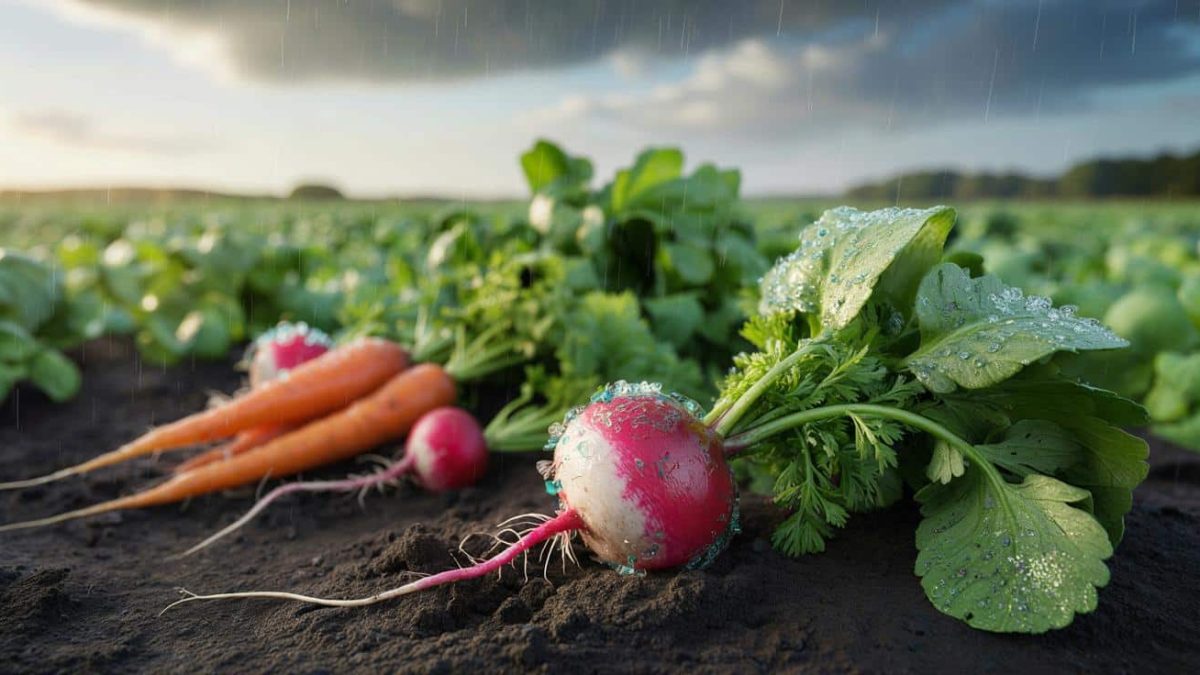
Shocking news for health-conscious consumers: A recent study has revealed that even the freshest, most organic produce may harbor an unexpected contaminant – invisible microplastics. This alarming discovery has turned the humble carrot, radish, and salad into potential carriers of a silent plastic plague, threatening to undermine our very efforts to eat clean and green.
The findings, published in the prestigious journal Environmental Science & Technology, have sent shockwaves through the food industry and left consumers questioning the purity of their plant-based diets. The implications are far-reaching, as this invisible plastic rain infiltrates the very foundations of our sustenance, challenging our assumptions about the safety and integrity of the food we consume.
As we grapple with this unsettling revelation, the questions mount: How widespread is this problem, and which produce is most affected? What are the potential health risks, and can we, as individuals, take steps to protect ourselves? The answers, it seems, will determine the future of our relationship with the very foods we’ve come to rely on for our wellbeing.
Radishes, Carrots, and Salad: The Unexpected Plastic Hosts
The study, conducted by researchers at the University of Newcastle in the UK, examined a range of common vegetables and found that they were all harboring microscopic plastic particles. From the humble radish to the ubiquitous carrot and even the seemingly pure leafy greens, the researchers discovered that these unassuming foods had become unwitting vessels for this invisible plastic plague.
Interestingly, the study found that the plastic particles were not limited to the surface of the produce, but had actually penetrated deep into the flesh of the vegetables. This raises alarming questions about the ability of these microplastics to bypass the natural protective barriers that plants have evolved to keep out harmful substances.
As one researcher commented, “The fact that these microplastics are finding their way into the core of the vegetables is particularly troubling. It suggests that the natural filters and defense mechanisms that plants have developed over millennia are simply not equipped to deal with this modern, man-made scourge.”
The Caspary Barrier: Nature’s Filter, Foiled by Plastic
At the heart of this problem lies the Caspary barrier, a natural defense mechanism that plants have evolved to protect themselves from harmful substances. This specialized cell layer acts as a gatekeeper, selectively allowing the passage of nutrients while blocking the entry of potentially toxic materials.
However, the study’s findings indicate that when it comes to microplastics, this natural barrier is simply no match. The researchers believe that the tiny, almost imperceptible size of these plastic particles allows them to slip past the Caspary barrier, infiltrating the plant’s tissue and ultimately ending up on our plates.
- ➡Nie wirklich Feierabend: 10 unsichtbare Regeln, die Perfektionisten nicht abschalten lassen
- ➡Diese Alltagsfehler im Hühnerstall bremsen die Eierproduktion brutal aus
- ➡Nachtwach zwischen 2 und 4 Uhr? Dieses Stresshormon steckt dahinter
- ➡Zungen-Rand-Test: Dieses stille Zahnproblem raubt Ihnen den Schlaf
As one expert explained, “The Caspary barrier is a remarkable evolutionary adaptation, but it was not designed to deal with the microscopic, synthetic polymers that we’ve introduced into the environment. In a sense, we’ve overwhelmed a system that has served plants well for millions of years.”
Radishes as the Canary in the Coalmine
While the study examined a range of vegetables, the researchers highlighted the radish as a particularly concerning case. These small, vibrant roots, often prized for their crisp texture and peppery flavor, were found to be among the most heavily contaminated with microplastics.
As the researchers noted, “Radishes, with their large surface area-to-volume ratio and unique root structure, seem to be particularly adept at accumulating these plastic particles. In a way, they’ve become the canary in the coalmine, signaling the extent of this problem across the produce spectrum.”
This revelation has raised the question of whether all vegetable varieties are equally vulnerable to this plastic infiltration, or if some may be more resilient than others. As the research continues, consumers will be closely watching to see which of their favorite foods may be harbouring this invisible threat.
- ➡Neue Bankbetrugs-Welle 2026: Wie falsche Berater per Anruf Ihr Konto leerräumen
- ➡Spektakuläre Kometen-Show: Ein Besucher aus der Oortwolke kommt nahe an die Erde
- ➡Käse gegen Demenz? Neue Studie zeigt überraschenden Schutzeffekt
- ➡Warum Menschen ihr Wochenende gern allein verbringen – und was das über sie verrät
Our Plastic Problem Reaches the Farmland
The discovery of microplastics in our produce is a sobering reminder that the scourge of plastic pollution has now reached even the most fundamental sources of our sustenance. What was once a problem confined to the oceans and landfills has now crept into the very soil that nourishes the plants we consume.
As one environmental scientist observed, “This is a wake-up call that our plastic problem has now infiltrated the agricultural system, with potentially devastating consequences for food security and public health. We can no longer ignore the pervasive nature of this crisis – it has reached the heart of our food chain.”
The implications of this finding are far-reaching, as it challenges the notion that a return to a more natural, plant-based diet is a surefire path to better health. If even the most wholesome, organic produce is tainted by invisible plastic particles, then the very foundations of our nutritional choices are called into question.
The Health Risks of Microplastic Consumption
The presence of microplastics in our food supply raises serious concerns about the potential health impacts. While the long-term effects of consuming these tiny plastic particles are not yet fully understood, experts warn that they could pose a significant threat to human health.
- ➡Frühling im Garten: Warum Sie diese 3 „Unkräuter“ lieber stehen lassen sollten
- ➡Wenn Wohnungskatzen plötzlich ausrasten: Was hinter dem „Tiger-Syndrom“ steckt
- ➡Geheime Hohlräume in Cheops-Nachbarpyramide gefunden: Forscher wittern verborgenen Gang
- ➡Zu eng geworden? Mit diesem Nähtrick passt Ihre Lieblingsjeans wieder
One key concern is the ability of microplastics to accumulate and concentrate harmful chemicals, toxins, and pathogens. As these particles move through the food chain, they may act as vectors, transporting dangerous substances into the human body.
Furthermore, the microscopic size of these plastics means they can be easily absorbed into the bloodstream, potentially causing inflammation, disrupting cellular processes, and even interfering with the body’s natural detoxification mechanisms. The implications for our overall health and wellbeing are deeply troubling.
Protecting Ourselves as Consumers
As consumers, the revelation of microplastics in our produce leaves us with a difficult dilemma. How can we continue to enjoy the health benefits of a plant-based diet while safeguarding ourselves from this invisible threat?
Experts suggest that thorough washing and peeling of produce may help to remove some of the surface-level microplastics, but they caution that this is not a foolproof solution. The plastic particles that have penetrated deep into the plant tissue are nearly impossible to eliminate through simple washing.
- ➡Legendäres Internetkabel aus dem Atlantik gezogen: Wie TAT‑8 Geschichte schrieb
- ➡Geheimtipp in der Bretagne: Dieses Küstendorf verzaubert wirklich jeden
- ➡Alzheimer kündigt sich leise an : Frühe Warnzeichen fern der Vergesslichkeit
- ➡Seltsame Wellen am Zungenrand? Dieses Zeichen warnt vor nächtlichem Zähnepressen
Additionally, the researchers warn that certain cooking methods, such as boiling, may actually concentrate the microplastics, making them more concentrated in the final dish. This leaves consumers with the unenviable choice of either compromising the nutritional value of their produce or potentially exposing themselves to the risks of microplastic consumption.
The Way Forward: Tackling the Plastic Scourge at its Source
As the scientific community grapples with the implications of this study, the path forward is clear: we must address the root cause of the problem – the pervasive and relentless production and distribution of plastic materials.
Experts argue that a multi-pronged approach is needed, one that involves stricter regulation, innovative solutions, and a fundamental shift in societal attitudes towards plastic consumption. Only by tackling this problem at its source can we hope to protect the integrity of our food supply and safeguard the health of generations to come.
As one policy analyst remarked, “This is no longer just an environmental issue – it’s a public health crisis that demands immediate and decisive action. We can no longer afford to treat plastic as a disposable convenience; it has become a threat to the very sustenance that keeps us alive.”
The Future of Food: Navigating the Plastic Minefield
As consumers, we are left with the daunting task of navigating this new reality, where the very foods we rely on for nourishment may harbor an invisible, yet insidious, threat. The implications of this study are far-reaching, forcing us to rethink our relationship with the produce we consume and the systems that bring it to our tables.
The road ahead is fraught with uncertainty, but one thing is clear: the time for complacency has passed. We must demand accountability from the industries that have allowed this plastic scourge to infiltrate our food supply, and we must be willing to make difficult choices in our own consumption habits.
Only by confronting this challenge head-on, and with a steadfast commitment to protecting the integrity of our sustenance, can we hope to safeguard the health and wellbeing of generations to come. The battle against microplastics in our produce may be daunting, but the stakes have never been higher – the future of our food, and our very way of life, hangs in the balance.
What is the main focus of the study?
The study focused on detecting the presence of microplastics in common vegetables like radishes, carrots, and leafy greens. The researchers found that these microscopic plastic particles had managed to penetrate the natural defenses of the plants and were present even in the edible parts of the produce.
- ➡Psychologen sicher: Die berühmte Klamotten-Stuhl-Ecke verrät viel über dich
- ➡Kamin-Heizgeheimnis: Diese Pressholz-Briketts liefern bis zu dreimal mehr Wärme
- ➡Monty Dons März-Trick für Hortensien: Der einfache Schnitt, mit dem deine Beete jeden Sommer explodieren
- ➡Keine engen Freunde? Diese 7 Charakterzüge könnten dahinterstecken
What are the key findings of the study?
The key findings of the study are that microplastics have infiltrated the food chain, contaminating even the most wholesome, organic produce. The plastic particles were found to have bypassed the plants’ natural protective barriers, raising concerns about the potential health risks of consuming these invisible contaminants.
Which vegetables were found to be the most affected?
The study highlighted radishes as particularly concerning, as they were found to be among the most heavily contaminated with microplastics. The researchers attributed this to the radish’s large surface area-to-volume ratio and unique root structure, which seem to make them adept at accumulating these plastic particles.
What are the potential health risks of consuming microplastics?
Experts warn that the long-term effects of consuming microplastics are not yet fully understood, but they could pose significant health risks. Concerns include the ability of the particles to accumulate and concentrate harmful chemicals, toxins, and pathogens, as well as their potential to cause inflammation, disrupt cellular processes, and interfere with the body’s natural detoxification mechanisms.
How can consumers protect themselves from microplastic contamination in produce?
While thorough washing and peeling of produce may help remove some surface-level microplastics, the researchers caution that this is not a foolproof solution, as the plastic particles have penetrated deep into the plant tissue. Additionally, certain cooking methods like boiling may actually concentrate the microplastics, making the problem even more challenging for consumers to address.
What are the long-term implications of this problem?
The discovery of microplastics in our produce challenges the very foundations of our food system, undermining the notion that a return to a more natural, plant-based diet is a surefire path to better health. Experts argue that this crisis demands immediate and decisive action to address the root cause of the problem – the pervasive and relentless production and distribution of plastic materials.
How can the problem of microplastics in produce be addressed?
Experts suggest that a multi-pronged approach is needed, involving stricter regulation, innovative solutions, and a fundamental shift in societal attitudes towards plastic consumption. Only by tackling the problem at its source can we hope to protect the integrity of our food supply and safeguard the health of generations to come.
What is the future of the food industry in light of this issue?
The discovery of microplastics in our produce forces us to rethink our relationship with the foods we consume and the systems that bring them to our tables. Navigating this new reality will require consumers to demand accountability from the industries responsible and be willing to make difficult choices in their own consumption habits. The battle against microplastics in our food may be daunting, but the stakes have never been higher – the future of our sustenance, and our very way of life, hangs in the balance.