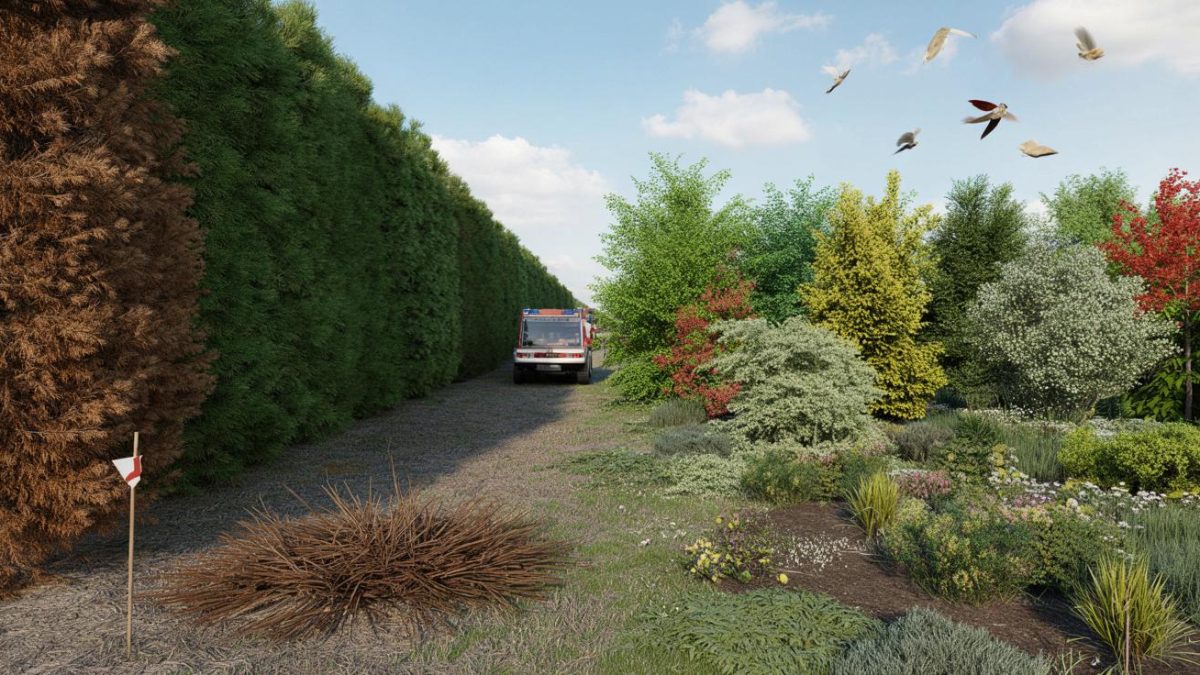
In recent years, a growing number of municipalities across the German-speaking world have been taking a closer look at the hedges in residential gardens. From updated zoning plans to fire safety regulations and green space ordinances, local authorities are increasingly imposing restrictions on certain “standard” hedge varieties. This shift is driven by a range of concerns, from fire hazards to biodiversity and sustainability.
As communities reevaluate their approach to private greenery, homeowners find themselves navigating a changing landscape. What was once a common garden feature is now subject to heightened scrutiny and, in some cases, outright bans. This ongoing transformation has sparked conversations about the role of traditional hedges, the needs of modern communities, and the adaptations required to create greener, more resilient neighborhoods.
The Thuja Hedge: From Ubiquitous to Problematic
One of the most prominent casualties of this shift is the ubiquitous Thuja hedge. Long a staple in many gardens, this coniferous evergreen is now increasingly viewed as a problem plant by local authorities. The reasons behind this shift are multifaceted, ranging from fire risks to ecological concerns.
Fire safety has emerged as a key driver, with Thuja hedges seen as potential accelerants in the event of a blaze. Their dense, highly flammable foliage can act as a conduit, quickly spreading flames from one property to the next. In response, many municipalities are updating their building codes and fire safety regulations to limit or prohibit the use of Thuja in new landscaping projects.
- ➡Mit dieser „Sauce zum Löffeln“ wird ein Dessertkoch zum Champion
- ➡Warum Parkour laut Sportwissenschaftlern Beweglichkeit, Reaktionsfähigkeit und Körperkontrolle extrem fordert
- ➡Mit 12 im Audi: Kinder liefern sich waghalsige Mini-Verfolgungsjagd
- ➡Tierärzte warnen: Darum sollte Ihre Katze im März drinnen bleiben
Beyond fire hazards, the Thuja hedge is also coming under scrutiny for its impact on biodiversity. These monoculture plantings often provide little in the way of habitat or food sources for local wildlife, failing to contribute to the overall ecological balance of the community.
The Shift Toward Diversified, Sustainable Hedges
As the tide turns against traditional Thuja hedges, municipalities are encouraging homeowners to explore alternative, more ecologically-friendly options. These include native shrub species, mixed hedges, and even “living fences” that combine different plant types.
The goal is to create hedges that not only serve as attractive boundaries but also support biodiversity, reduce fire risks, and contribute to the overall sustainability of the community. This shift requires homeowners to rethink their garden design and work closely with local authorities to ensure compliance with updated regulations.
For many, the transition to a new hedge type can be a significant undertaking, both financially and aesthetically. However, proponents argue that the long-term benefits to the community and the environment make it a worthwhile investment.
- ➡Gelbes Band an der Hundeleine: Das bedeutet das heimliche Warnsignal
- ➡Diese 5 Möbel sollten Sie niemals streichen – sonst verlieren sie fast ihren ganzen Wert
- ➡Mit diesem einfachen Trick wird dein alter Besen zum Lebensretter für Vögel
- ➡Friseur warnt: Diese Haarlänge lässt dein Gesicht sofort älter wirken
The Challenge of Compliance and Adaptation
As municipalities tighten their rules around garden hedges, homeowners find themselves navigating a complex web of regulations and requirements. In some cases, existing Thuja hedges may need to be removed or heavily trimmed to meet new fire safety standards.
This can create tensions between homeowners and local authorities, as residents grapple with the cost and inconvenience of adapting their gardens. Some may resist the changes, arguing that their established hedges pose no immediate threat and should be grandfathered in under the new rules.
However, local officials counter that a consistent, community-wide approach is necessary to address the broader issues at hand. They emphasize the importance of proactive measures to enhance fire safety, support biodiversity, and create more sustainable neighborhoods.
The Future of Residential Greenery
As the shift away from traditional Thuja hedges continues, the long-term implications for residential gardens and communities remain to be seen. Experts anticipate a growing emphasis on native, drought-resistant plant species, as well as the incorporation of more diverse, multi-layered landscaping designs.
- ➡China-Orbiter schlägt Starlink: Laser-Datenregen aus 36.000 Kilometern
- ➡Einfacher geht’s nicht: Winterliche Rauten mit Rosinen und Mandeln in 30 Minuten
- ➡Gigantischer Goldfund in China: Droht jetzt eine neue Gold-Rally?
- ➡Seit zwei Jahren keine Mehlpackung mehr: Diese fluffigen Kuchen retten jeden Süßhunger
This transition may not only alter the aesthetic of many neighborhoods but also have broader impacts on local ecosystems, water usage, and the overall environmental footprint of residential areas. Homeowners and local authorities will need to work together to navigate these changes and ensure that the evolving approach to residential greenery aligns with the needs and values of the community.
Ultimately, the shift away from ubiquitous Thuja hedges reflects a broader rethinking of the role of private gardens in the context of urban and suburban development. As communities strive to balance aesthetics, function, and environmental responsibility, the humble garden hedge has become a focal point for these important conversations.
Navigating the Transition: Advice for Homeowners
For homeowners affected by the changing regulations around garden hedges, the path forward can seem daunting. However, experts and local authorities offer guidance on how to navigate this transition successfully.
First and foremost, it’s crucial for homeowners to familiarize themselves with the specific rules and regulations in their area. This may involve reviewing updated zoning plans, fire safety codes, and green space ordinances to understand the requirements and timelines for any necessary changes.
Once the compliance landscape is clear, homeowners can begin exploring alternative hedge options that meet the new standards. This may involve consulting with local nurseries, landscape designers, or municipal horticulturists to identify suitable native species and mixed planting designs.
The Role of Community Engagement
As municipalities and homeowners work to adapt to the evolving regulations around garden hedges, the importance of community engagement cannot be overstated. Open communication, collaboration, and a shared understanding of the underlying issues are essential for navigating this transition successfully.
Local authorities can play a key role in this process by providing educational resources, financial incentives, and support programs to assist homeowners in the transition. This may include guidance on appropriate plant selections, funding for hedge removal and replacement, or even community-wide planting initiatives.
By fostering a collaborative approach, communities can ensure that the shift away from traditional Thuja hedges is not merely a top-down imposition, but rather a shared effort to create more sustainable, fire-resilient, and ecologically-balanced neighborhoods.
FAQs
Why are municipalities banning Thuja hedges?
Municipalities are increasingly banning Thuja hedges due to concerns over fire risks and lack of biodiversity. Thuja hedges are highly flammable and can act as conduits for spreading fires, while also providing limited habitat and food sources for local wildlife.
What alternative hedge options are being encouraged?
Local authorities are encouraging homeowners to explore more diverse, ecologically-friendly hedge options, such as native shrub species, mixed hedges, and “living fences” that combine different plant types.
How can homeowners comply with the new regulations?
Homeowners should familiarize themselves with the specific rules and regulations in their area, review their options for alternative hedge plantings, and work closely with local authorities to ensure a smooth transition.
What is the role of community engagement in this process?
Community engagement is essential, as municipalities and homeowners work together to navigate the transition. Local authorities can provide educational resources, financial incentives, and support programs to assist homeowners in adapting to the new regulations.
- ➡Diese französische Küstenstadt könnte 2030 zum Albtraum werden
- ➡Bauer verschenkt 90 Tonnen Kartoffeln, weil der Handel sie nicht abnehmen will
- ➡Erben zahlen weniger: Frankreich deckelt Gebühren bei Kontonachlass
- ➡Ihr Rasen wird deutlich gesünder und kräftiger, wenn Sie diesen häufigen Mähfehler konsequent vermeiden
How will this impact the overall look and feel of residential neighborhoods?
The shift away from traditional Thuja hedges is expected to change the aesthetic of many neighborhoods, as homeowners incorporate more diverse, native plant species and mixed hedge designs. This transition may also have broader impacts on local ecosystems, water usage, and the environmental footprint of residential areas.
What are the long-term benefits of this transition?
The transition to more sustainable, fire-resilient, and ecologically-balanced hedge options is expected to have long-term benefits for communities, including enhanced fire safety, improved biodiversity, and a more sustainable approach to residential greenery.
How can homeowners work with local authorities to ensure a successful transition?
Homeowners should proactively engage with local authorities, stay informed about updated regulations, and work collaboratively to identify suitable hedge options that meet the new requirements. This may involve participating in community initiatives, seeking guidance from municipal horticulturists, and exploring financial incentives or support programs.
What are the potential challenges for homeowners in adapting to the new regulations?
The main challenges for homeowners may include the cost and inconvenience of removing or heavily trimming existing Thuja hedges, as well as the aesthetic and practical considerations of transitioning to a new hedge type. Homeowners may also face resistance to the changes or a lack of understanding about the underlying reasons for the regulations.