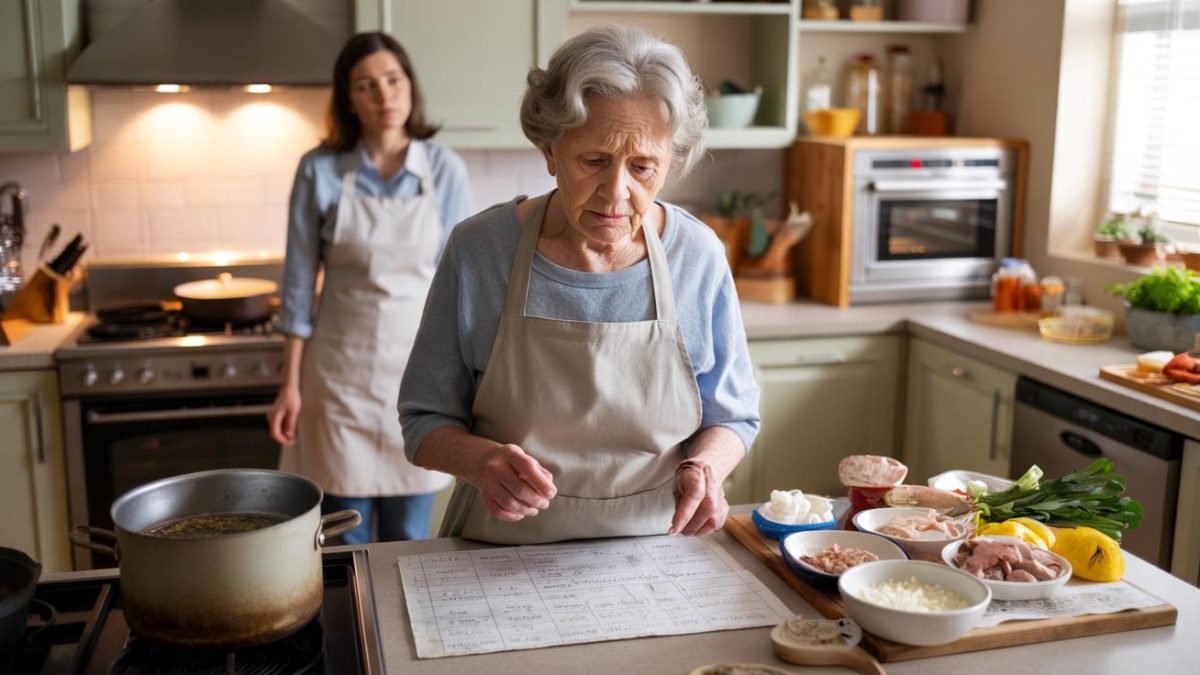
For many families, there’s that one go-to dish that has been perfected over the years. But when the usually reliable home chef starts to struggle with even the most familiar recipes, it could be a sign of a deeper issue – one that shouldn’t be ignored.
Alzheimer’s disease, the most common form of dementia, can often manifest itself through subtle changes in everyday activities, including the once-effortless task of cooking. As the disease gradually impairs cognitive functions, even the most seasoned home cooks may find themselves confused or disoriented in the kitchen, unable to reliably execute the recipes they’ve made countless times before.
This shift in culinary capabilities can serve as an early warning sign, alerting families to the potential onset of Alzheimer’s or other forms of cognitive decline. By recognizing and addressing these changes, loved ones can take proactive steps to support the individual and potentially slow the progression of the disease.
The Telltale Sign: Struggling with Familiar Recipes
For many individuals living with Alzheimer’s, the kitchen becomes a testing ground for the brain’s executive functions – the cognitive processes that enable us to plan, organize, and execute tasks effectively. As the disease takes hold, these abilities can become compromised, leading to difficulties in carrying out even the most routine cooking tasks.
Family members may notice that the individual starts to forget essential steps in a recipe, becomes confused about the order of ingredients, or struggles to multitask the various components of a meal. What was once a seamless process can suddenly become a source of frustration and confusion.
It’s important to note that the occasional cooking mishap or forgetfulness does not necessarily indicate Alzheimer’s or another form of dementia. However, a persistent pattern of struggles with familiar recipes, especially when accompanied by other cognitive or behavioral changes, should prompt further evaluation and medical attention.
Distinguishing Normal Lapses from Concerning Symptoms
Separating the occasional cooking blunder from a potential warning sign of Alzheimer’s can be challenging, but there are some key differences to look for. Normal, age-related cooking mishaps tend to be isolated incidents, easily corrected, and often accompanied by a sense of self-awareness or embarrassment from the individual.
In contrast, Alzheimer’s-related cooking difficulties may become more frequent, persistent, and accompanied by a lack of recognition or concern from the individual. They may repeatedly make the same mistakes, struggle to recover from errors, or become increasingly anxious or agitated in the kitchen.
It’s also important to consider the individual’s overall cognitive and functional abilities. If the cooking struggles are accompanied by other noticeable changes, such as difficulties with memory, communication, or daily tasks, it may be a sign of a more serious underlying condition.
Why Cooking Can Be an Early Indicator of Alzheimer’s
The kitchen is a complex environment that requires the seamless coordination of various cognitive functions, including memory, problem-solving, spatial awareness, and multitasking. As Alzheimer’s disease begins to impact these executive functions, the kitchen can become a challenging and revealing setting.
Preparing a meal requires the ability to recall and follow a sequence of steps, juggle multiple tasks simultaneously, and adapt to unexpected changes or distractions. For individuals in the early stages of Alzheimer’s, these once-automatic processes can become increasingly difficult, leading to mistakes, confusion, and frustration in the kitchen.
Additionally, the familiarity of a well-known recipe can provide a false sense of security, masking the underlying cognitive changes. It’s only when the individual encounters a more complex or novel cooking task that the true impact of the disease becomes evident.
- ➡Diese unscheinbare Linux-Version macht dich in wenigen Stunden zum Terminal-Profi
- ➡Nur bis Ende Januar: Jetzt diese 3 Obstbäume schneiden – sonst bleibt die Ernte mickrig
- ➡Vergessene Power-Frucht: So locken Sie Meisen in den Garten – und vertreiben Schädlinge
- ➡Geheime Chronik der Meere: Was Schildkrötenpanzer wirklich verraten
Practical Examples That Should Raise Concerns
| Concerning Behavior | Potential Explanation |
|---|---|
| Repeatedly forgetting key steps in a recipe, even for a well-known dish | Difficulty with memory and sequencing tasks |
| Inability to multitask or keep track of multiple cooking tasks simultaneously | Impaired executive function and cognitive flexibility |
| Confusion about the purpose or use of common kitchen utensils or appliances | Decreased spatial awareness and problem-solving skills |
| Burning or overcooking food due to a lack of attention or awareness | Decreased ability to monitor and regulate behavior |
These types of cooking-related challenges, when persistent and accompanied by other cognitive or behavioral changes, should serve as a wake-up call for family members and caregivers. Recognizing these early warning signs can lead to timely medical evaluation and potentially help slow the progression of the disease.
What Caregivers and Loved Ones Can Do
If you notice a loved one struggling with familiar cooking tasks, it’s important to approach the situation with empathy and understanding. Avoid criticism or embarrassment, as this can further erode their confidence and exacerbate the problem.
Instead, offer to assist or take over the cooking duties, focusing on maintaining the individual’s sense of independence and dignity. Encourage them to engage in other cognitive activities, such as memory exercises or puzzles, which can help strengthen their cognitive reserve and potentially delay the onset of more severe symptoms.
Most importantly, don’t hesitate to seek medical advice. Early intervention and diagnosis can make a significant difference in managing Alzheimer’s and other forms of dementia, allowing for the implementation of appropriate care and support strategies.
“Recognizing changes in cooking abilities can be an important early indicator of cognitive decline. By addressing these issues proactively, families can take steps to support their loved ones and potentially slow the progression of the disease.”
– Dr. Sarah Lenz, Geriatric Neuropsychologist
Cooking may seem like a simple task, but it requires a complex interplay of cognitive functions. When those functions begin to falter, it can signal the onset of Alzheimer’s or other forms of dementia. By staying vigilant and addressing these warning signs early, families can take meaningful steps to support their loved ones and improve their quality of life.
Frequently Asked Questions
How early can Alzheimer’s-related cooking difficulties appear?
Cooking challenges can often be among the earliest signs of Alzheimer’s, appearing even in the mild or early stages of the disease. As the brain’s executive functions start to decline, the complexity of cooking can expose these cognitive changes.
What other signs should I look for alongside cooking struggles?
In addition to cooking difficulties, other early signs of Alzheimer’s may include memory lapses, trouble with problem-solving, confusion about time or place, and changes in mood or personality. It’s important to observe any patterns or combinations of these symptoms.
How can I support a loved one experiencing Alzheimer’s-related cooking challenges?
Be patient and understanding, and offer to assist or take over the cooking duties. Encourage your loved one to engage in cognitive activities and seek medical advice to address the issue proactively. Maintaining their dignity and independence is crucial.
Is there a specific test or assessment for Alzheimer’s-related cooking difficulties?
While there is no single test, healthcare professionals may use a variety of cognitive assessments, including observing the individual’s performance in the kitchen, to evaluate and diagnose Alzheimer’s or other forms of dementia.
How can early detection of Alzheimer’s make a difference?
Early diagnosis allows for the implementation of appropriate care and support strategies, which can help manage symptoms, maintain cognitive function, and potentially slow the progression of the disease. It also gives families more time to plan and prepare for the challenges ahead.
What should I do if I suspect a loved one is experiencing Alzheimer’s-related cooking difficulties?
Gently express your concerns, offer assistance, and encourage your loved one to seek medical attention. A comprehensive evaluation by a healthcare professional can help determine the underlying cause and develop a personalized plan of care.
Can cooking difficulties be addressed through training or adaptations?
In some cases, providing specialized training, using assistive devices, or modifying the cooking environment can help individuals with Alzheimer’s maintain their cooking abilities for longer. However, these strategies work best when implemented in the early stages of the disease.
How common are Alzheimer’s-related cooking difficulties?
Cooking challenges are relatively common in the early stages of Alzheimer’s, as the disease often begins to impact the brain’s executive functions before more severe memory loss or disorientation occurs. Recognizing these signs can be crucial for early intervention.