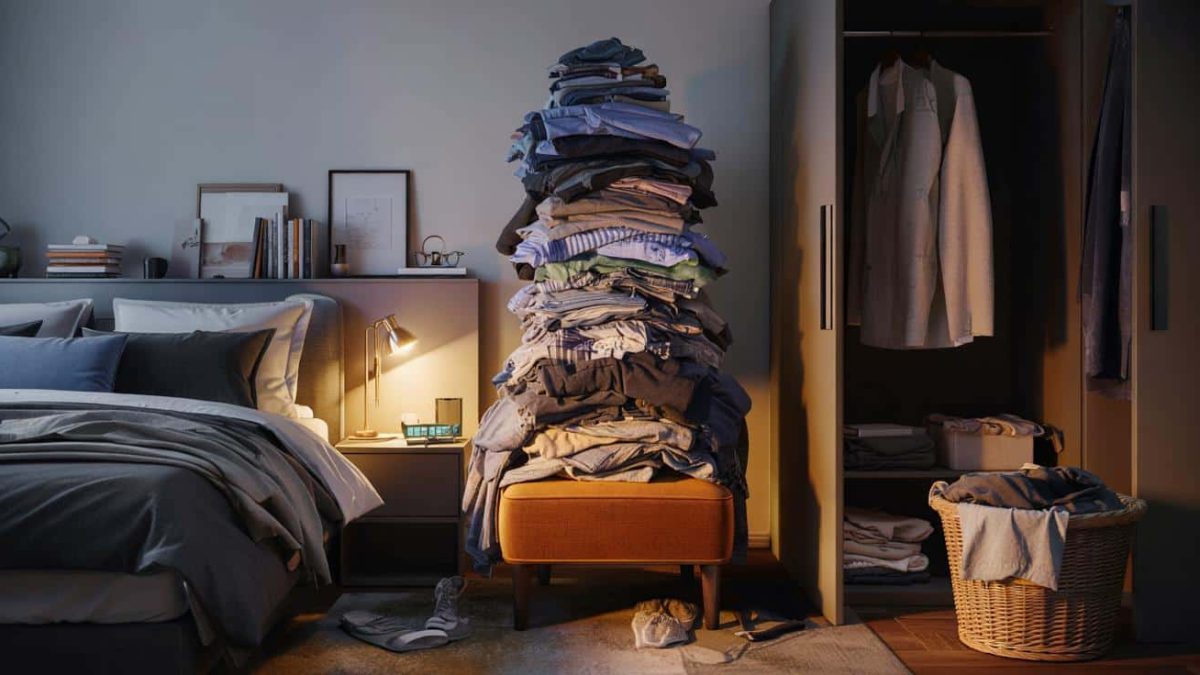
In a world where our homes have become a reflection of our inner selves, the humble chair has emerged as a fascinating window into our personalities. Nowhere is this more apparent than in the curious phenomenon of the “chair of clothes” – a stack of garments, haphazardly piled high, that has become a ubiquitous feature in many households.
This chair, often a silent witness to our daily routines, can reveal far more about us than we might expect. From the organized minimalist to the creative free spirit, the way we interact with this unassuming piece of furniture can provide a glimpse into our deepest characteristics and habits.
As we delve deeper into this sartorial microcosm, we’ll uncover the stories hidden within, exploring what a towering pile of clothes on a chair can truly tell us about the individuals who call this space their own.
The Chair of Clothes: A Reflection of Your Personality
The chair of clothes is more than just a convenient dumping ground for our wardrobe; it’s a manifestation of our personal style, our priorities, and even our relationship with organization. While some may view it as a necessary evil, a temporary holding pen for our daily attire, others have embraced it as a way to express their carefree, creative spirits.
Those who maintain a tidy, well-organized chair may be more likely to exhibit traits of discipline and attention to detail in other areas of their lives. Conversely, a chair that resembles a haphazard mountain of fabric can suggest a more spontaneous, free-flowing approach to life.
But the chair of clothes is not just a binary representation of order versus chaos. It can also serve as a reflection of our moods, our stress levels, and even our emotional well-being. A chair that’s meticulously maintained one day and in disarray the next could indicate fluctuations in our mental state or a need for greater self-care.
The Psychological Zone of the Chair of Clothes
The chair of clothes occupies a unique psychological space, serving as a middle ground between the structured confines of the closet and the liberating expanse of the open room. It’s a zone where we can temporarily set aside the demands of tidiness and indulge in a more carefree, spontaneous approach to our clothing.
For some, this chair represents a necessary respite from the rigors of daily life, a space where they can let go of perfectionism and embrace a more relaxed, creative mindset. It’s a place where the lines between work, play, and personal identity can blur, allowing us to experiment with different styles and expressions.
- ➡Spritschock in Europa: Slowenien führt als erstes EU-Land Benzin-Rationierung ein
- ➡Audi Q3 gegen BMW X1: welcher Premium-SUV überzeugt 2026 wirklich?
- ➡Psychologie erklärt: Warum dein plötzliches „Nein“ kein Egoismus ist
- ➡Mit 54 Jahren wieder fit werden: Der einfache Spaziergang-Rhythmus, den viele Trainer empfehlen
However, the chair of clothes can also become a source of anxiety and guilt for those who struggle with maintaining order. The towering piles of fabric can serve as a constant reminder of our unfinished tasks, weighing us down with a sense of inadequacy and the pressure to conform to societal expectations of neatness.
When the Chair of Clothes Becomes a Problem
While the chair of clothes can be a harmless, even endearing, aspect of our lives, it can also become a source of deeper issues if left unchecked. When the piles of clothing begin to encroach on our living spaces, disrupting our daily routines and causing frustration, it may be time to reassess our relationship with this household icon.
In extreme cases, the chair of clothes can be a symptom of underlying mental health challenges, such as hoarding or depression. The inability to part with clothing or the lack of motivation to maintain a tidy living space can be a cry for help, a call for us to address the deeper emotional needs that are driving this behavior.
By acknowledging the chair of clothes as a potential indicator of our overall well-being, we can take proactive steps to regain control and find a healthy balance between self-expression and organization. This may involve seeking professional support, implementing organizational strategies, or simply cultivating a greater sense of mindfulness in our daily routines.
- ➡Blitz-Rezept: Endivien-Schiffchen mit Schinken – fertig in 10 Minuten
- ➡Eine Angewohnheit, die ein kleines Vermögen kostet: Sieben von zehn Haushalten lassen dieses Gerät die ganze Nacht im Standby-Modus, was jährlich 180 € kostet
- ➡Kletterkraut im Garten: Diese „Unkraut“-Triebe bringen bis zu 1.000 Euro pro Kilo
- ➡Chemikerin warnt: Dieser Beutel-Reis kann Ihrer Gesundheit schaden
Embracing the Chair of Clothes: Finding Balance
The chair of clothes need not be a source of shame or anxiety. In fact, it can be a testament to our creativity, our adaptability, and our willingness to embrace the messiness of life. The key is to find a balance that allows us to enjoy the benefits of this unique space without it becoming a hindrance to our well-being.
For those who thrive in a more structured environment, incorporating occasional “chair of clothes” moments can be a way to inject a bit of playfulness and spontaneity into their lives. Conversely, those who gravitate towards a more free-flowing approach can learn to incorporate some organizational strategies to prevent the chair from spiraling out of control.
Ultimately, the chair of clothes is a reflection of our individual needs and preferences. By recognizing its role in our lives and learning to navigate it with self-compassion, we can harness its potential to enhance our personal growth and foster a deeper understanding of ourselves.
The Unexpected Benefits of the Chair of Clothes
While the chair of clothes may seem like a chaotic and cluttered aspect of our living spaces, it can actually offer some unexpected benefits. For instance, the ability to quickly access our clothing can save us time and reduce stress during those hurried morning routines.
Additionally, the chair can serve as a visual reminder of the items we wear most frequently, helping us to curate our wardrobes and make more conscious purchasing decisions. By identifying the clothing that consistently ends up on the chair, we can better understand our personal style preferences and ensure that our closets are filled with pieces we truly love and wear.
Furthermore, the chair of clothes can provide a sense of comfort and familiarity, particularly for those who thrive in a more relaxed, informal environment. The ability to easily grab and go, without the formality of a meticulously organized closet, can foster a sense of ease and spontaneity in our daily lives.
Navigating the Chair of Clothes: Tips and Strategies
For those who struggle to maintain a balance with the chair of clothes, there are several strategies and tips that can help. One approach is to designate a specific “chair of clothes” zone, limiting its spread and preventing it from overtaking the entire living space.
Another effective method is to establish a weekly or bi-weekly routine of sorting, folding, and putting away the clothing that has accumulated on the chair. This not only keeps the clutter at bay but also provides a sense of accomplishment and control over our living environments.
For those who find the chair of clothes particularly challenging, incorporating mindfulness practices or seeking the support of a professional organizer can be beneficial. By addressing the underlying emotional or psychological factors that contribute to this behavior, we can develop healthier coping mechanisms and a more balanced relationship with our clothing and living spaces.
| Personality Trait | Chair of Clothes Reflection |
|---|---|
| Discipline and Attention to Detail | Tidy, well-organized chair |
| Spontaneity and Creative Expression | Haphazard, towering pile of clothes |
| Emotional Well-being | Fluctuating state of the chair |
“The chair of clothes can be a reflection of our inner state, a visual manifestation of the chaos or order within our lives. By understanding this dynamic, we can gain valuable insights into our personal preferences, habits, and even our emotional well-being.”
– Dr. Emma Sinclair, Clinical Psychologist
Also Read
“The chair of clothes is more than just a piece of furniture; it’s a psychological space where we can temporarily let go of the pressures of perfection and embrace a more relaxed, expressive side of ourselves. Recognizing and navigating this space can be a powerful tool for self-discovery and personal growth.”
– Sarah Watkins, Organizational Behavior Specialist
“The chair of clothes is a fascinating microcosm of our personal lives, where the way we interact with this unassuming piece of furniture can reveal a lot about our priorities, our coping mechanisms, and even our mental health. By understanding its significance, we can learn to harness the benefits of this unique space while avoiding the potential pitfalls.”
– Dr. Liam Nguyen, Clinical Psychologist
As we continue to navigate the complexities of our personal and professional lives, the chair of clothes serves as a subtle yet powerful reminder that the small things in our living spaces can hold profound insights about our inner selves. By embracing this unique piece of furniture and learning to strike a balance between order and creativity, we can unlock a deeper understanding of who we are and how we choose to express ourselves in the world.
What is the “chair of clothes” phenomenon?
The “chair of clothes” refers to the common occurrence of piling up clothing on a chair instead of properly storing or putting it away. This can be a reflection of an individual’s personality, habits, and emotional well-being.
How can the chair of clothes reveal aspects of a person’s personality?
A tidy, well-organized chair may indicate traits of discipline and attention to detail, while a haphazard pile of clothes can suggest a more spontaneous, creative approach to life. The state of the chair can also reflect a person’s emotional well-being.
Why is the chair of clothes considered a psychological “zone” or space?
The chair of clothes occupies a unique space between the structured closet and the open room, allowing for a more relaxed, spontaneous approach to clothing. It can serve as a respite from the demands of daily life or become a source of anxiety and guilt for those who struggle with organization.
When can the chair of clothes become a problem?
The chair of clothes can become problematic when it begins to encroach on living spaces, disrupt daily routines, and cause frustration. In extreme cases, it may be a symptom of underlying mental health issues, such as hoarding or depression.
- ➡Unscheinbare Staude, große Wirkung: Mit dieser Gartenpflanze locken Sie Meisen in Scharen an
- ➡Neuer Wohntrend im Frühling: Warum gefärbtes Glas jetzt den Rattan-Boom ablöst
- ➡Rechnen Roboter besser? Wie Software heute große Mathematik-Beweise prüft
- ➡Warum ein Stück Butter Gemüse intensiver wirken lässt
How can people find a balance with the chair of clothes?
Strategies like designating a specific chair zone, establishing a regular sorting and putting-away routine, and incorporating mindfulness practices can help individuals maintain a healthy balance between order and self-expression when it comes to the chair of clothes.
What are some unexpected benefits of the chair of clothes?
The chair of clothes can provide quick access to clothing, serve as a visual reminder for wardrobe curation, and foster a sense of comfort and spontaneity in one’s living space. Recognizing these benefits can help individuals embrace the chair in a more positive way.
How can professional help support individuals with chair of clothes issues?
Seeking the support of a professional organizer or clinical psychologist can help individuals address the underlying emotional or psychological factors contributing to chair of clothes behavior, develop healthier coping mechanisms, and find a balanced approach to their living spaces.
Is a chair of clothes always a negative thing?
No, the chair of clothes is not necessarily a negative thing. It can be a reflection of an individual’s personality and creativity, as long as it is not causing significant disruption or distress in their daily life. Finding a healthy balance is the key.