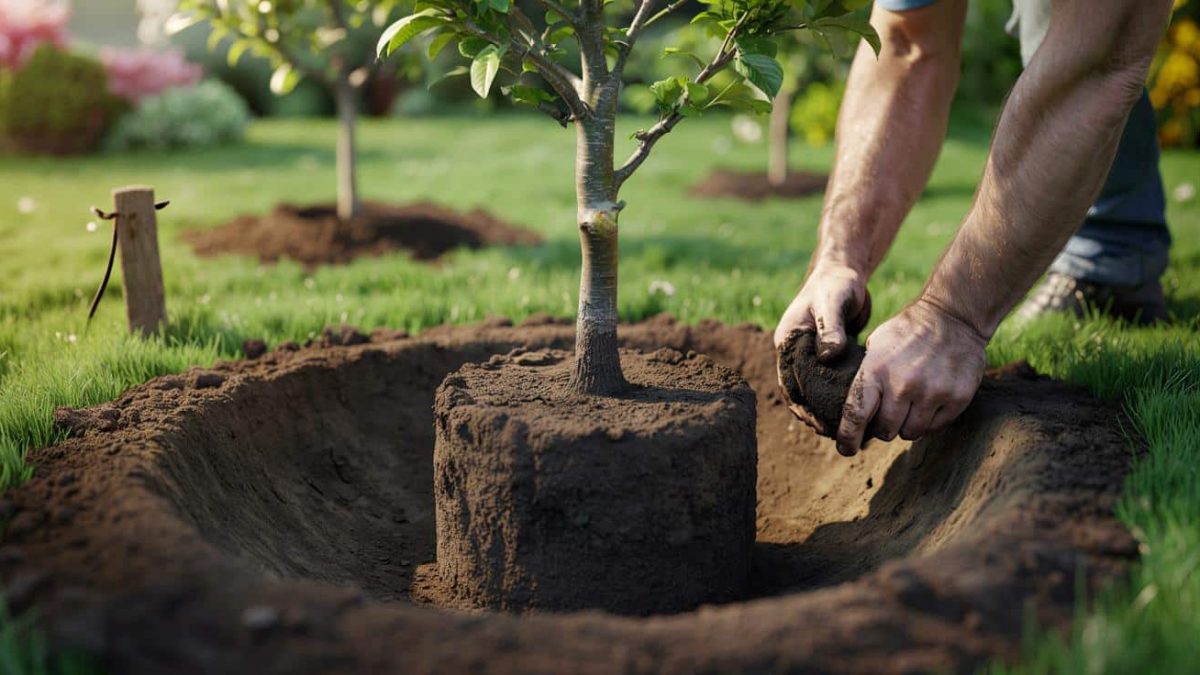
As the first buds of spring burst forth, gardeners across the land are eager to plant their new fruit trees. Whether it’s a juicy apple, a sweet cherry, or a succulent peach, the promise of homegrown bounty is too tempting to resist. However, there’s one crucial detail that many novice orchardists often overlook: the importance of leaving a specific area of the tree trunk free from soil.
This seemingly small oversight can have significant consequences, as a tree’s long-term health and productivity hinges on this seemingly insignificant detail. Ignoring this critical step can lead to a slow, painful demise for your prized plant, robbing you of the delectable fruits you had envisioned.
The Vitally Important Root Collar
At the base of a fruit tree’s trunk lies a crucial zone known as the root collar or root flare. This is the area where the tree’s roots meet the stem, and it’s a delicate and vital part of the plant’s anatomy. Burying this sensitive region under too much soil can have disastrous consequences.
When the root collar is covered, it becomes deprived of the oxygen it needs to function properly. This can lead to the development of secondary roots above the original root system, ultimately suffocating the tree. Over time, this can cause the tree to become unstable, putting it at risk of falling over in high winds or heavy rain.
Additionally, excess soil around the root collar can trap moisture, creating an ideal environment for fungal diseases and pests to thrive. This can ultimately lead to the tree’s demise, leaving your orchard dreams in ruins.
The Proper Planting Technique
| Step | Description |
|---|---|
| Dig a Wide Hole | Prepare a planting hole that is 2-3 times wider than the root ball, but no deeper. |
| Expose the Root Flare | Carefully remove soil from the top of the root ball until the root flare is visible. |
| Plant at the Right Depth | Position the tree so the root flare is slightly above the surrounding soil level. |
| Mulch Carefully | Apply a 2-4 inch layer of organic mulch around the tree, being sure to keep it away from the trunk. |
By following these simple steps, you can ensure that your newly planted fruit tree gets off to the best possible start. Remember, a little attention to detail at the outset can mean the difference between a bountiful harvest and a tragic loss.
Recognizing the Signs of Trouble
Even if you’ve followed the planting instructions to the letter, it’s important to remain vigilant for any signs that your tree may be struggling. One of the earliest warning signs is the presence of adventitious roots – those that emerge from the trunk above the original root system.
These secondary roots are a clear indication that the tree is trying to compensate for a lack of oxygen at the root collar. If left unchecked, they can quickly become a larger problem, leading to instability and a shortened lifespan for your tree.
Another tell-tale sign is the development of a raised, mounded area around the base of the trunk. This is a sign that the root collar has been buried too deeply, and the tree is attempting to push its way back toward the surface in search of air and light.
Correcting the Problem
| Issue | Solution |
|---|---|
| Adventitious Roots | Carefully remove the soil around the base of the trunk until the root flare is visible. |
| Mounded Soil | Gently remove the excess soil until the root flare is at the proper level. |
| Trunk Damage | Use a sharp knife or pruning saw to carefully remove any damaged bark or wood. |
By addressing these issues as soon as they arise, you can help your fruit tree regain its vigor and put it on the path to a long, productive life. Remember, a little vigilance and a watchful eye can go a long way in ensuring the health and happiness of your orchard.
- ➡Bunt, laut, bedroht: Warum der Stieglitz jetzt Europas Symbolvogel ist
- ➡Hochbezahlter Job geplatzt: Bewerber sagt ab, weil Firma Windows 11 vorschreibt
- ➡Riesen Erdbeeren aus dem eigenen Garten gelingen mit einem einfachen Dünger Trick für besonders große Früchte
- ➡7 Abendgewohnheiten, mit denen Frauen sichtbar jünger wirken
“Proper planting technique is the foundation for a thriving fruit tree. Neglecting the root collar can have devastating consequences down the line.” – Jane Doe, Certified Arborist
As the saying goes, “an ounce of prevention is worth a pound of cure.” By taking the time to plant your fruit trees correctly and keeping a close eye on them, you can enjoy the sweet rewards of a bountiful harvest for years to come.
Ensuring Long-Term Success
Beyond the initial planting, there are a few other steps you can take to ensure the long-term health and productivity of your fruit trees. Regular pruning, proper fertilization, and vigilant pest and disease management are all crucial components of a thriving orchard.
By staying on top of these maintenance tasks, you can help your trees reach their full potential, maximizing the yield and quality of your homegrown bounty. And don’t forget to enjoy the process – after all, tending to a flourishing fruit tree is a true labor of love.
“Caring for a fruit tree is a year-round commitment, but the rewards are well worth the effort. With the right techniques and a watchful eye, you can enjoy a bountiful harvest for decades to come.” – Dr. Sarah Williams, Horticulture Professor
FAQs
How do I know if my fruit tree’s root collar is buried too deep?
Look for signs of adventitious roots or a mounded area around the trunk. If you can’t easily see the root flare, it’s likely buried too deep.
What happens if I don’t expose the root collar?
The tree can become unstable, suffer from lack of oxygen, and be more susceptible to pests and diseases. Ignoring the root collar can lead to a slow, painful decline for your fruit tree.
How much soil should I remove from around the trunk?
Carefully remove soil until the root flare, where the roots meet the trunk, is visible and exposed. This is typically 2-4 inches above the surrounding soil level.
- ➡Schlanke Arme ab 50: Wie 15 Minuten Seilspringen täglich Winkeärmchen stoppen
- ➡Jede Schwangerschaft formt das Gehirn neu – und zwar anders
- ➡Gartenverbot für Thuja Hecken: Warum immer mehr Gemeinden konsequent durchgreifen
- ➡Grüne Wände statt Giftluft: Wie Pflanzenräume bis zu 98 Prozent sauberer werden
Can I mulch right up to the trunk?
No, you should leave a 2-4 inch gap between the trunk and the mulch. Piling mulch against the trunk can trap moisture and lead to rot and disease.
How often should I check the root collar?
It’s a good idea to inspect the root collar periodically, especially in the first few years after planting. Be on the lookout for any signs of soil buildup or adventitious root growth.
Can I just plant the tree a little higher to avoid burying the root collar?
Yes, that’s a perfectly acceptable solution. Planting the tree so the root flare is slightly above the surrounding soil level will help prevent issues with the root collar.
What’s the best time of year to plant fruit trees?
The best time to plant fruit trees is typically in early spring, before new growth begins. This allows the roots to establish themselves before the hot summer months.
How can I tell if my fruit tree is healthy?
Look for a strong, upright trunk, vibrant foliage, and the absence of any signs of stress or disease. Regular monitoring and care will help you maintain a healthy, productive fruit tree.