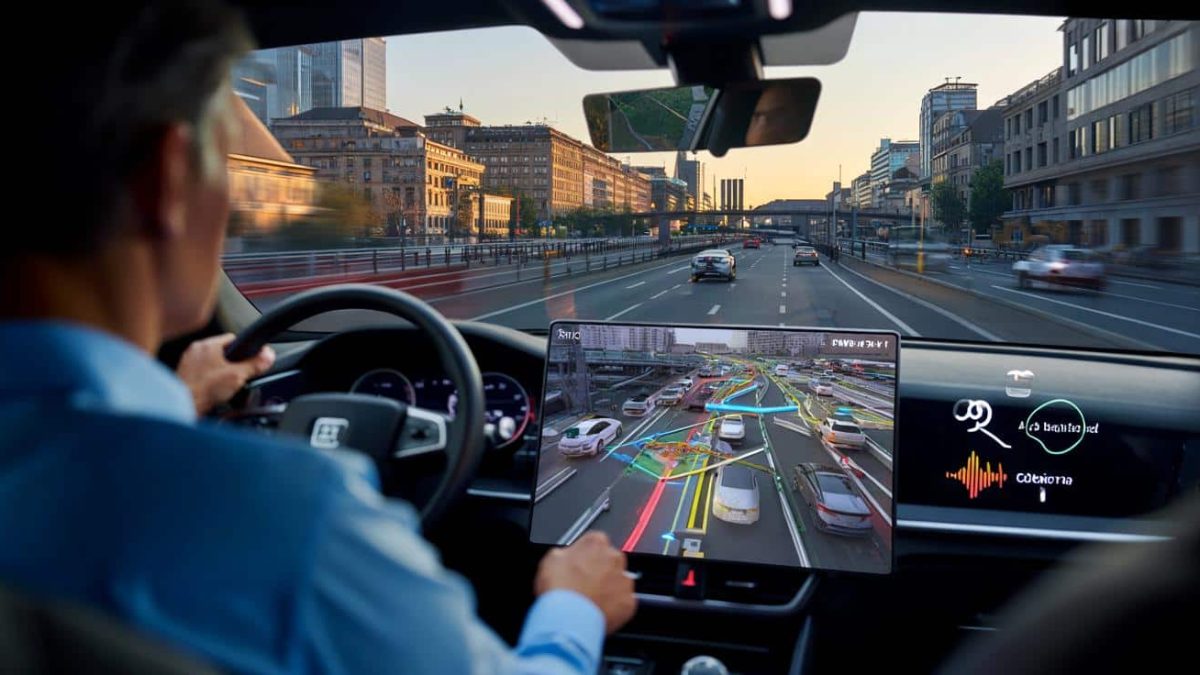
Buckle up, Google Maps users, as the tech giant has just unveiled a massive update that’s set to transform the way we navigate the digital world. With a focus on immersive 3D experiences and AI-powered assistance, Google’s latest Maps revamp promises to revolutionize the way we plan our journeys and explore new destinations.
Gone are the days of flat, two-dimensional maps. Google has ambitiously integrated cutting-edge 3D technology into its navigation app, allowing users to visualize their routes in stunning, lifelike detail. But this isn’t just a visual upgrade – it’s a game-changer for driver safety and confidence on the road.
As we delve into the heart of this transformative update, prepare to be transported to a new era of digital cartography, where the boundaries between the physical and virtual worlds blur, and the possibilities for seamless navigation are endless.
Immersive Navigation: A 3D Revolution
One of the standout features of Google’s Maps update is the introduction of immersive 3D navigation. Instead of the traditional flat map view, users will now be able to experience their routes in a fully rendered, three-dimensional environment. This means that instead of simply seeing a top-down representation of the road, drivers will be able to visualize the actual terrain, buildings, and landmarks along their path.
This enhanced perspective is not just a visual upgrade; it offers practical benefits for drivers. By providing a more accurate representation of the road ahead, the 3D navigation can help users better anticipate turns, lane changes, and potential hazards, ultimately leading to a safer and more confident driving experience.
Moreover, the 3D maps will extend beyond the confines of the road, allowing users to explore their destinations in rich, three-dimensional detail. Whether you’re planning a trip to a new city or navigating an unfamiliar neighborhood, the immersive 3D experience will give you a better understanding of the layout and spatial relationships, making it easier to orient yourself and find your way.
Saying Goodbye to the Robotic Voice
As part of the Maps overhaul, Google has also introduced a significant upgrade to the voice guidance feature. Gone are the days of the monotonous, robotic-sounding directions. Instead, users will be greeted with a more natural, conversational voice that aims to mimic the way humans communicate in everyday life.
This shift towards a more human-like voice guidance is not just a superficial change; it’s designed to enhance the overall user experience. By adopting a more natural tone and incorporating common speech patterns, the new voice assistant aims to provide directions that feel more intuitive and relatable, making the navigation process more seamless and less jarring.
Moreover, the updated voice guidance is designed to be more contextual, adapting its tone and phrasing based on the specific situation. For example, the assistant might offer a more encouraging and reassuring tone when providing directions in complex or unfamiliar areas, or a more direct and concise approach when guiding users through familiar routes.
Ask Maps: Your AI-Powered Personal Assistant
One of the most exciting additions to Google Maps is the introduction of “Ask Maps,” a powerful AI-driven assistant that aims to revolutionize the way users interact with the app. Imagine being able to ask Maps questions about your location, your route, or even recommendations for nearby attractions, and receiving tailored, contextual responses in real-time.
Unlike traditional navigation apps that rely on static data and predefined routes, Ask Maps leverages the latest advancements in artificial intelligence to understand user intent and provide dynamic, personalized guidance. Whether you’re seeking the fastest route to your destination, looking for the best local restaurant, or curious about the history of a landmark, Ask Maps is designed to be your go-to digital assistant, ready to provide insightful and helpful information at the tap of a button.
By integrating natural language processing and machine learning, Ask Maps can engage in conversational exchanges, understanding the nuances of human language and responding with relevant and contextual information. This level of AI-powered intelligence promises to transform the way we interact with maps, making the navigation experience more intuitive, efficient, and tailored to individual needs.
- ➡Vergessener Atom-U-Boot-Schrotthaufen verseucht seit Jahrzehnten die Norwegische See
- ➡Gärtner verrät: Mit diesen Stauden blüht dein Garten jahrzehntelang
- ➡Geheimnis der Tiefe gelüftet: Französisches U-Boot nach 80 Jahren vor Spanien gefunden
- ➡Diese Trend-Kurzhaarfrisur wird den Frühling 2026 bestimmen
What It Means for Users in the German-Speaking World
As the Google Maps update rolls out globally, users in the German-speaking world can expect to see a host of exciting new features and capabilities. The immersive 3D navigation, for instance, will be particularly beneficial for drivers navigating the winding roads and bustling urban centers of Germany, Austria, and Switzerland.
The enhanced voice guidance, with its more natural and contextual tone, will also be a welcome change for German-speaking users, who may have previously found the robotic directions jarring or difficult to follow. With the new conversational approach, the voice assistant aims to provide a more seamless and intuitive navigation experience, catering to the linguistic nuances and preferences of the local audience.
But perhaps the most significant impact of the Google Maps update will be the integration of the Ask Maps feature. As a multilingual AI assistant, Ask Maps will be able to understand and respond to queries in German, making it easier for users to access location-based information, plan their journeys, and discover new destinations in their native language.
Practical Tips for Navigating the Update
As Google rolls out the Maps update, users may encounter a few initial challenges as they adapt to the new features and interface. To help ensure a smooth transition, here are a few practical tips to keep in mind:
First and foremost, be sure to update your Google Maps app to the latest version to access all the new capabilities. This will ensure that you’re taking full advantage of the 3D navigation, improved voice guidance, and the powerful Ask Maps assistant.
Take some time to explore the app’s settings and customization options. You may want to adjust the 3D map view to suit your personal preferences, or experiment with the new voice guidance features to find the right balance between natural language and clear instructions.
Don’t be afraid to engage with the Ask Maps assistant. Try asking it a variety of questions, from simple route planning to more complex queries about local landmarks or events. The more you interact with the AI, the better it will become at understanding your needs and providing tailored, helpful responses.
The Future of Digital Navigation
With this latest update, Google has set the stage for a new era of digital navigation, one that seamlessly blends cutting-edge technology with a more intuitive, human-centric approach. The integration of immersive 3D mapping, natural language voice guidance, and AI-powered assistance marks a significant shift in the way we interact with and experience maps.
- ➡Neue Krebswarnung aus der Kanalisation: Wie Abwasser Darmtumoren im Viertel verraten könnte
- ➡Geniale Deko-Idee: So werden vergilbte Bettlaken zu Wohn-Schätzen
- ➡Ikea-Hit aus Bambus: Warum immer mehr Wohnzimmer auf diese Jalousie umsteigen
- ➡Warum manche Menschen ständig kritisieren – und wie du dich schützt
As users in the German-speaking world and beyond embrace these transformative features, the impact on daily life and travel can be profound. Drivers will feel more confident and secure on the roads, pedestrians will navigate unfamiliar areas with greater ease, and all users will benefit from a more personalized, responsive, and enriching navigation experience.
But this is just the beginning. As technology continues to evolve and user expectations rise, we can expect to see even more innovative and transformative updates to Google Maps in the years to come. The future of digital navigation is here, and it’s poised to redefine the way we explore, discover, and connect with the world around us.
FAQ
What are the key features of the Google Maps update?
The main features of the Google Maps update include immersive 3D navigation, more natural and contextual voice guidance, and the introduction of the AI-powered “Ask Maps” assistant.
How will the 3D navigation feature improve the user experience?
The 3D navigation feature provides a more accurate and lifelike representation of the road and surroundings, helping drivers better anticipate turns, lane changes, and potential hazards, leading to a safer and more confident driving experience.
What is the purpose of the new voice guidance in Google Maps?
The updated voice guidance aims to provide more natural, conversational directions that mimic human speech patterns, making the navigation process more intuitive and less jarring for users.
How does the “Ask Maps” assistant work?
The “Ask Maps” assistant uses AI and natural language processing to understand user queries and provide tailored, contextual information about locations, routes, and recommendations in real-time.
What are the key benefits of the Google Maps update for users in the German-speaking world?
The key benefits include the improved 3D navigation for drivers, the more natural voice guidance, and the multilingual “Ask Maps” assistant, which can understand and respond to queries in German.
How can users get the most out of the Google Maps update?
Users should ensure they have the latest version of the app, explore the customization options, and actively engage with the “Ask Maps” assistant to get the most personalized and helpful navigation experience.
What is the long-term impact of the Google Maps update?
The update marks a significant shift in the way we interact with and experience digital navigation, paving the way for more immersive, responsive, and personalized mapping solutions in the future.
How does the Google Maps update compare to other navigation apps?
The Google Maps update sets a new standard for digital navigation, integrating cutting-edge features like 3D mapping and AI-powered assistance that are not yet widely available in other mainstream navigation apps.