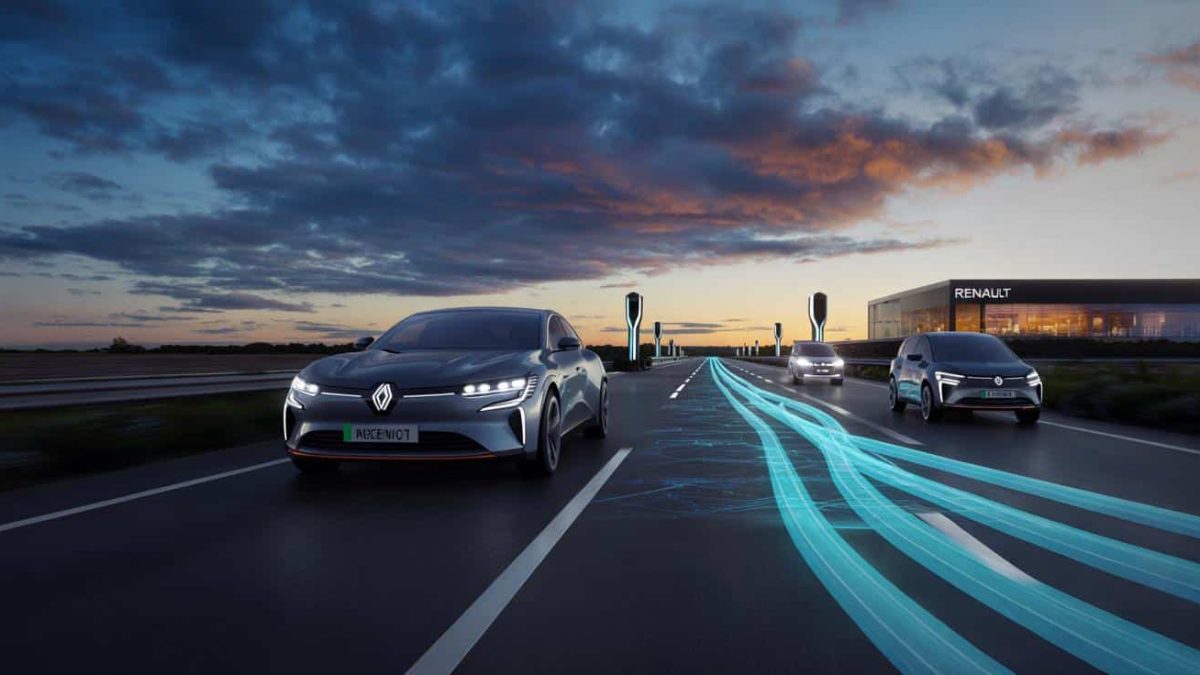
Renault’s electric vehicle (EV) plans are taking an unexpected turn, as the French automaker shifts gears towards a more pragmatic approach. Instead of a full-blown electric offensive, Renault is now embracing a balanced mix of hybrid and electric models, a strategic move that could have significant implications for the automotive industry and consumers alike.
At the heart of Renault’s new direction is a focus on delivering exceptional range and rapid charging capabilities, addressing two of the key concerns that have historically hindered widespread EV adoption. The company’s ambitious plans include the development of models with a staggering 1,400-kilometer (870-mile) range, achieved through the use of range-extender technology, and the introduction of a new battery generation capable of charging in just 10 minutes.
This shift in strategy comes as Renault seeks to position itself as a leader in the rapidly evolving electric mobility landscape, where consumers are increasingly demanding greater convenience and flexibility. By diversifying its product portfolio and emphasizing technological advancements, the company aims to cater to a wider range of customer preferences and needs.
Renault’s Pragmatic Approach: Embracing Hybrid and Electric Vehicles
Renault’s new strategy marks a departure from its previous all-electric focus in Europe. The company is now embracing a more balanced approach, combining hybrid and electric models to meet the diverse needs of consumers. This shift reflects the realization that a one-size-fits-all approach may not be the most effective way to drive the adoption of eco-friendly vehicles.
- ➡Geniale Oma-Tricks: Mit diesen Küchenkräutern bleiben Spinnen draußen
- ➡Warum Hochbegabte Gruppenarbeit im Unterricht oft nicht ertragen
- ➡Trendname 2026: Warum immer mehr Eltern ihren Sohn Adriano nennen
- ➡Ihr Rasen wird deutlich gesünder und kräftiger, wenn Sie diesen häufigen Mähfehler konsequent vermeiden
By incorporating hybrid technology, Renault aims to appeal to customers who may not be entirely ready to commit to a fully electric vehicle. Hybrids offer a transitional solution, allowing for a gradual shift towards electrification while addressing range anxiety and infrastructure concerns that have deterred some consumers.
At the same time, Renault remains committed to its electric vehicle development, with plans to introduce 36 new models, 16 of which will be pure electric. This dual-pronged strategy is designed to provide a comprehensive range of options, catering to the varying preferences and needs of the market.
Reaching New Heights: Renault’s Range-Extender Technology
One of the most exciting aspects of Renault’s new direction is the company’s focus on delivering exceptional driving ranges. The introduction of range-extender technology is set to push the boundaries of what’s possible in the EV space, with the goal of achieving a remarkable 1,400-kilometer (870-mile) range on a single charge.
This breakthrough in range is a significant step forward, as it addresses one of the primary concerns that have hindered widespread EV adoption – the fear of running out of battery power during long-distance journeys. By offering such an extensive driving range, Renault aims to alleviate range anxiety and make electric vehicles a more practical and appealing option for a wider range of consumers.
The implementation of range-extender technology, which typically utilizes a small internal combustion engine to generate additional power for the electric drivetrain, represents a strategic move by Renault to bridge the gap between traditional and electric mobility. This approach allows the company to provide the benefits of electric driving while addressing the range limitations that have been a persistent challenge in the industry.
Charging Revolution: Renault’s 10-Minute Battery Charging
In addition to its focus on range, Renault is also pushing the boundaries of charging technology, with the development of a new battery generation capable of charging in just 10 minutes. This remarkable achievement has the potential to transform the EV charging landscape, making it more convenient and accessible for drivers.
The ability to recharge an EV’s battery in a matter of minutes, rather than hours, represents a significant breakthrough that could address another major barrier to wider EV adoption – the time required for charging. By reducing the time spent at charging stations, Renault’s new battery technology could make electric vehicles a more practical and appealing option for those who require frequent long-distance travel or have limited access to charging infrastructure.
This technological advancement is the result of Renault’s ongoing research and development efforts, showcasing the company’s commitment to driving innovation in the electric mobility sector. As the charging time for EVs becomes more comparable to the refueling time for traditional internal combustion engine vehicles, the adoption of electric cars is likely to accelerate, further contributing to the transition towards a more sustainable transportation future.
Renault’s Digital Transformation: Embracing the Software-Defined Vehicle
Alongside its focus on range and charging capabilities, Renault is also embracing the concept of the “software-defined vehicle,” where the car becomes a rolling computer, constantly evolving and adapting to the needs of its users. This strategic shift reflects the growing importance of digital technologies in the automotive industry, as manufacturers seek to stay ahead of the curve and provide a more personalized and connected driving experience.
By integrating advanced software and connectivity features, Renault aims to offer customers a level of customization and functionality that goes beyond the traditional boundaries of the automobile. From over-the-air updates to personalized infotainment and autonomous driving capabilities, the software-defined vehicle represents a significant step forward in the evolution of the automotive industry.
This digital transformation aligns with broader industry trends, as car manufacturers increasingly recognize the value of data and software in shaping the future of mobility. Renault’s embrace of this strategy positions the company as a forward-thinking player in the rapidly evolving automotive landscape, where the lines between traditional car manufacturing and technology are becoming increasingly blurred.
Renault’s Robotics Revolution: Transforming Production with Industry 4.0
Alongside its advancements in electric vehicle technology, Renault is also revolutionizing its manufacturing processes through the integration of Industry 4.0 principles and the deployment of humanoid robots. This strategic move aims to enhance the efficiency, flexibility, and precision of the company’s production facilities, positioning Renault as a trailblazer in the automotive industry’s digital transformation.
The introduction of humanoid robots, capable of working alongside human employees, represents a significant step forward in the automation of manufacturing processes. These advanced robotic systems are designed to assist with tasks that are repetitive, physically demanding, or potentially hazardous, allowing human workers to focus on more complex and strategic aspects of the production process.
By embracing Industry 4.0 technologies, Renault is not only improving the quality and consistency of its vehicles but also creating a more adaptable and responsive manufacturing environment. This shift towards a more intelligent and integrated production system aligns with the company’s broader strategy of delivering innovative and technologically advanced products to its customers.
The Impact on Automotive Consumers in Germany
Renault’s strategic shift has the potential to significantly impact the automotive landscape in Germany, a market that has traditionally been a stronghold for the country’s domestic manufacturers. As the company introduces its new range of hybrid and electric vehicles, coupled with groundbreaking advancements in range and charging capabilities, German consumers may find themselves presented with a broader and more compelling set of options when it comes to eco-friendly mobility.
The introduction of Renault’s 1,400-kilometer range models and 10-minute charging capabilities could make electric vehicles a more practical and appealing choice for a wider range of German drivers, particularly those who regularly undertake long-distance journeys or have limited access to charging infrastructure. This could, in turn, spur increased EV adoption and contribute to the country’s broader efforts to reduce carbon emissions and promote sustainable transportation.
- ➡Comeback des Longchamp-Le-Pliage: Warum dieser Teenie-Bag jetzt wieder überall ist
- ➡Warum Pflanzenöl auf Möbeln zum heimlichen Allergie-Risiko werden kann
- ➡Nachbarschafts-Zoff: Darf mein Nachbar die hässliche Mauer ungeputzt lassen?
- ➡Assistenzhund rettet Jungen mit Diabetes – Video rührt Netz zu Tränen
Moreover, Renault’s embrace of the software-defined vehicle and Industry 4.0 principles in its manufacturing processes could also have ripple effects on the German automotive industry. As consumers become increasingly accustomed to personalized, connected, and technologically advanced vehicles, domestic manufacturers may need to intensify their own digital transformation efforts to remain competitive and meet the evolving demands of the market.
Key Terms Explained: Range Extenders and Software-Defined Vehicles
| Term | Explanation |
|---|---|
| Range Extender | A range extender is a small internal combustion engine that generates additional electricity to power an electric vehicle’s electric drivetrain. This technology is used to extend the driving range of an EV beyond what the on-board battery can provide on its own. |
| Software-Defined Vehicle | A software-defined vehicle is a car that relies heavily on advanced software and connectivity features to provide a more personalized, adaptable, and technologically advanced driving experience. This includes the ability to receive over-the-air updates, integrate with digital services, and enable autonomous driving capabilities. |
As Renault navigates this strategic shift, the company faces both opportunities and challenges. The potential to offer consumers greater range, faster charging, and more personalized driving experiences could position Renault as a leader in the evolving electric mobility landscape. However, the successful execution of its hybrid and software-defined vehicle strategies will require a delicate balance of innovation, customer responsiveness, and effective integration of emerging technologies.
“Renault’s new approach represents a pragmatic response to the evolving needs of the automotive market. By diversifying its product portfolio and embracing technological advancements, the company is positioning itself to cater to a wider range of customer preferences and drive the adoption of eco-friendly mobility solutions.”
Also Read
- ➡Gelbes Band an der Hundeleine: Das bedeutet das heimliche Warnsignal
- ➡Verrostete Grillroste? Mit diesem Küchenklassiker wird dein BBQ-Rost wieder wie neu
- ➡1600-Euro-Staatstutzte für Rentnerpaar: So funktioniert die Seniorenhife wirklich
- ➡Unsichtbare Gefahr im Garten: Warum dieser Schlauch plötzlich Schlangen anzieht
– Analyst, Automotive Industry Research Institute
The road ahead for Renault is not without its challenges, as the company navigates the complexities of the electric vehicle transition and the rapidly changing automotive landscape. However, the company’s commitment to innovation, flexibility, and customer-centric strategies suggests that Renault is well-positioned to play a significant role in shaping the future of sustainable transportation.
“Renault’s focus on range, charging, and software-defined vehicles reflects the industry’s recognition that convenience and personalization are key to driving widespread EV adoption. By addressing these critical factors, the company is poised to appeal to a broader segment of the market and accelerate the transition towards a more sustainable mobility future.”
– Researcher, Sustainable Mobility Research Center
What are the key features of Renault’s new electric vehicle strategy?
Renault’s new electric vehicle strategy includes a focus on hybrid and electric models, range-extender technology to achieve 1,400 km of driving range, a new battery generation capable of charging in just 10 minutes, and the integration of software-defined vehicle features to provide a more personalized and connected driving experience.
How does Renault’s approach differ from its previous all-electric focus?
Previously, Renault had an all-electric focus in Europe, but now the company is embracing a more balanced approach, combining hybrid and electric models to cater to a wider range of customer preferences and needs. This shift reflects a pragmatic response to the evolving automotive market and the desire to drive wider adoption of eco-friendly mobility solutions.
What are the benefits of Renault’s range-extender technology and 10-minute charging capability?
Renault’s range-extender technology and 10-minute charging capability address two key concerns that have hindered widespread EV adoption: range anxiety and long charging times. The 1,400 km driving range and rapid charging capabilities make electric vehicles a more practical and appealing option for a broader range of consumers, particularly those who undertake long-distance journeys or have limited access to charging infrastructure.
How is Renault’s embrace of the “software-defined vehicle” concept transforming the automotive industry?
Renault’s integration of advanced software and connectivity features in its vehicles represents a significant shift towards the “software-defined vehicle” concept. This approach allows for greater personalization, over-the-air updates, and the integration of autonomous driving capabilities, blurring the lines between traditional car manufacturing and technology. This digital transformation aligns with broader industry trends and positions Renault as a forward-thinking player in the evolving automotive landscape.
- ➡Schlaflos? Diese Strategien helfen wirklich gegen quälende Nächte
- ➡300 Sonnentage und null Massentourismus: Die geheime Mittelmeerinsel zwischen Afrika und Italien
- ➡Genialer Küchen-Hack: So bleiben Bananen tagelang gelb und frisch
- ➡Spanien geht gegen Raser vor und setzt auf Mini Blitzer sowie Überwachungsdrohnen
What are the implications of Renault’s new strategy for the German automotive market?
Renault’s strategic shift has the potential to impact the German automotive market, which has traditionally been dominated by domestic manufacturers. The introduction of Renault’s range-extended and fast-charging electric models, as well as its embrace of software-defined vehicle features, could make electric vehicles a more practical and appealing choice for German consumers. This could spur increased EV adoption and contribute to the country’s efforts to reduce carbon emissions and promote sustainable transportation.
How is Renault’s adoption of Industry 4.0 principles and humanoid robots transforming its manufacturing processes?
Renault is revolutionizing its manufacturing processes by integrating Industry 4.0 principles and deploying humanoid robots in its production facilities. This shift towards more intelligent, flexible, and automated manufacturing aims to enhance efficiency, quality, and adaptability, positioning Renault as a trailblazer in the automotive industry’s digital transformation.
What are the key opportunities and challenges facing Renault as it navigates this strategic shift?
Renault faces both opportunities and challenges as it implements its new strategy. The potential to offer consumers greater range, faster charging, and more personalized driving experiences could position the company as a leader in the evolving electric mobility landscape. However, the successful execution of its hybrid and software-defined vehicle strategies will require effective integration of emerging technologies, maintaining a balance between innovation and customer responsiveness, and overcoming any potential industry or regulatory hurdles.
How do experts view Renault’s new strategic direction?
Experts in the automotive industry and sustainable mobility research have praised Renault’s new strategic direction as a pragmatic and customer-centric approach to driving the adoption of eco-friendly mobility solutions. They highlight the company’s focus on addressing key consumer concerns, such as range anxiety and charging times, as well as its embrace of technological advancements like software-defined vehicles and Industry 4.0 principles in manufacturing.
- ➡Warum dein Bougainvillea nur Blätter treibt – und wie du ihn zur Blütenexplosion bringst
- ➡Diese robuste Gartenpflanze stoppt Unkraut – jetzt ist Pflanzzeit
- ➡Garten-Alarm: Warum Experten jetzt dringend zur Thuja-Rodung raten
- ➡5 heimliche Verhaltensmuster, die verraten: Dieser Mensch ist nie erwachsen geworden