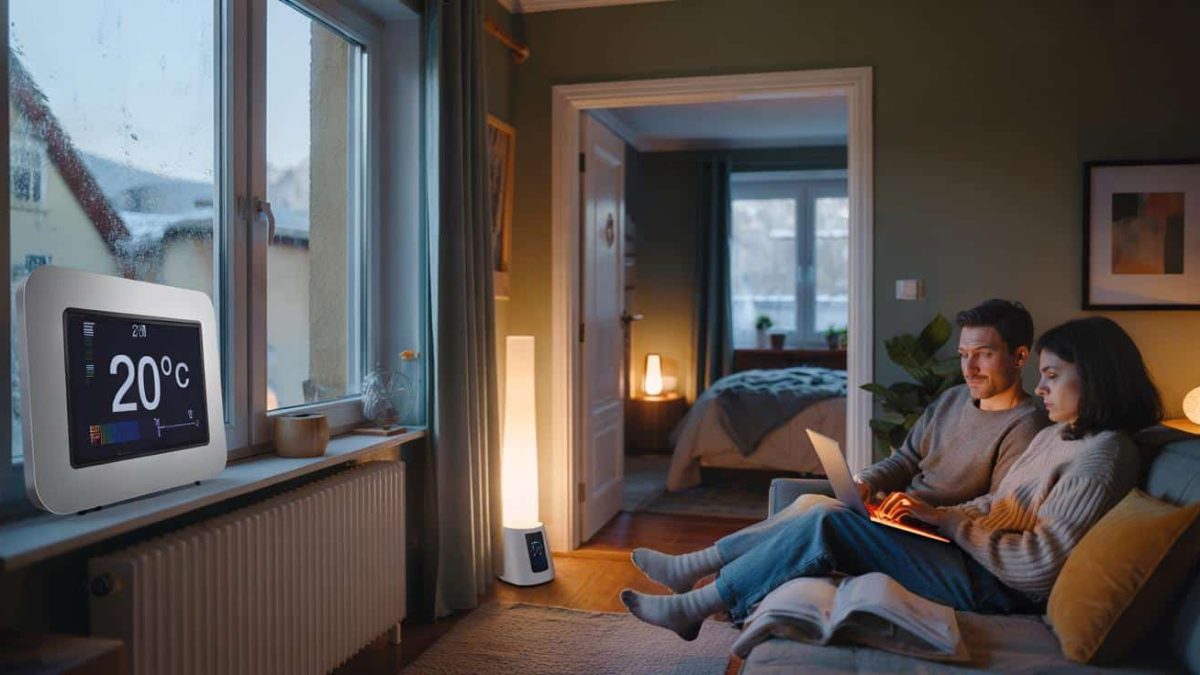
In many households, the routine is simple: turn on the heating, set the thermostat to 19 degrees, and you’re done. But new insights from energy experts are now seriously challenging this longstanding guideline. The question is: What is the optimal room temperature, and how can we achieve it without breaking the bank?
The 19-degree rule has been a fixture in many homes for years, but its origins may surprise you. It’s a recommendation that has evolved over time, shaped by various factors like energy efficiency, comfort, and even government policies. As we delve deeper, it becomes clear that the “one-size-fits-all” approach may not be the best solution for every household.
The Shifting Perspectives on Ideal Room Temperature
As energy efficiency has become a growing concern, the 19-degree guideline has come under scrutiny. Experts argue that this temperature may not be the most practical or beneficial for everyone. In fact, research suggests that a slightly higher temperature, around 20 degrees Celsius, could be more suitable for many households.
The reasoning behind this shift is multifaceted. Comfort levels are not solely determined by the numeric reading on the thermostat; factors like humidity, air movement, and personal preferences all play a role in how we perceive warmth. By aiming for a slightly higher temperature, many people may find themselves feeling more comfortable and cozy in their homes.
Moreover, the 19-degree recommendation was often based on the assumption that it would lead to significant energy savings. However, as energy-efficient technologies and insulation have improved, the gap between 19 and 20 degrees has become less dramatic in terms of energy consumption.
Finding the Sweet Spot: Tailoring Temperature to Specific Rooms
One of the key insights emerging from energy experts is the importance of tailoring room temperatures to their specific uses and needs. A one-size-fits-all approach may not be the most practical or efficient solution.
For example, bedrooms, where we spend a significant portion of our time resting, may benefit from a slightly lower temperature, around 18-19 degrees, to create a more comfortable and sleep-inducing environment. On the other hand, living rooms and other common areas where we are more active may thrive at a slightly higher temperature, perhaps 20-21 degrees.
By recognizing the unique requirements of different spaces, homeowners can optimize their energy usage and create a more personalized and comfortable living environment.
Maintaining 20 Degrees Without Breaking the Bank
The prospect of raising the thermostat to 20 degrees might raise concerns about skyrocketing energy bills. However, energy experts suggest that there are strategies to maintain this temperature without a significant financial burden.
Proper insulation, energy-efficient appliances, and smart heating controls can all play a crucial role in managing energy costs. Additionally, being mindful of your heating habits, such as closing doors to unused rooms and taking advantage of natural sunlight, can help keep your energy bills in check.
With a little bit of planning and adaptation, the transition from 19 to 20 degrees can be achieved without breaking the bank.
When 19 Degrees Becomes Problematic
While the 19-degree rule has been a longstanding recommendation, it’s important to recognize that it may not be suitable for everyone. In some cases, this temperature could actually be detrimental to health and well-being.
Individuals with certain medical conditions, the elderly, or those who are more sensitive to cold temperatures may find 19 degrees to be too low, leading to discomfort, shivering, and even increased risk of illness. In these instances, a slightly higher temperature, around 20-21 degrees, may be more appropriate to ensure their comfort and overall health.
It’s crucial to consider individual needs and preferences when determining the optimal room temperature, rather than relying solely on a universal guideline.
Finding Your Personal Comfort Zone
Ultimately, the ideal room temperature is a highly personal matter, and there is no one-size-fits-all solution. The key is to find the temperature that provides the right balance of comfort, energy efficiency, and overall well-being.
By experimenting with small temperature adjustments and paying attention to how your body and mind respond, you can determine the sweet spot that works best for you and your household. Don’t be afraid to adjust the thermostat and try different settings to find your personal comfort zone.
Remember, the goal is to create a living environment that feels cozy, inviting, and tailored to your specific needs, without sacrificing your financial well-being.
| Room | Recommended Temperature |
|---|---|
| Bedroom | 18-19°C |
| Living Room | 20-21°C |
| Kitchen | 19-20°C |
| Bathroom | 21-22°C |
“The 19-degree rule is a good starting point, but it’s not a one-size-fits-all solution. Our homes and our personal needs are diverse, so we need to be open to finding the right temperature for our specific situations.”
– Sarah Wilkinson, Energy Efficiency Consultant
Also Read
- ➡Spektakulärer Fund in Ägypten: Forscher holen Teile des legendären Leuchtturms von Alexandria aus dem Meer
- ➡Warum Hochbegabte Gruppenarbeit im Unterricht oft nicht ertragen
- ➡In 30 Tagen fit im Wohnzimmer: Diese 10 Übungen reichen wirklich
- ➡Uralter Mars-Stein verrät: In diesem schwarzen Brocken steckt altes Wasser
“Comfort is not just about the numerical temperature reading. Factors like humidity, air circulation, and individual preferences play a crucial role in how we perceive warmth. That’s why 20 degrees can feel more comfortable for many people than 19 degrees.”
– Dr. Emma Greenwood, Indoor Climate Researcher
“Energy efficiency is important, but it shouldn’t come at the expense of our health and well-being. For some individuals, 19 degrees may be too low, leading to discomfort and potential health risks. Finding the right temperature balance is key.”
– Dr. Michael Bauer, Geriatric Physician
Also Read
- ➡5 unscheinbare Gewohnheiten, die jede Frau außergewöhnlich wirken lassen
- ➡Warum Japaner im Winter keine Vögel füttern – und was wir davon lernen können
- ➡Dieses Wintergericht koche ich immer vor – abends bleibt nur Genießen
- ➡Was ein Gärtner über den richtigen Zeitpunkt zum Gießen im Sommer weiß den er selbst nie vergisst
The 19-degree rule has been a longstanding recommendation, but it’s time to rethink this approach. By embracing a more personalized and flexible understanding of optimal room temperature, we can create living environments that are both energy-efficient and tailored to our individual needs and preferences.
What are the main factors to consider when determining the ideal room temperature?
The main factors to consider include personal comfort, health and well-being, energy efficiency, and the specific use of the room. Factors like humidity, air circulation, and individual preferences also play a role in how we perceive warmth.
How can I maintain a 20-degree temperature without significantly increasing my energy bills?
Strategies include proper insulation, energy-efficient appliances, smart heating controls, and being mindful of heating habits like closing doors to unused rooms and taking advantage of natural sunlight.
Is 19 degrees really too low for everyone?
No, 19 degrees may be suitable for many people, but it’s important to consider individual needs. Certain groups, like the elderly or those with medical conditions, may find 19 degrees to be too low, leading to discomfort and potential health risks.
How can I find my personal comfort zone in terms of room temperature?
Experiment with small temperature adjustments and pay attention to how your body and mind respond. Don’t be afraid to try different settings to find the sweet spot that works best for you and your household.
Are there any specific temperature recommendations for different rooms in the house?
Yes, experts recommend tailoring temperatures to the specific use of each room. For example, bedrooms may benefit from a slightly lower temperature (18-19°C) for better sleep, while living rooms and common areas can be kept at a slightly higher temperature (20-21°C).
What are the potential health risks of maintaining a 19-degree temperature?
For individuals who are more sensitive to cold temperatures, such as the elderly or those with certain medical conditions, a 19-degree temperature may lead to discomfort, shivering, and an increased risk of illness. A slightly higher temperature (20-21°C) may be more appropriate in these cases.
How can I balance energy efficiency with personal comfort when setting the thermostat?
By using energy-efficient technologies, proper insulation, and smart heating habits, you can maintain a comfortable 20-degree temperature without a significant increase in energy costs. It’s about finding the right balance between comfort and efficiency.
Are there any other tips for creating a cozy and energy-efficient living environment?
In addition to adjusting the thermostat, consider using layers of clothing, closing doors to unused rooms, and taking advantage of natural sunlight to help regulate the temperature and reduce energy usage. Experiment and find the right combination that works for you.