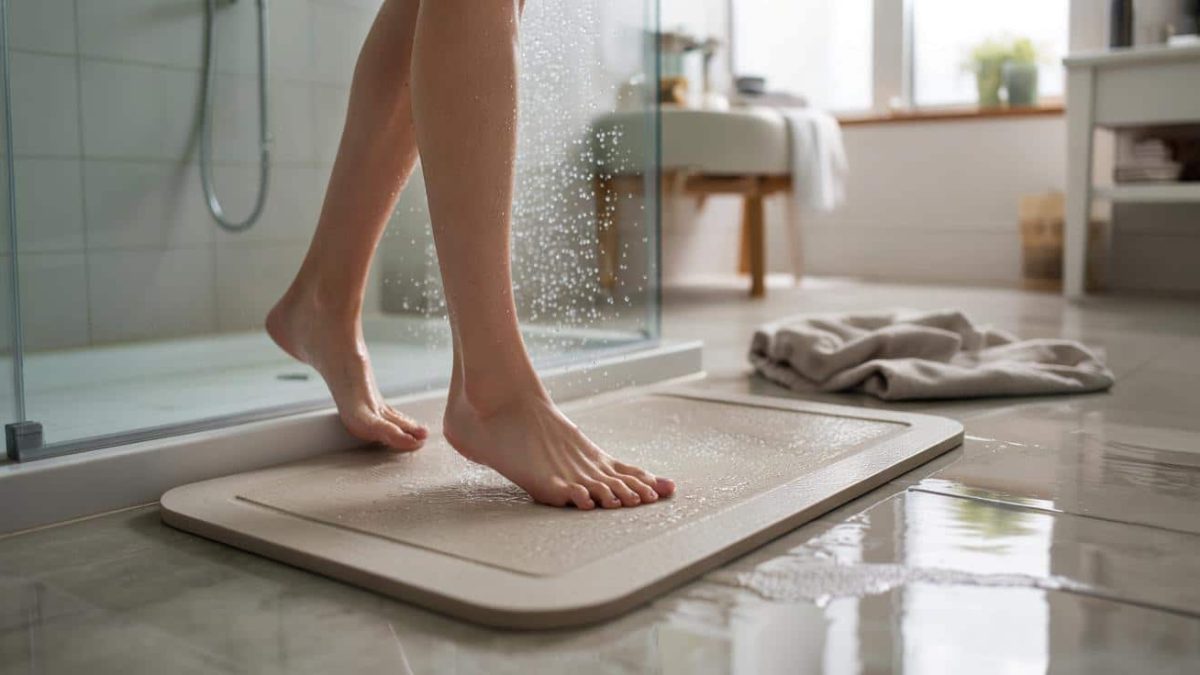
Gone are the days when fluffy fabric bath mats dominated bathroom floors. A new wave of stone-based bath mats is sweeping the design world, offering a sleek, modern alternative that promises both style and functionality. As homeowners increasingly prioritize wellness and mindfulness in their personal spaces, these natural stone mats are emerging as the must-have accessory for creating a spa-like ambiance in the everyday.
What’s driving this shift away from the traditional textile mats? For one, the growing awareness of the potential health and hygiene concerns associated with fabric mats. As these mats absorb moisture and trap bacteria, they can become breeding grounds for mold and mildew, compromising indoor air quality. Stone-based mats, on the other hand, are naturally antimicrobial, making them a more hygienic option.
But the appeal of stone mats extends beyond their practical benefits. These minimalist, nature-inspired designs are elevating the bathroom into a sanctuary of relaxation, blending seamlessly with modern decor trends that favor organic, earthy tones and textures. The mats’ smooth, cool surfaces and neutral hues create a sense of serenity, transporting users from the hustle and bustle of daily life into a soothing, spa-like oasis.
The Rise of Diatomite: The Secret Behind Stone Bath Mats
At the heart of this stone bath mat revolution lies a remarkable material: diatomite. Also known as diatomaceous earth, this naturally occurring siliceous sedimentary rock is composed of the fossilized remains of tiny aquatic organisms called diatoms. Its unique porous structure and absorbent properties make it an ideal foundation for these innovative bath mats.
Diatomite’s exceptional water-wicking abilities allow it to quickly draw moisture away from the skin, providing a dry, comfortable surface underfoot. Additionally, its anti-slip texture helps to prevent accidents in the bathroom, making it a safer alternative to traditional mats. The material’s durability and ease of maintenance further enhance its appeal, as these mats can be easily cleaned and maintained to retain their pristine appearance.
Beyond its practical advantages, diatomite’s sustainable and eco-friendly credentials are also attracting environmentally conscious consumers. As a natural, renewable resource, diatomite offers a more sustainable option compared to synthetic materials commonly found in bath mats.
Elevating the Bathroom Experience: The Design Appeal of Stone Bath Mats
The rise of stone bath mats is not just about function; it’s also about form. These minimalist, nature-inspired designs are redefining the aesthetic of the modern bathroom, elevating it from a utilitarian space to a serene, spa-like oasis.
The sleek, smooth surfaces of the stone mats create a calming and sophisticated look that complements a wide range of bathroom styles, from contemporary to rustic. Whether opting for a neutral tone like beige or gray or a bolder hue like charcoal or black, these mats seamlessly blend with various color schemes and decor palettes.
But the design appeal of stone mats extends beyond their color and finish. The mats’ organic shapes and textures add depth and visual interest to the bathroom, reflecting the natural beauty of the materials. Some designs even feature subtle, abstract patterns that lend a touch of artistry to the space.
| Material | Key Features | Benefits |
|---|---|---|
| Diatomite |
|
|
| Natural Stone |
|
|
“Stone bath mats are a game-changer in the world of bathroom design,” says interior design expert Emily Carlson. “They offer a perfect balance of form and function, creating a spa-like atmosphere while also addressing practical concerns like hygiene and safety. It’s no wonder homeowners are increasingly gravitating towards these natural, sustainable solutions.”
Choosing the Right Stone Bath Mat for Your Bathroom
With the growing popularity of stone bath mats, consumers are faced with a wide array of options to choose from. When selecting the perfect mat for your bathroom, there are several key factors to consider:
- ➡Garten-Hack statt Chemie: Warum Spülmittel beim Unkraut killen Trumpf ist
- ➡Photinia-Hecke voller schwarzer Flecken? So retten Sie sie vor dem Frühling
- ➡Schluss mit der 19-Grad-Regel: Welche Raumtemperatur wirklich sinnvoll ist
- ➡Der genaue Weg, Workouts mit Mondphasen zu synchronisieren, für Höchstleistung und hormonelles Gleichgewicht bei aktiven Frauen
Material composition: While diatomite is a popular choice, some stone mats may also be made from materials like marble, granite, or slate. Each material has its own unique properties and aesthetic appeal, so it’s important to choose one that aligns with your personal style and preferences.
Size and shape: Stone bath mats come in a variety of sizes and shapes, from rectangular to circular to organic, free-form designs. Measure your bathroom space carefully to ensure the mat you choose will fit seamlessly and provide adequate coverage.
Slip resistance: Look for mats with a textured or grooved surface to enhance traction and prevent slips and falls, especially in wet environments. Some mats may also feature additional anti-slip features like suction cups or rubber backing.
“When it comes to stone bath mats, the devil is in the details. Consumers should pay close attention to factors like material quality, slip resistance, and ease of maintenance to ensure they invest in a long-lasting, high-performing solution for their bathroom,” advises home improvement expert, Sarah Williamson.
Maintaining the Pristine Appearance of Your Stone Bath Mat
One of the key advantages of stone bath mats is their durability and ease of maintenance. However, to keep these mats looking their best, a little care and attention is required. Regular cleaning and proper storage are essential to preserving the mat’s pristine appearance and extending its lifespan.
When cleaning a stone bath mat, avoid harsh chemical cleaners, which can potentially damage the material. Instead, opt for a mild, pH-neutral detergent or a specialized stone cleaner. Gently scrub the mat with a soft-bristled brush or sponge, taking care to remove any built-up grime or residue. Rinse thoroughly and allow the mat to air dry completely before placing it back in the bathroom.
To prevent the mat from becoming waterlogged or developing mold and mildew, it’s important to store it properly when not in use. Hang or prop the mat up in a well-ventilated area to ensure it dries completely between uses. Some mats may even come with storage solutions, such as wall-mounted racks or dedicated drying stands, to make this process even easier.
| Cleaning Tip | Explanation |
|---|---|
| Use a mild, pH-neutral detergent | Harsh chemicals can damage the stone material, so a gentle, pH-balanced cleaner is the best option. |
| Scrub with a soft-bristled brush or sponge | Avoid abrasive cleaning tools that could scratch the surface of the mat. |
| Rinse thoroughly and air dry | Ensuring the mat is completely dry before use is crucial to prevent mold and mildew growth. |
| Store properly when not in use | Hanging or propping the mat up in a well-ventilated area will help it dry out between uses. |
“Proper maintenance is key to preserving the beauty and longevity of a stone bath mat,” says cleaning expert, Jessica Michaels. “By following a few simple steps, homeowners can ensure their investment remains a stunning and functional focal point in the bathroom for years to come.”
The Future of Bathroom Design: Stone Bath Mats as a Wellness Statement
As the wellness movement continues to shape design trends, stone bath mats are poised to become more than just a functional accessory. These natural, sustainable materials are transforming bathrooms into personalized sanctuaries that promote relaxation, mindfulness, and a connection to the earth.
Beyond their practical benefits, stone mats are now being viewed as a way to create a spa-like ambiance in the home. Their neutral color palettes and organic forms evoke a sense of tranquility, while their durable construction ensures they can withstand the rigors of daily use without compromising their elegant appearance.
For health-conscious consumers, these stone mats also represent a commitment to sustainable living and a more mindful approach to personal care. By choosing a natural, eco-friendly material, homeowners can enjoy the benefits of a luxurious bathroom experience while reducing their environmental impact.
- ➡März-Geheimtipp im Garten: Diese Flammenblume färbt Beete bis in den Herbst
- ➡Vintage-Schätze für den Garten: Diese 5 Brocante-Klassiker feiern Comeback
- ➡Frisst dein Hund ständig Gras? Wann es harmlos ist – und wann nicht
- ➡Genialer 2-Cent-Trick: Mit diesem Küchenhelfer werden Bildschirme streifenfrei sauber
“Stone bath mats are not just a design trend; they’re a lifestyle choice,” says wellness expert, Dr. Olivia Perez. “By incorporating these natural, soothing materials into the bathroom, homeowners are creating a space that nurtures both the body and the mind, promoting a sense of tranquility and well-being in their everyday lives.”
Who Benefits the Most from Stone Bath Mats?
While stone bath mats offer a wealth of benefits for all homeowners, certain individuals and households may find them particularly advantageous:
Families with young children: The anti-slip properties of stone mats can provide an added layer of safety in the bathroom, helping to prevent accidents and falls. Additionally, the mats’ easy-to-clean surfaces make them a practical choice for households with active little ones.
Older adults: As we age, maintaining balance and stability in the bathroom becomes increasingly important. Stone mats with their textured, non-slip surfaces can help to reduce the risk of falls and injuries, promoting a safer, more accessible bathroom environment for seniors.
- ➡Spektakuläre Kometen-Show: Ein Besucher aus der Oortwolke kommt nahe an die Erde
- ➡Elektroauto-Schock: Top-Hersteller von Wallbox-Ladern kämpft ums Überleben
- ➡Diese einfache Übung für die Hüftmobilität kann laut Experten Rückenschmerzen im Alltag vorbeugen
- ➡Wer sein Bett nie macht, hat laut Psychologie einen klaren Vorteil
Health-conscious consumers: For those focused on creating a wellness-centric home, stone bath mats offer a natural, sustainable alternative to traditional fabric mats. The mats’ antimicrobial properties and lack of chemical treatments make them an appealing choice for individuals prioritizing clean, green living.
| Target Audience | Key Benefits |
|---|---|
| Families with young children |
|
| Older adults |
|
| Health-conscious consumers |
|
“Stone bath mats are a game-changer for those of us who prioritize wellness and safety in the home,” says lifestyle blogger, Sarah Michaels. “By incorporating these natural, high-performing mats into our bathrooms, we’re creating a sanctuary that not only looks beautiful but also supports our overall well-being.”
What makes stone bath mats more hygienic than traditional fabric mats?
Stone bath mats, particularly those made from materials like diatomite, are naturally antimicrobial and resistant to the growth of mold, mildew, and bacteria. Unlike fabric mats, which can absorb moisture and harbor these microorganisms, stone mats have a non-porous surface that prevents the buildup of harmful contaminants, making them a more hygienic choice for the bathroom.
- ➡Studie zeigt: In dieser Region Frankreichs sind Supermärkte am günstigsten
- ➡Rutschgefahr nach dem Winter: Mit diesem Küchen-Trick wird die Terrasse in 1 Stunde wieder sauber
- ➡135-Euro-Strafe wegen bellendem Schäferhund: Nachbarschaftsstreit eskaliert
- ➡Neues Vitamin‑C-Serum: Faltenglätter mit Sofort-Frische-Effekt fürs Gesicht
How do I care for a stone bath mat to keep it looking its best?
To maintain the pristine appearance of a stone bath mat, it’s important to clean it regularly using a mild, pH-neutral detergent and a soft-bristled brush or sponge. Avoid harsh chemicals that could potentially damage the material. Rinse the mat thoroughly and allow it to air dry completely before placing it back in the bathroom. When not in use, store the mat in a well-ventilated area to prevent mold and mildew growth.
What are the key factors to consider when choosing a stone bath mat?
When selecting a stone bath mat, pay attention to the material composition, size and shape, and slip resistance. Diatomite is a popular choice, but other natural stones like marble, granite, or slate may also be available. Ensure the mat fits your bathroom space and has a textured or grooved surface to enhance traction and prevent falls. Additionally, consider any special features like suction cups or rubber backing for added stability.
How do stone bath mats compare to traditional fabric mats in terms of design?
Stone bath mats offer a more sophisticated, minimalist aesthetic compared to traditional fabric mats. Their sleek, natural surfaces and neutral color palettes seamlessly blend with a wide range of bathroom styles, from contemporary to rustic. The organic shapes and textures of stone mats also add depth and visual interest to the space, creating a spa-like ambiance that elevates the overall design of the bathroom.
Are stone bath mats more expensive than fabric mats?
While stone bath mats may have a higher initial cost compared to traditional fabric mats, their long-lasting durability and low maintenance requirements can make them a worthwhile investment in the long run. The high-quality materials and craftsmanship that go into these mats justify the slightly higher price tag, and their ability to withstand heavy use and maintain their pristine appearance for years can offset the initial cost difference.
How do stone bath mats promote wellness and mindfulness in the bathroom?
By incorporating natural, soothing materials like stone into the bathroom, homeowners can create a personalized sanctuary that nurtures both the body and the mind. The neutral color palettes and organic forms of stone bath mats evoke a sense of tranquility, helping to transform the bathroom into a space for relaxation and mindfulness. Additionally, the sustainable and eco-friendly nature of these mats aligns with a more conscious, wellness-focused lifestyle.
Are stone bath mats suitable for households with young children or older adults?
Yes, stone bath mats can be an excellent choice for families with young children or older adults. The mats’ textured, non-slip surfaces help to enhance bathroom safety and stability, reducing the risk of falls and injuries. Additionally, the easy-to-clean nature of stone mats makes them a practical option for households with active little ones or those with mobility challenges.
How durable are stone bath mats compared to traditional fabric mats?
Stone bath mats, particularly those made from durable materials like diatomite, are known for their exceptional durability and longevity. Unlike