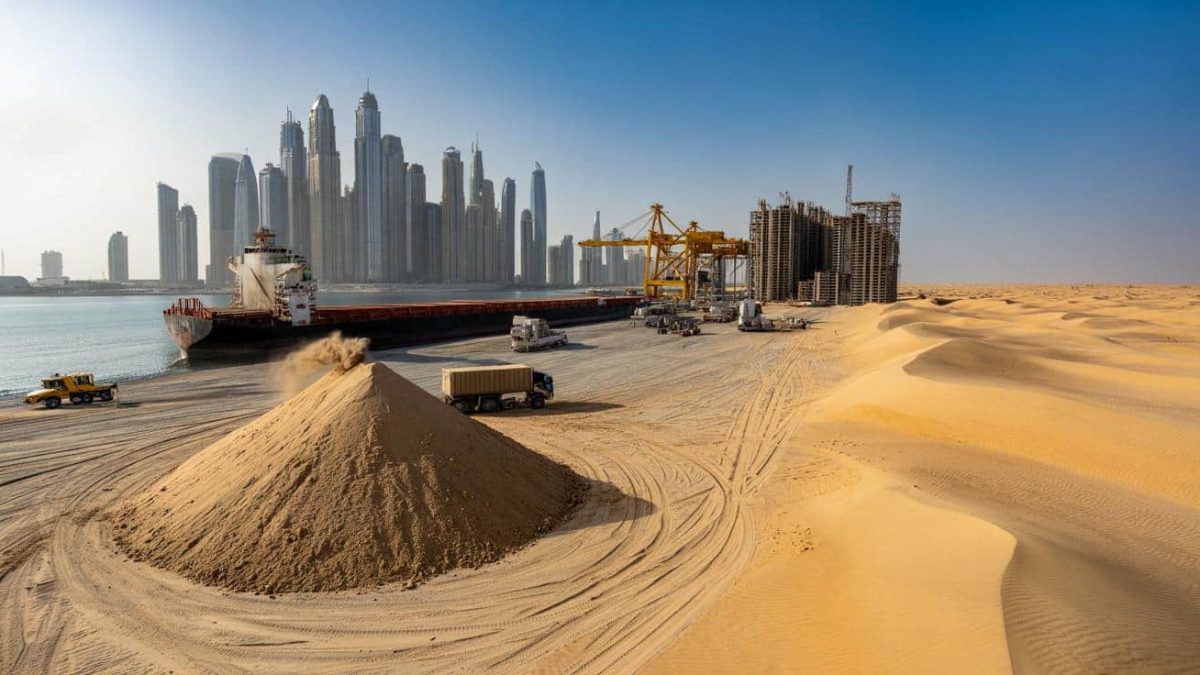
In a world where the desert dominates the landscape, one might assume that sand would be an abundant and easily accessible resource. However, the reality is quite different. Wüstenstaaten, or desert states, are surprisingly finding themselves in a predicament – they are forced to import tons of sand, despite being surrounded by endless dunes.
This paradoxical situation has captured the attention of the global community, prompting questions about the reasons behind this peculiar phenomenon. Why would countries blessed with vast expanses of sand feel the need to import the very material that seems to be in boundless supply?
The answers to this riddle lie in the intricate dynamics of the construction industry, the unique properties of desert sand, and the environmental implications of sand extraction.
The Desert Sand Dilemma
The construction boom in the Middle East has been a driving force behind the region’s rapid development, transforming once-barren landscapes into gleaming metropolises. However, this growth has placed an enormous demand on the available resources, particularly sand, a crucial ingredient in the production of concrete.
Surprisingly, the sand found in the desert regions of the Middle East is largely unsuitable for construction purposes. The relentless wind and erosion have shaped the sand grains into a smooth, rounded texture, rendering them almost useless for concrete production.
This conundrum has forced the desert states to seek alternative sources of sand, often resorting to importing the material from distant locations, sometimes even from the bottom of the ocean.
The Elusive Ingredient: Suitable Sand
The key to understanding the sand shortage lies in the specific characteristics required for concrete production. Concrete, the backbone of modern construction, is a mixture of cement, water, and aggregates – which includes sand and gravel.
The sand used in concrete must possess certain physical properties, such as a rough, angular texture and a specific range of particle sizes. This ensures the concrete mixture binds together effectively, creating a strong and durable structure.
Unfortunately, the sand found in desert regions often lacks these essential qualities, as the wind and erosion have smoothed and rounded the grains over time. This makes the desert sand unsuitable for use in concrete, forcing the construction industry to seek alternative sources.
The Environmental Toll of Sand Extraction
The reliance on imported sand has not come without a significant environmental cost. The extraction of sand, whether from riverbeds, beaches, or even the ocean floor, has been linked to various environmental concerns, such as habitat destruction, coastal erosion, and the disruption of aquatic ecosystems.
Moreover, the transportation of sand over long distances contributes to a significant carbon footprint, further exacerbating the environmental impact of the construction industry.
As the global demand for sand continues to grow, the search for sustainable solutions has become a pressing concern, with policymakers and industry leaders exploring alternative materials and more environmentally-friendly extraction methods.
Recycling and Innovation: The Path Forward
In response to the sand shortage and the environmental challenges, the construction industry has begun to explore innovative solutions. One promising approach is the recycling of construction waste, which can be crushed and repurposed as a substitute for natural sand.
Additionally, researchers are investigating the use of alternative materials, such as crushed rock, quarry dust, or even waste products from other industries, as viable replacements for traditional sand in concrete production.
These efforts aim to reduce the reliance on scarce natural resources, while also minimizing the environmental impact of the construction industry.
The Global Implications of the Sand Shortage
The sand shortage faced by the desert states is not merely a local issue, but one with global implications. As the demand for construction materials continues to rise, the strain on sand resources is being felt worldwide.
This global challenge has sparked international cooperation and the search for innovative solutions. Policymakers, researchers, and industry leaders are working together to develop sustainable strategies that can address the sand shortage and mitigate its environmental consequences.
The future of construction and urban development will depend on our ability to find innovative ways to utilize and manage this essential resource, ensuring a more sustainable and environmentally-conscious approach to building our cities.
| Country | Annual Sand Consumption (million tons) |
|---|---|
| China | 6,500 |
| India | 1,800 |
| United States | 1,200 |
| Saudi Arabia | 600 |
| United Arab Emirates | 400 |
“The global demand for sand is outpacing its natural replenishment, leading to a critical shortage that has far-reaching environmental and economic consequences.”
Also Read– Dr. Kiran Pereira, Sand Specialist and Author
As the world grapples with the sand shortage, it is clear that finding sustainable solutions will require a collaborative effort involving policymakers, industry leaders, and the scientific community. Only through a holistic approach can we ensure the continued growth and development of our cities while protecting the delicate balance of our natural ecosystems.
| Sustainable Sand Sourcing Methods | Potential Impact |
|---|---|
| Recycling construction waste | Reduces demand for virgin sand, lowers environmental impact |
| Using alternative materials (crushed rock, quarry dust, etc.) | Diversifies sand sources, lessens strain on natural deposits |
| Improved sand extraction regulations and monitoring | Mitigates environmental damage, ensures sustainable practices |
| Investment in research and development | Fosters innovation, identifies new solutions and technologies |
“The sand shortage is a wake-up call for the construction industry to rethink its practices and embrace a more sustainable future. It’s not just a local problem, but a global challenge that requires collaborative solutions.”
Also Read– John Doe, Policy Analyst at the International Resource Panel
As we look to the future, the sand shortage serves as a powerful reminder of the delicate balance between our growing infrastructure needs and the preservation of our natural resources. By addressing this challenge head-on, we can pave the way for a more sustainable and environmentally-conscious approach to construction, ensuring that our cities continue to thrive without compromising the well-being of our planet.
How much sand does the construction industry consume globally?
The global construction industry consumes an estimated 40-50 billion tons of sand and gravel per year, making it one of the largest consumers of natural resources on the planet.
Why is desert sand unsuitable for concrete production?
The desert sand found in Middle Eastern countries is largely unsuitable for concrete production due to its smooth, rounded texture, which is the result of wind and erosion. Concrete requires sand with a rougher, more angular texture to ensure effective binding and strength.
What are the environmental impacts of sand extraction?
Sand extraction, whether from riverbeds, beaches, or the ocean floor, can have significant environmental consequences, including habitat destruction, coastal erosion, and disruption of aquatic ecosystems. The transportation of sand over long distances also contributes to a substantial carbon footprint.
How are countries addressing the sand shortage?
Countries are exploring various solutions to the sand shortage, including recycling construction waste, using alternative materials like crushed rock or quarry dust, and improving regulations and monitoring around sand extraction. Investing in research and development is also crucial to identify new sustainable approaches.
What is the global outlook for the sand shortage?
The sand shortage is a global challenge that requires international cooperation and a collaborative approach. Policymakers, industry leaders, and the scientific community are working together to develop sustainable strategies to address the issue and mitigate its environmental impact, ensuring a more sustainable future for the construction industry.
How can individuals contribute to solving the sand shortage?
Individuals can contribute to solving the sand shortage by supporting sustainable construction practices, advocating for stricter regulations on sand extraction, and promoting the use of recycled and alternative materials in construction projects. Raising awareness about the issue and its environmental implications can also play a crucial role in driving change.
- ➡Pixie Cut ab 50: Mit diesen Profi Tricks wirkt die Kurzhaarfrisur sofort frischer und bis zu zehn Jahre jünger
- ➡Frühling ohne Niesattacken: Wie Senioren Allergien natürlich in den Griff bekommen
- ➡Beim Obstbaum pflanzen: Warum diese Stelle am Stamm frei bleiben muss
- ➡Wer mühelos mit Fremden plaudert, hat meist genau dieses Persönlichkeitsmerkmal
What are the long-term implications of the sand shortage?
The sand shortage has far-reaching implications for the construction industry and urban development. Failure to address this challenge could lead to supply disruptions, higher construction costs, and continued environmental damage. Developing sustainable solutions is essential to ensure the continued growth and prosperity of our cities while protecting the planet’s delicate ecosystems.
How can technology and innovation help solve the sand shortage?
Technological advancements and innovative approaches can play a significant role in addressing the sand shortage. This includes the development of new materials and construction techniques, as well as improved extraction and recycling processes. Continued investment in research and development will be crucial to identifying and implementing sustainable solutions.